Why Most Small Business Websites Fail to Generate Leads?
 By
Avantika Shergil
|
May 8, 2026 |
Web Development
By
Avantika Shergil
|
May 8, 2026 |
Web Development
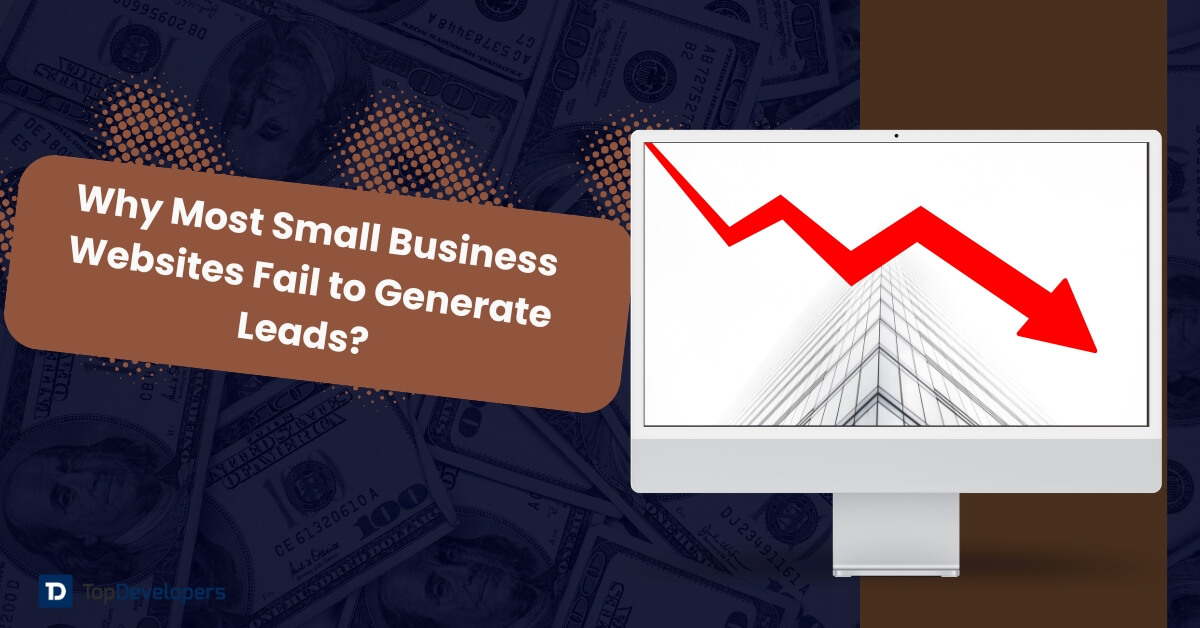
Running a business website is no longer just about having an online presence. Most small businesses already have websites, but many of those websites fail to generate inquiries, calls, consultations, or sales. In many cases, the problem is not traffic alone. The real issue is that the website was never built to convert visitors into leads.
A business website should function as a lead generation system. It should communicate value clearly, build trust quickly, guide users toward action, and remove friction from the buying process. Unfortunately, many small business websites are designed like digital brochures instead of conversion-focused business assets.
If your website receives visitors but produces very few inquiries, there are usually several underlying problems affecting conversions. Here are the most common reasons why small business websites fail to generate leads.
Table of Contents
Most Business Websites Are Built for Appearance Instead of Conversions
Many small businesses prioritize visual design without considering conversion strategy. A website may look modern, but if it does not guide visitors toward taking action, it will struggle to generate business results.
A conversion-focused website is structured around user intent. Every section, page, button, and message should support a business objective such as generating inquiries, booking consultations, collecting leads, increasing phone calls, or encouraging purchases.
Most failing websites focus heavily on aesthetics while ignoring user journey, conversion flow, trust building, lead capture, and decision-making psychology.
Digital Brochure vs Lead-Generating Website
| Digital Brochure Website | Lead-Generating Website |
|---|---|
| Focuses mostly on visuals | Focuses on business outcomes |
| Generic messaging | Clear value proposition |
| Few CTAs | Strategic conversion paths |
| Static pages | Conversion-driven structure |
| Minimal trust signals | Strong credibility elements |
A business website should support marketing and sales efforts, not simply display company information.
Visitors Cannot Understand the Business Quickly
Most website visitors decide within seconds whether a website is relevant to them. If the messaging is unclear, confusing, or too generic, users leave before exploring further.
This is one of the biggest conversion problems on small business websites.
The 5-Second Clarity Test
When a visitor lands on your homepage, they should immediately understand:
- What your business does
- Who your services are for
- What problem you solve
- Why they should trust you
- What they should do next
Many websites fail this test because they use vague headlines such as “Innovative Digital Solutions” or “Transforming Businesses Online.” These statements sound professional but communicate very little.
A stronger homepage headline focuses on outcomes and clarity. For example:
Custom Web Development Services That Help Businesses Generate More Leads and Sales
This immediately explains the service, the audience, and the business value.
Weak Calls-to-Action Reduce Conversions
Many small business websites either have no clear CTA, hide important actions, or overwhelm users with too many choices.
Visitors should never have to guess what to do next.
Strong calls-to-action help guide users through the conversion process. Weak CTAs create hesitation and reduce engagement.
Weak vs High-Converting CTAs
| Weak CTA | Better CTA |
|---|---|
| Contact Us | Get a Free Website Audit |
| Learn More | Schedule a Free Consultation |
| Submit | Request a Custom Quote |
| Click Here | Improve My Website Performance |
High-converting websites use CTAs strategically throughout the page, especially above the fold, after service explanations, near testimonials, and at the end of pages.
Slow and Mobile-Unfriendly Websites Lose Potential Customers
Website speed and mobile usability directly affect lead generation. Modern users expect websites to load quickly and function smoothly across devices.
If a website is slow or difficult to use on mobile devices, visitors often leave immediately.
Why Mobile Optimization Matters
A large percentage of website traffic now comes from smartphones. Yet many small business websites still use outdated layouts, difficult navigation, oversized elements, and slow-loading pages.
A poor mobile experience increases bounce rates and reduces conversions.
Common Website Performance Problems
- Large unoptimized images
- Excessive animations
- Poor hosting infrastructure
- Outdated code
- Unnecessary plugins
- Bloated page builders
Search engines also consider performance metrics such as Core Web Vitals when evaluating websites. Slow websites can negatively affect both rankings and conversions.
Basic Website Speed Checklist
- Compress images properly
- Use modern caching
- Minimize unnecessary scripts
- Optimize mobile layouts
- Improve server performance
- Reduce page clutter
Most Small Business Websites Lack Trust Signals
Visitors are cautious when interacting with unfamiliar businesses online. If a website does not establish credibility quickly, users hesitate to inquire or make contact.
Trust signals help reduce perceived risk.
Common Missing Trust Elements
- Testimonials
- Client reviews
- Case studies
- Project examples
- Certifications
- Recognizable client logos
- Real team photos
Without these elements, visitors may question whether the business is legitimate or experienced.
Why Trust Signals Matter
People rarely become leads immediately after visiting a website. Trust-building elements help move users closer to action by reinforcing credibility.
Effective trust signals include Google reviews, before-and-after project results, detailed case studies, portfolio sections, awards, certifications, and client success metrics.
SEO Traffic Alone Does Not Generate Leads
Many businesses assume that higher rankings automatically lead to more customers. However, SEO traffic without conversion optimization often produces disappointing results.
A website can attract visitors and still fail to generate inquiries.
The Difference Between Traffic and Conversion
SEO helps bring users to the website. Conversion optimization helps turn those visitors into leads.
Without proper conversion systems, visitors leave quickly, engagement remains low, and inquiries stay limited.
SEO and CRO Must Work Together
High-performing websites combine technical SEO, fast performance, strong UX, persuasive messaging, strategic CTAs, and optimized landing pages.
Businesses that focus only on rankings often overlook the actual customer journey.
Weak Lead Capture Systems Lose Potential Customers
Many websites make it unnecessarily difficult for users to contact the business.
Some common issues include long forms, poor form placement, confusing fields, no mobile optimization, broken submissions, and delayed follow-up processes.
Even interested visitors may abandon the process if contacting the business feels inconvenient.
Long Forms Create Friction
Asking for too much information early in the process often reduces submissions.
For most small businesses, simple forms perform better:
- Name
- Phone number
- Short message
Additional information can be collected later during consultations or sales conversations.
Lack of Automation Hurts Response Time
Many businesses also fail to integrate CRM systems, automated responses, lead tracking, appointment scheduling, and WhatsApp communication.
Fast follow-up significantly improves lead conversion rates. Businesses that respond slowly often lose leads to competitors.
Signs Your Website Is Costing You Leads
Many business owners do not realize their website is underperforming until they compare results against competitors or industry standards.
- High bounce rates
- Low inquiry volume
- Poor mobile engagement
- Weak local visibility
- Visitors not reaching contact pages
- Low conversion rates despite traffic
- Inconsistent lead quality
If your website receives traffic but generates few qualified inquiries, there is usually a structural conversion problem.
Final Thoughts
Most small business websites fail to generate leads because they were never designed to support conversion strategy. They may look visually appealing, but they lack the messaging, structure, trust elements, performance, and user experience needed to turn visitors into customers.
A modern business website should function as:
- A lead generation system
- A trust-building platform
- A marketing asset
- A customer acquisition tool
Businesses that invest in conversion-focused web development typically see stronger engagement, better lead quality, and improved long-term ROI from their online presence. This is why many businesses now prefer working with experienced web development companies that understand both website performance and conversion strategy.
If your current website is struggling to generate inquiries, a professional website audit can help identify the conversion issues limiting performance.
Avantika Shergil
| May 8, 2026


Avantika Shergil is a technology enthusiast and thought leader with deep expertise in software development and web technologies. With over 8 years of experience analyzing and evaluating cutting-edge digital solutions, Avantika has a knack for demystifying complex tech trends. Her insights into modern programming frameworks, system architecture, and web innovation have empowered businesses to make informed decisions in the ever-evolving tech landscape. Avantika is passionate about bridging the gap between technology and business strategy, helping businesses build customized software and website, and understand about different tools to leverage effectively for their ventures. Explore her work for a unique perspective on the future of digital innovation.