Top AI Software Platforms for 2026
 By
Derek Cohen
|
Apr 8, 2026 |
AI Tools Artificial Intelligence
By
Derek Cohen
|
Apr 8, 2026 |
AI Tools Artificial Intelligence
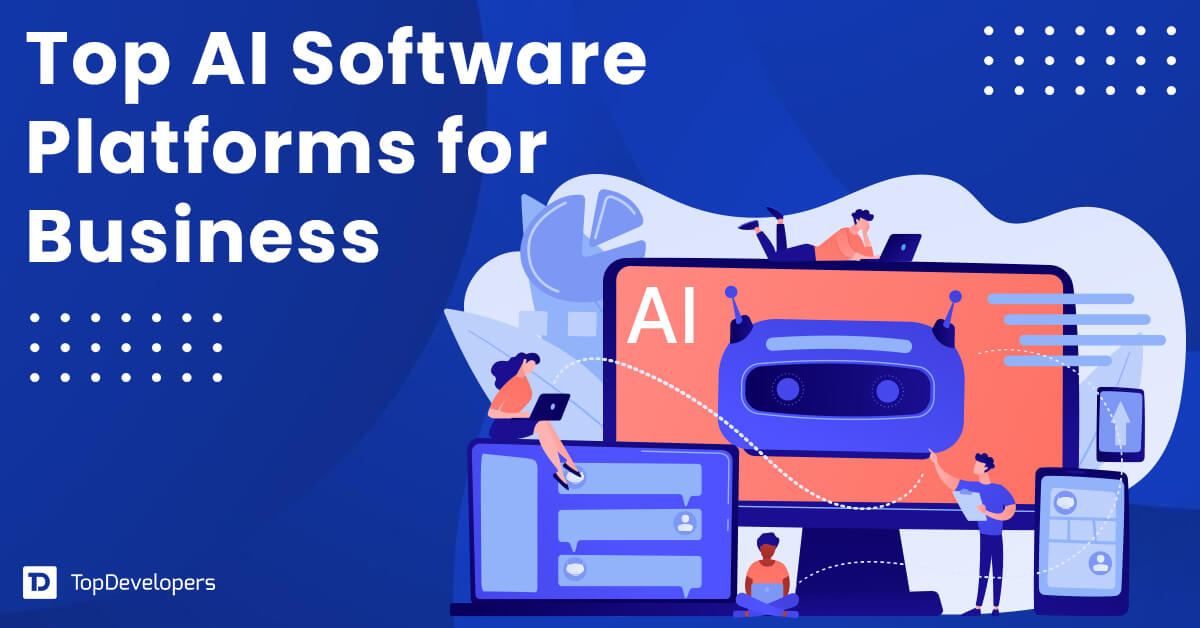
AI software has become essential in today’s fast-paced digital landscape, helping businesses enhance customer experiences and maintain a competitive advantage. AI is transforming industries across the globe, and the right artificial intelligence platform can help companies automate processes, make data-driven decisions, and innovate at scale.
According to Statista, the global AI market is projected to reach an impressive $826.70 billion by 2030, growing at a robust CAGR of 28.46% from 2024 to 2030. AI adoption continues to accelerate, with 83% of businesses identifying it as a strategic priority. From machine learning platforms to conversational AI tools, companies are leveraging AI to automate processes, enhance decision-making, and secure a competitive edge.
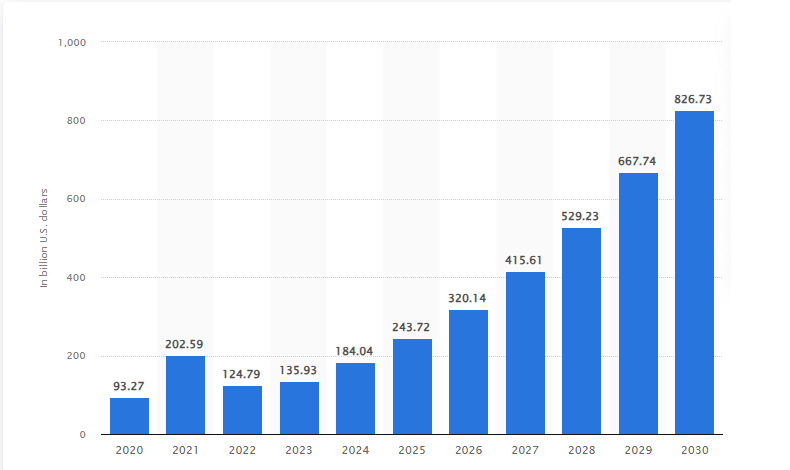
From conversational AI platforms that drive customer engagement to AI software platforms that streamline business processes, there are many tools available to help businesses leverage AI. However, with so many options, it can be challenging to choose the best fit.
In this comprehensive guide, we explore the most popular AI software platforms to help you find the best solution for your business. Whether you’re in retail, healthcare, or manufacturing, these platforms offer the scalability, flexibility, and intelligence needed to maintain a competitive edge in the ever-evolving digital landscape.
Table of Contents
What are the factors to consider when choosing AI Software Platforms?
Before diving into the list of best AI platforms, it’s essential to consider some key factors that will help you select the right AI platform for your business:
- Scalability: Ensure the platform can grow with your business as your AI needs to evolve.
- Customization: Look for AI platforms that allow you to train custom models to meet your specific requirements.
- Ease of Integration: The AI software platform should integrate seamlessly with your existing infrastructure and tools.
- Use Cases: Consider whether the platform has been designed for your industry and business model.
- Pricing: Evaluate both the upfront and long-term costs of the platform, including usage fees.
Top AI Platforms with details
The rapid advancement of artificial intelligence has led to the emergence of powerful AI platforms that cater to diverse business and development needs. From cloud-based ecosystems to specialized machine learning frameworks, these platforms enable organizations to build, deploy, and scale AI-driven solutions efficiently. Each platform offers unique capabilities, including automation, data analytics, natural language processing, and predictive modeling, making it essential to evaluate them based on specific use cases. In the following section, we will explore the top AI platforms in detail, highlighting their core features, strengths, and ideal applications.
OpenAI GPT-5.4
OpenAI GPT-5.4 is an advanced generative AI platform designed to deliver highly accurate, context-aware, and multimodal intelligence across a wide range of business applications. Building on previous iterations, GPT-5.4 introduces improved reasoning, better long-context handling, and enhanced reliability, making it a strong choice for enterprises seeking scalable AI solutions. Its ability to process and generate content across multiple formats enables more dynamic and integrated workflows. As AI adoption accelerates, GPT-5.4 positions itself as a core platform for intelligent automation and decision support.
Core Features of GPT Model:
- Advanced Multimodal Capabilities: Processes text, images, audio, and structured data within a unified framework.
- Extended Context Window: Handles significantly larger inputs for complex workflows and long-form content generation.
- Improved Reasoning & Accuracy: Delivers more precise outputs with reduced hallucinations and better logical consistency.
- Custom Model Adaptation: Supports fine-tuning and domain-specific optimization for industry use cases.
- Seamless API Integration: Enables efficient deployment across web apps, enterprise systems, and automation pipelines.
Available Models: - GPT-5.4 Standard: Balanced model for general-purpose tasks with high accuracy.
- GPT-5.4 Turbo: Optimized for faster performance and cost efficiency in high-volume applications.
- GPT-5.4 Enterprise: Designed for large-scale deployments with enhanced security, compliance, and support.
- Codex (Advanced): Specialized for AI-driven coding, debugging, and software development workflows.
Use Cases of GPT 5.4:
- Retail: Generate personalized shopping experiences, product descriptions, and AI-powered support systems.
- Healthcare: Automate clinical documentation, summarize patient records, and assist in research analysis.
- Finance: Produce real-time financial insights, risk assessments, and automated reporting.
- Education: Power adaptive learning platforms, intelligent tutoring systems, and content generation tools.
Why OpenAI’s GPT Model Stands Out:
GPT-5.4 distinguishes itself through enhanced reasoning capabilities, multimodal processing, and scalability across enterprise environments. Its ability to handle complex queries with high contextual understanding makes it suitable for mission-critical applications. Additionally, its flexibility in customization and seamless integration allows businesses to embed AI deeply into operational workflows.
GPT Model Pricing:
OpenAI follows a usage-based pricing model, where costs depend on token consumption and model selection. GPT-5.4 Turbo is generally more cost-efficient for large-scale deployments, while enterprise pricing is customized based on infrastructure, security, and usage requirements. Organizations can optimize costs by selecting models aligned with their performance and latency needs.
OpenAI’s GPT Model is Best For:
Enterprises, startups, and developers looking for a highly advanced AI platform for content generation, automation, customer engagement, data analysis, and software development at scale.
Explore: Best Vibe Coding Tools to Supercharge Your Development
Google Cloud AI Platform
Google Cloud AI Platform provides developers and data scientists with powerful tools to build, train, and deploy machine learning models at scale. Integrated with Google’s cloud ecosystem, the platform supports both beginner-friendly AutoML tools and advanced deep learning frameworks like TensorFlow.
Core Features of Google Cloud AI Platform:
- AutoML for custom machine learning models
- Pre-trained models for vision, speech, and text
- TensorFlow support for deep learning projects
Available Models of Google Cloud AI Platform:
- AutoML Vision: Image classification and object detection
- AutoML Natural Language: Sentiment analysis, entity recognition, and text classification
- AutoML Translation: Machine translation between multiple languages
- AI Platform Prediction: Deploy custom-trained models for real-time predictions
Google Cloud AI Platform Use Cases:
- Retail: Inventory management and personalized product recommendations.
- Healthcare: AI-assisted diagnostics using image recognition models.
- Finance: Detecting fraud and predicting stock trends using machine learning models.
- Customer Service: Building conversational AI for customer interactions with chatbots.
Why Google Cloud AI Platform Stands Out:
Google Cloud AI Platform offers a seamless integration with other Google Cloud services such as BigQuery and Kubernetes, making it an ideal choice for businesses looking to leverage the power of Google’s scalable infrastructure. Its AutoML functionality also allows users with minimal technical expertise to build powerful machine-learning models quickly and easily.
Google Cloud AI Platform Pricing:
Google Cloud AI Platform follows a pay-as-you-go model, charging based on the specific services you use. For example, AutoML model training costs around $3.15 per node hour, while predictions are priced at $0.10 per 1,000 predictions. Google offers a free tier for some services, which can be useful for developers and small businesses starting with limited-scale projects.
Google Cloud AI Platform is Best For:
Enterprises and mid-sized businesses that require scalable AI solutions integrated with cloud services, especially those already using Google Cloud.
Amazon Web Services (AWS) AI
AWS AI is a comprehensive AI and ML platform offering services for everything from natural language processing (NLP) to image recognition. Amazon SageMaker makes machine learning model development and deployment simpler, while other tools like Lex and Polly power chatbots and voice-driven applications.
Core Features if Amazon Web Services (AWS) AI:
- Amazon SageMaker for machine learning models
- AWS Lex aka Amazon Lex for conversational AI
- AWS Polly aka Amazon Polly for text-to-speech conversion
- AWS Rekognition aka Amazon Rekognition for image and video analysis
Available Models of Amazon Web Services (AWS) AI:
- SageMaker: For building supervised and unsupervised machine learning models.
- Lex: Conversational AI for virtual assistants and chatbots.
- Polly: Convert text to speech with human-like voices.
Rekognition: Image and video analysis.
Amazon Web Services (AWS) AI Use Cases:
- Retail: Personalize online shopping with AI-driven product recommendations.
- Healthcare: Enhance patient diagnostics with AI-driven image analysis.
- Customer Service: Implement AI-powered virtual assistants for customer engagement.
- Manufacturing: Use predictive maintenance to reduce downtime.
Why Amazon Web Services (AWS) AI Stands Out:
AWS AI offers an incredibly customizable ecosystem of services, allowing businesses to select exactly the AI tools they need. Its wide range of tools, such as SageMaker, Rekognition, and Lex, makes it a versatile platform suitable for various industries and use cases.
Amazon Web Services (AWS) AI Pricing:
AWS provides a wide range of pricing options. For example, Amazon SageMaker charges $0.10 per hour for training, with additional fees for real-time inference requests at $0.00035 per second. AWS offers a free tier for some of its AI services, including up to 250 hours of t2.medium instance usage on SageMaker for the first two months.
Amazon Web Services (AWS) AI is Best For:
Businesses of all sizes that need a flexible and scalable platform for building machine learning models, natural language processing, and image recognition.
IBM Watson (Watson Artificial Intelligence)
IBM Watson is a leader in the AI industry, offering specialized solutions in natural language processing (NLP), machine learning (ML), and predictive analytics. Watson’s industry-specific tools are widely used in sectors like healthcare, finance, and customer service to help businesses analyze data, improve efficiency, and innovate.
Core Features of IBM Watson:
- Watson Assistant for Conversational AI
- Watson Discovery for data analysis
- Watson Health for healthcare applications
- Watson Visual Recognition for Image Analysis
Available IBM Watson Models:
- Watsonx Assistant / IBM watsonx Assistant Virtual Agent: Virtual assistants and AI-driven chatbots.
- Watson Visual Recognition: Image analysis and object detection.
- Watson Discovery: Uncover patterns in structured and unstructured data.
- Watson Natural Language Understanding: Sentiment analysis and text classification.
Use Cases of IBM Watson:
- Healthcare: Analyze patient data with NLP for personalized care.
- Finance: Detect fraud and predict market movements with AI models.
- Customer Service: Build AI chatbots to automate customer interactions.
- Legal: Use Watson for contract analysis and research.
Why IBM Watson Stands Out:
IBM Watson excels in industry-specific applications, particularly in healthcare, finance, and customer service. Its strong emphasis on explainable AI ensures that businesses operating in highly regulated sectors can trust the AI-driven decisions made by Watson.
IBM Watson Pricing:
IBM Watson offers various pricing models depending on the services used:
- Watson Studio pricing starts with a pay-as-you-go model, with the option for an enterprise plan.
- For Watson Discovery, prices start at $500 per month for up to 10,000 documents and 10,000 queries, while enterprise options go up to $5,000 per month for larger scale use cases
- IBM Watson Assistant also offers a free tier, with paid plans based on the number of interactions per month.
IBM Watson is Best For:
Enterprises in regulated industries, including healthcare, finance, and customer service, that require a reliable and explainable AI platform to enhance operational efficiency and customer experiences.
Microsoft Azure AI
Microsoft Azure AI platform leverages Microsoft’s vast cloud infrastructure to provide scalable AI tools for businesses. The platform is well integrated with other Microsoft services, allowing companies to implement AI across various business processes seamlessly.
Core Features of Microsoft Azure AI:
- Pre-built cognitive services for vision, text, and speech
- Azure Machine Learning for custom model building
- Integration with Power BI for AI-driven analytics
Available Microsoft Azure AI Models:
- Azure Machine Learning: Build, train, and deploy machine learning models.
- Cognitive Services: Pre-built models for vision, speech, and language.
- Bot Service: Build conversational AI bots for customer engagement.
- Text Analytics: Sentiment analysis and key phrase extraction.
Use Cases of Microsoft Azure AI:
- Retail: Leverage AI to optimize supply chains and improve customer experiences.
- Healthcare: Analyze medical records with Azure’s NLP capabilities.
- Finance: Implement AI to manage risk and enhance fraud detection.
- Customer Service: Use Azure Bot Service to build AI-powered chatbots.
Why Microsoft Azure AI Stands Out:
Azure AI stands out for its deep integration with Microsoft’s ecosystem, allowing businesses already using Microsoft products like Office 365 or Azure to seamlessly incorporate AI capabilities. Its robust tools for data analytics and machine learning make it an excellent choice for data-driven organizations.
Microsoft Azure AI Pricing:
Azure AI follows a pay-as-you-go model:
- Machine Learning: Starts at $0.07 per hour for basic VM usage.
- Computer Vision API: Free tier offers 5,000 transactions/month; beyond that, prices start at $1 per 1,000 transactions.
- Text Analytics: Starts at $0.05 per 1,000 transactions for sentiment analysis and key phrase extraction.
Microsoft Azure AI is Best For:
Businesses already invested in the Microsoft ecosystem that are looking for a scalable and integrated AI platform to enhance data analytics and customer engagement.
H2O.ai | Convergence of The World’s Best Predictive & Generative AI
H2O.ai is an open-source platform that focuses on automated machine learning (AutoML). It allows businesses of all sizes to quickly build and deploy AI models, even without extensive technical expertise. H2O.ai offers flexibility, making it ideal for businesses looking for scalable and cost-effective AI solutions.
Core Features of H2O.ai:
- AutoML for building machine learning models automatically
- Open-source tools with support for a wide variety of algorithms
- Integration with Hadoop and Apache Spark for big data processing
Available H2O.ai Models:
- AutoML: Build and train machine learning models automatically.
- H2O Driverless AI: Automated feature engineering and model building.
- H2O Sparkling Water: Integration with Apache Spark for large-scale machine learning.
- H2O Open Source: Machine learning models for classification and regression.
Use Cases of H2O.ai:
- Healthcare: Use predictive analytics for patient outcomes and personalized medicine.
- Finance: Leverage machine learning to predict stock prices and detect fraud.
- Retail: Build personalized product recommendations with machine learning.
- Marketing: Implement AI to segment customers and tailor marketing campaigns.
Why H2O.ai Stands Out:
H2O.ai is known for its open-source nature and ease of use. Its AutoML capabilities make it ideal for businesses that need to build machine learning models quickly, without requiring extensive coding skills. It also offers integration with Apache Spark for large-scale data processing.
H2O.ai Pricing:
H2O.ai offers its core platform as open-source and free to use. However, for businesses requiring advanced features, such as Driverless AI (for automated machine learning), H2O.ai provides enterprise pricing options. Exact costs for enterprise solutions are available upon request, depending on the organization’s needs, including the scale of deployment and additional support features.
H2O.ai is Best For:
Small to medium-sized businesses and data scientists looking for an open-source, scalable, and easy-to-use machine learning platform with support for AutoML.
DataRobot | Deliver Value from AI
DataRobot is a machine learning platform focused on automating the end-to-end AI lifecycle. With its AutoML capabilities, DataRobot simplifies the process of building and deploying Artificial Intelligence models, making it accessible for businesses without large data science teams.
Core Features of DataRobot:
- AutoML for building and deploying machine learning models
- Model explainability tools for understanding AI predictions
- Pre-built models for common business use cases
Available DataRobot Models:
- AutoML: Automatically build and tune machine learning models.
- Pre-built Industry Models: AI models for sectors like retail, finance, and healthcare.
- Prediction API: Deploy models and make real-time predictions.
- Model Explainability: Tools for understanding how AI models make decisions.
Use Cases of DataRobot:
- Finance: Use AI to predict stock prices and manage risk.
- Retail: Build models to personalize shopping experiences for customers.
- Healthcare: Use AI to predict patient outcomes and optimize treatment plans.
- Marketing: Implement machine learning models to optimize customer segmentation.
Why DataRobot Stands Out:
DataRobot automates the end-to-end machine learning process, making it accessible to businesses without large data science teams. Its focus on AutoML and explainability ensures that models are not only powerful but also understandable, a critical feature for controlled industries.
DataRobot Pricing:
DataRobot’s pricing is customized based on the specific needs of each organization. While there is no fixed public pricing, estimates show that the annual subscription typically ranges from $65,000 to $440,000 depending on usage, deployment options, and the number of models or data processed. The average annual cost for most customers is around $172,000. DataRobot also offers a free trial to let potential users explore its features before committing to a paid plan.
For more accurate pricing tailored to your needs, you would need to contact DataRobot directly
DataRobot is Best For:
Mid-sized businesses and enterprises looking for automated machine learning workflows that don’t require extensive AI expertise.
C3.ai: Leading Enterprise AI Software Provider

C3.ai is an AI platform focused on enterprise-scale AI solutions. The platform is known for providing AI tools specifically designed for complex industries like manufacturing, healthcare, and energy. C3 AI allows businesses to deploy Artificial Intelligence models at scale to optimize operations and enhance decision-making.
Core Features of C3.ai:
- Enterprise-scale AI for data integration and predictive analytics
- Pre-built AI applications for various industries
- Support for large datasets and complex workflows
Available C3.ai Models:
- C3 AI Suite: Comprehensive suite for building and deploying AI applications.
- C3 Predictive Maintenance: Pre-built AI models for detecting equipment failures.
- C3 Energy Management: Optimize energy consumption with AI.
- C3 Inventory Optimization: Use AI to manage inventory in real time.
Use Cases of C3.ai:
- Manufacturing: Implement predictive maintenance to reduce downtime.
- Energy: Optimize energy usage and reduce costs with AI-driven insights.
- Healthcare: Improve operational efficiency in hospitals with AI-based workflows.
- Retail: Use AI for supply chain optimization and demand forecasting.
Why C3.ai Stands Out:
C3.ai is specifically designed for enterprise-scale AI deployments. Its pre-built AI models are optimized for industries such as energy, manufacturing, and healthcare, providing tailored solutions to complex operational challenges.
C3.ai Pricing:
C3.ai uses a consumption-based pricing model, which means customers are billed based on the actual resources used, measured in vCPU/vGPU hours. This model provides flexibility and aligns with industry standards for cloud-based services. Businesses can scale their usage up or down depending on their needs.
C3.ai typically starts with a pilot program, which lasts around six months and costs approximately $250,000. After the pilot phase, pricing continues on a consumption basis, depending on the size and complexity of the deployment
C3.ai is Best For:
Large enterprises in industries such as manufacturing, energy, and healthcare need scalable, industry-specific AI solutions.
SAS AI: Artificial Intelligence (AI) Solutions
SAS AI offers a robust platform that combines machine learning, deep learning, and natural language processing capabilities to provide businesses with advanced AI solutions. Known for its powerful analytics tools, SAS AI is widely used in industries like healthcare, finance, and manufacturing.
Core Features of SAS AI:
- Machine learning and deep learning tools
- Natural language processing and text analytics
- Integration with SAS’s powerful analytics platform
Available SAS AI Models:
- SAS Machine Learning: Pre-built models for regression, classification, and clustering.
- SAS Visual Analytics: Use AI-driven insights for real-time decision-making.
- SAS Text Analytics: NLP models for sentiment analysis and text mining.
- SAS Deep Learning: Build neural networks for complex tasks.
Use Cases of SAS AI:
- Healthcare: Use predictive analytics to improve patient outcomes.
- Finance: Implement AI to manage risk and detect fraud.
- Retail: Leverage AI to optimize pricing strategies and forecast demand.
- Manufacturing: Use machine learning to predict equipment failures and improve
production.
Why SAS AI Stands Out:
SAS AI offers a comprehensive set of analytics tools and machine learning capabilities. Its strong reputation for data analytics makes it particularly well-suited for businesses that rely heavily on predictive modeling and data-driven decision-making.
SAS AI Pricing:
SAS Viya, the AI and analytics platform from SAS, operates with a custom pricing model tailored to the specific needs of each business. Pricing can depend on factors such as the scale of deployment, features required, and the type of industry solutions being implemented. SAS offers several options to try or buy their software, including free trials and custom quotes for larger enterprise implementations. Businesses are encouraged to contact SAS directly for a detailed pricing estimate, which will vary based on the complexity of their needs and usage levels.
For more specific pricing details, businesses can request a demo or consultation via the SAS website.
SAS AI is Best For:
Businesses in healthcare, finance, and manufacturing looking for an advanced AI platform with strong predictive analytics and data management capabilities.
Salesforce Einstein | Artificial Intelligence—AI Solutions
Salesforce Einstein is an AI platform built directly into the Salesforce CRM, designed to help businesses automate and enhance customer relationship management. Einstein provides AI-powered insights, predictions, and automation to help sales, marketing, and service teams deliver more personalized experiences at scale. Whether it’s predicting sales outcomes or recommending the next best action in customer interactions, Salesforce Einstein brings AI directly into daily business workflows.
Core Features of Salesforce Einstein:
- Predictive analytics for sales forecasting and opportunity scoring
- Einstein Vision for image recognition and analysis
- Einstein Bots for conversational AI
- Natural language processing (NLP) for sentiment analysis
Available Salesforce Einstein Models:
- Einstein Prediction Builder: Predict business outcomes with custom AI models.
- Einstein Bots: Build conversational AI bots for customer service and engagement.
- Einstein Vision: Use image recognition models to identify objects and analyze images.
- Einstein Next Best Action: Provide recommendations for the next best move in customer interactions.
Use Cases of Salesforce Einstein:
- Sales: Predict customer behavior and score leads to prioritize the most promising opportunities.
- Marketing: Use AI to segment audiences and deliver personalized content based on customer data.
- Customer Service: Implement AI chatbots to answer customer queries and handle common issues.
- E-commerce: Leverage Einstein Vision to identify and tag products in images, improving searchability.
Why Salesforce Einstein Stands Out:
Salesforce Einstein integrates seamlessly into the Salesforce CRM, making it one of the best AI platforms for companies already using Salesforce products. The AI tools are designed to improve customer relationships and drive sales, marketing, and service performance through automation and intelligent insights.
Salesforce Einstein Pricing:
Salesforce Einstein is priced on a per-user, per-month basis, depending on the specific product or feature you’re using. For instance:
- Sales Cloud Einstein costs $50 USD per user per month, which includes features like lead and opportunity scoring, predictive forecasting, and analytics.
- Einstein Predictions starts at $75 USD per user per month, enabling advanced predictive analytics across CRM workflows.
Salesforce also offers custom pricing depending on usage, and features like Einstein Copilot or generative AI may come with additional costs based on API calls (Einstein Requests).
Salesforce Einstein is Best For:
Businesses using Salesforce for CRM, looking to enhance their customer relationship strategies with built-in AI capabilities.
Dataiku | Everyday AI, Extraordinary People

Dataiku is an end-to-end data science and machine learning platform designed to empower data teams of all skill levels. The platform provides a collaborative space for data scientists, engineers, and business analysts to work together on building machine learning models and deploying them into production. Dataiku supports a wide range of machine learning algorithms, from simple regression to deep learning models, and integrates with major cloud providers.
Core Features of Dataiku:
- Data preparation and wrangling tools
- Visual workflows for building machine learning models
- Collaboration features for data teams
- Integration with Python, R, and SQL for custom code
Available Dataiku Models:
- AutoML: Build models without writing code, using automated machine learning.
- Visual ML: Create machine learning models with drag-and-drop workflows.
- Custom Code Models: Integrate custom models using Python, R, or SQL.
- Deep Learning Models: Build neural networks for more complex use cases.
Use Cases of Dataiku:
- Retail: Build demand forecasting models to optimize inventory management.
- Finance: Use predictive analytics to assess credit risk and detect fraudulent transactions.
- Healthcare: Implement machine learning models to predict patient outcomes and optimize treatment plans.
- Manufacturing: Use predictive maintenance models to reduce equipment downtime and improve efficiency.
Why Dataiku Stands Out:
Dataiku’s platform is designed for collaboration, making it easier for teams to work together on complex AI projects. It offers a mix of no-code tools for business analysts and advanced coding capabilities for data scientists, which ensures that everyone can contribute to AI-driven decision-making.
Dataiku Pricing:
Dataiku offers several pricing options based on its cloud and enterprise editions:
- Free Edition: Available for small teams with limited features, supporting up to 3 users. This edition is designed for basic data projects and doesn’t include deployment or automation.
- Paid Editions: Dataiku provides customized pricing for businesses based on the size and requirements of the team. Paid editions come with features like enterprise-wide collaboration, model deployment, automation, and AI governance. These editions can be self-hosted or managed by Dataiku Cloud. For detailed pricing, businesses need to contact Dataiku for a tailored quote.
Dataiku is Best For:
Data teams and enterprises looking for a collaborative platform to streamline machine learning model development and deployment.
CognitiveScale
CognitiveScale is an AI platform designed to provide businesses with AI-powered decision-making capabilities. The platform focuses on delivering explainable AI and responsible AI for industries such as healthcare, finance, and retail. CognitiveScale is known for its Cortex AI platform, which helps companies deploy scalable AI applications that can adapt to changing data and business needs.
Core Features of CognitiveScale:
- Explainable AI for transparency in decision-making
- AI lifecycle management for developing and deploying models
- AI-powered customer experience tools
- Industry-specific AI solutions for healthcare and finance
Available CognitiveScale Models:
- Cortex AI for Healthcare: Predictive models for patient care and operational efficiency.
- Cortex AI for Finance: AI models for fraud detection and risk management.
- Cortex AI for Retail: Personalized shopping experiences and demand forecasting models.
- Explainable AI Models: Tools to ensure transparency in machine learning models.
Use Cases of CognitiveScale:
- Healthcare: Use AI to predict patient readmissions and optimize treatment plans.
- Finance: Implement explainable AI for credit scoring and fraud detection.
- Retail: Deliver personalized shopping experiences and optimize inventory using AI-driven insights.
- Customer Service: Use AI to power virtual assistants that offer explainable responses to customers.
Why CognitiveScale Stands Out:
CognitiveScale places a strong emphasis on explainable and responsible AI, ensuring that businesses can trust the decisions made by AI models. This makes the platform ideal for industries where transparency is essential, such as healthcare and finance.
CognitiveScale Pricing:
The pricing for CognitiveScale’s Cortex AI platform is typically customized based on the specific needs of the business, the scale of deployment, and the industry. They operate on a tailored enterprise pricing model, and businesses are encouraged to contact CognitiveScale directly for a personalized quote.
For detailed pricing, you can reach out to CognitiveScale through their website to get a specific estimate tailored to your project requirements.
CognitiveScale is Best For:
Enterprises in highly regulated industries like healthcare and finance require explainable AI models.
Clarifai, The World’s Leading Computer Vision Platform
Clarifai is an AI platform focused on computer vision, image recognition, and natural language processing. Clarifai helps businesses across industries implement AI to understand images, videos, and text at scale. It provides powerful APIs that enable developers to quickly integrate computer vision and NLP into their applications without the need for deep AI expertise.
Core Features of Clarifai:
- Pre-trained computer vision models for image and video analysis
- Natural language processing models for text analysis
- Customizable models for specific business needs
- Scalable cloud-based AI infrastructure
Available Clarifai Models:
- Clarifai Visual Recognition: Pre-trained models for object detection, scene recognition, and facial recognition.
- Clarifai Text Recognition: NLP models for sentiment analysis, entity recognition, and text categorization.
- Custom Models: Train your own models based on specific datasets and business requirements.
- API Integration: Easily integrate Clarifai’s models into your applications.
Use Cases of Clarifai:
- Retail: Implement AI to enhance visual search functionality on e-commerce websites.
- Healthcare: Use image recognition to analyze medical scans and improve diagnostics.
- Media and Entertainment: Use AI to automatically tag and categorize media content for efficient organization.
- Security: Implement facial recognition for enhanced security and surveillance systems.
Why Clarifai Stands Out:
Clarifai offers cutting-edge AI models for visual recognition and natural language processing, allowing businesses to automate complex tasks that involve understanding images, videos, and text. Its API-driven platform makes it easy for developers to integrate AI into applications without building models from scratch.
Clarifai Pricing:
Clarifai offers three pricing tiers to accommodate businesses of different sizes and needs:
- Community Plan:
- Free forever
- Includes 1,000 operations per month for basic AI tasks like image classification or detection.
- Essential Plan:
- Starts at $30 per month
- Designed for small businesses that are beginning to ramp up their AI usage, with access to $30 worth of operations and inputs per month.
- Professional Plan:
- Starts at $300 per month
- Meant for higher-volume, more advanced users, offering $300 worth of monthly credits for operations and inputs.
- Enterprise Plan:
- Custom pricing tailored to large-scale AI deployments, with advanced features like hybrid deployment, custom QPS, and dedicated support.
Clarifai is Best For:
Developers and businesses looking for easy-to-integrate AI solutions for computer vision and NLP.
Domino Data Lab: Unleash the power of enterprise AI
Domino Data Lab is a data science platform designed to enable data scientists and engineers to build, test, and deploy machine learning models more efficiently. It focuses on collaboration, reproducibility, and scalability, making it easier for data teams to work together on AI projects. Domino supports a wide range of machine learning tools and frameworks, allowing teams to work with their preferred technologies while keeping projects organized.
Core Features of Domino Data Lab:
- Collaboration tools for data science teams
- Model version control and reproducibility
- Integration with popular machine learning libraries and cloud platforms
- Scalable infrastructure for deploying AI models
Available Domino Data Lab Models:
- AutoML Models: Build and deploy machine learning models with minimal coding.
- Custom Models: Use Python, R, or SQL to build custom models.
- Collaboration Models: Workspaces for data science teams to collaborate on projects.
- Model Deployment: Easily deploy models into production environments with scalable infrastructure.
Use Cases of Domino Data Lab:
- Finance: Build and deploy machine learning models to detect fraud and optimize trading strategies.
- Healthcare: Collaborate on AI models for predicting patient outcomes and optimizing healthcare workflows.
- Manufacturing: Use machine learning to optimize production processes and reduce waste.
- Retail: Develop models for demand forecasting and personalized marketing.
Why Domino Data Lab Stands Out:
Domino Data Lab is ideal for data science teams looking for a collaborative platform that supports a wide range of AI tools and frameworks. Its emphasis on collaboration and reproducibility ensures that data science projects are easy to manage and scale across the enterprise.
Domino Data Lab Pricing:
Domino Data Lab offers customized pricing based on the needs of your organization, including the size of your data science team, the scale of deployment, and specific feature requirements. While exact pricing is not publicly listed, Domino provides a free trial for organizations to explore the platform’s capabilities. For more precise pricing information, it’s recommended to contact Domino directly to get a tailored quote that fits your enterprise’s AI and data science requirements.
Domino’s pricing includes features such as collaboration tools, model management, and deployment at the enterprise scale, making it ideal for large organizations needing to streamline data science workflows.
Domino Data Lab is Best For:
Data science teams and enterprises that need a collaborative platform to manage the end-to-end AI lifecycle.
Veritone AI
Veritone AI is an artificial intelligence platform that specializes in media, entertainment, and government sectors. It offers a suite of AI-powered tools focused on audio and video processing, natural language processing, and cognitive engines. Veritone’s proprietary aiWARE platform enables businesses to orchestrate multiple AI models simultaneously, improving efficiency and accuracy across various workflows.
Core Features of Veritone AI:
- Audio and video analysis tools powered by AI
- Multi-engine orchestration to optimize workflows
- Pre-trained models for natural language processing and sentiment analysis
- Real-time transcription and translation services
Available Veritone AI Models:
- aiWARE: Multi-engine orchestration of cognitive AI tools for audio, video, and text processing.
- Veritone Discovery: AI-driven insights from structured and unstructured media data.
- Veritone Identify: Facial recognition and object detection models.
- Veritone Translate: Real-time language translation for video and audio.
Use Cases of Veritone AI:
- Media & Entertainment: Automate content indexing, tagging, and analysis for large-scale video or audio libraries.
- Law Enforcement: Leverage facial recognition models for identifying persons of interest from video footage.
- Legal & Compliance: Use transcription and NLP models to review and analyze legal documents and compliance requirements.
- Advertising: Implement AI to analyze the impact of audio and video ads and adjust content accordingly.
Why Veritone AI Stands Out:
Veritone is highly specialized in media and public sector applications, making it an excellent platform for businesses needing AI tools tailored for large-scale media processing, law enforcement, or government projects. Its aiWARE system is particularly useful for orchestrating multiple AI engines simultaneously, offering unparalleled versatility.
Veritone AI Pricing:
Veritone AI offers various solutions tailored to specific industries and use cases, with pricing based on the services and scale of deployment. For example, Veritone Voice, one of its key services, has pricing that starts at $500 per month for unlimited projects with up to 2 million characters processed through text-to-speech, providing access to over 200+ voice models in 150 languages.
For broader AI services, such as the aiWARE platform, which offers advanced cognitive engines across different AI categories (like transcription, object detection, and natural language processing), Veritone offers custom enterprise pricing based on the specific needs and scale of the deployment. This pricing model is designed to be flexible, allowing organizations to scale their AI usage according to their business demands.
For detailed and customized pricing, businesses are encouraged to contact Veritone directly to get a tailored quote based on their AI deployment requirements.
Veritone AI is Best For:
Media companies, law enforcement agencies, and government organizations looking for specialized AI solutions in audio-visual processing and cognitive computing.
Algorithmia
Algorithmia is an AI and machine learning platform designed to help businesses operationalize machine learning models efficiently. It offers a highly scalable infrastructure for deploying, managing, and optimizing machine learning models in production environments. Algorithmia allows developers to build AI models in any language and framework, with easy deployment and automatic scaling in the cloud.
Core Features of Algorithmia:
- AI and machine learning model deployment infrastructure
- Integration with popular programming languages and frameworks
- Model governance and versioning tools
- Real-time inference and scaling for machine learning models
Available Algorithmia Models:
- Machine Learning Ops (MLOps): Manage the entire machine learning lifecycle, from deployment to monitoring.
- Model Deployment: Deploy models created in Python, R, Java, or other languages with automatic scaling.
- Algorithm Marketplace: Access pre-built machine learning models from Algorithmia’s marketplace.
- Model Governance: Track model versions and ensure compliance with regulatory standards.
Use Cases of Algorithmia:
- Finance: Use AI to predict market trends and automate trading algorithms in real time.
- Healthcare: Deploy machine learning models to analyze patient data and optimize treatment plans.
- Retail: Implement demand forecasting models to better manage inventory and optimize supply chains.
- Technology: Automate and enhance DevOps workflows with machine learning models for performance optimization.
Why Algorithmia Stands Out:
Algorithmia focuses on machine learning operations (MLOps), helping businesses move machine learning models from development to production efficiently. Its support for multiple programming languages and frameworks makes it highly versatile for teams working with different AI technologies.
Algorithmia Pricing:
Algorithmia operates a pay-as-you-go pricing model based on compute time and resource usage. Pricing typically depends on the number of API calls, model execution time, and the complexity of the algorithms used. The platform offers a free tier with limited access, allowing developers to run a small number of AI models at no cost. For enterprise users, custom pricing plans are available, and businesses can reach out to Algorithmia directly for tailored quotes based on their AI deployment needs.
For detailed and accurate pricing, businesses are advised to contact Algorithmia for a quote based on their usage and scale requirements.
Algorithmia is Best For:
Enterprises with robust machine learning operations who need a platform to efficiently deploy, scale, and monitor their models in production environments.
Sift | AI-Powered Fraud Decisioning
Sift is a leading AI platform for fraud detection and digital trust, helping companies prevent fraud, abuse, and other digital risks. Using machine learning, Sift analyzes vast amounts of data to detect and stop fraudulent behavior before it can cause harm. Sift is used widely in e-commerce, financial services, and online communities to protect against payment fraud, account takeovers, and content abuse.
Core Features of Sift:
- AI-powered fraud detection and prevention
- Real-time monitoring and risk scoring
- Machine learning models for abuse detection
- Customizable workflows to automate fraud prevention
Available Sift Models:
- Sift Digital Trust & Safety Suite: Detect and prevent payment fraud, account takeovers, and spam.
- Real-Time Fraud Detection: Machine learning models that analyze transactions and user behaviors to predict fraudulent actions.
- Content Abuse Prevention: Use AI to identify and filter abusive content in real time.
- Risk Scoring Models: Score users and transactions based on risk levels to prevent fraud.
Use Cases of Sift:
- E-commerce: Prevent payment fraud and account takeovers by using real-time AI fraud detection.
- Financial Services: Use machine learning to detect fraudulent transactions and prevent identity theft.
- Online Communities: Leverage AI to detect abusive content, spam, and malicious behaviors in online forums.
- Marketplaces: Automate fraud prevention workflows to identify suspicious transactions and minimize financial losses.
Why Sift Stands Out:
Sift is purpose-built for fraud prevention and digital trust, offering highly specialized AI tools to help businesses combat digital fraud, abuse, and content violations. It is particularly effective in industries where digital transactions and user security are paramount.
Sift Pricing:
Sift offers customized pricing based on the specific needs of your business. They operate with a tiered pricing model, which scales depending on the volume of transactions and the types of fraud detection services used. Sift offers solutions for payment fraud, account defense, content integrity, and dispute management, each tailored to different industries like e-commerce, fintech, and marketplaces.
For exact pricing, Sift encourages businesses to contact their team directly, as rates depend on factors such as the number of transactions and the level of fraud protection needed. Additionally, Sift provides free trials for users to explore their platform before committing to a paid plan.
Sift is Best For:
E-commerce businesses, financial services, and online platforms looking for an AI-driven solution to detect and prevent fraud and other malicious activities.
Lobe.ai
Lobe.ai is a user-friendly AI platform designed to make machine learning accessible to everyone, regardless of coding experience. Lobe allows users to build custom machine learning models using a visual interface, without needing to write any code. This makes it ideal for individuals or small businesses looking to create AI models for tasks like image classification, object detection, and natural language processing.
Core Features of Lobe.ai:
- No-code machine learning model builder
- Visual interface for building custom AI models
- Pre-built models for common machine learning tasks
- Export models for use on devices and applications
Available Lobe.ai Models:
- Visual Classification Models: Train models to recognize and classify images.
- Object Detection Models: Detect and identify objects within images and videos.
- Text Models: Use NLP to analyze and categorize text data.
- Custom Models: Build and train machine learning models for specific use cases using a drag-and-drop interface.
Use Cases of Lobe.ai:
- Retail: Use image classification to enhance product recommendations on e-commerce websites.
- Education: Build AI tools to analyze student data and improve learning outcomes.
- Healthcare: Use custom models to analyze medical images and assist in diagnostics.
- Creative Industries: Implement AI tools for visual art, design, and media creation.
Why Lobe.ai Stands Out:
Lobe.ai is unique in its focus on no-code machine learning, allowing users without any technical background to build powerful AI models. Its drag-and-drop interface makes it accessible for small businesses, educators, and creatives looking to harness the power of AI without needing deep expertise.
Lobe.ai Pricing:
Lobe.ai is a free application. There are no costs associated with using the platform, and it provides all the necessary tools for building, training, and exporting machine learning models. Users can download and use the software to develop AI models without any licensing or subscription fees.
Lobe.ai is Best For:
Non-technical users, small businesses, and creatives looking for a no-code AI platform to build simple, functional machine learning models.
Sentient Technologies | Empowering Enterprises with Intelligent Solutions
Sentient Technologies is an AI platform known for its evolutionary algorithms and deep learning capabilities. Sentient’s AI platform is used for a range of applications, including e-commerce, finance, and autonomous decision-making. Its AI tools are designed to optimize large-scale decisions by analyzing vast datasets in real-time, making it ideal for businesses looking to automate complex processes and optimize workflows.
Core Features of Sentient Technologies:
- Evolutionary algorithms for autonomous decision-making
- Deep learning for analyzing complex data sets
- Real-time data analysis and optimization tools
- Integration with e-commerce platforms for personalized recommendations
Available Models:
- E-commerce Models: AI-driven tools for product recommendations and customer personalization.
- Autonomous Decision Models: Use deep learning and evolutionary algorithms to make real-time business decisions.
- Financial Models: Predict market trends and optimize trading strategies using AI.
- Optimization Models: Implement AI to optimize large-scale business operations and supply chains.
Use Cases of Sentient Technologies:
- E-commerce: Use AI to recommend products and optimize the customer journey.
- Finance: Automate trading strategies with real-time data analysis and predictive modeling.
- Manufacturing: Use AI to optimize production processes and reduce waste.
- Retail: Implement AI to analyze customer data and provide personalized shopping experiences.
Why It Stands Out:
Sentient Technologies is known for its use of evolutionary algorithms and deep learning to help businesses optimize large-scale decisions in real-time. It’s especially popular in industries like e-commerce and finance, where rapid decision-making can provide a competitive advantage.
Sentient Technologies Pricing:
Custom pricing is based on industry-specific needs and the size of the datasets involved.
Sentient Technologies is Best For:
E-commerce, finance, and large enterprises need AI tools to optimize decision-making and workflow automation.
Hugging Face

Hugging Face is an AI platform best known for its open-source libraries and tools that focus on natural language processing (NLP) and machine learning. Hugging Face offers a robust ecosystem where developers and data scientists can build, train, and deploy state-of-the-art NLP models. It is widely popular in the AI community, particularly for its Transformers library, which powers many advanced NLP applications.
Core Features of Hugging Face:
- Pre-trained and fine-tunable NLP models
- Open-source libraries like Transformers and Datasets
- Easy-to-use APIs for deploying NLP models
- A vibrant community of AI researchers and developers
Available Hugging Face Models:
- Transformers: Pre-trained NLP models such as BERT, GPT, and T5 for text generation, classification, and translation.
- Tokenizers: Efficient text tokenization tools to prepare data for machine learning models.
- Sentence Transformers: For tasks like semantic search and question-answering.
- AutoML for NLP: Automatically train and deploy language models with minimal code.
Use Cases of Hugging Face:
- Customer Service: Implement chatbots powered by state-of-the-art NLP models for better customer interaction.
- Content Moderation: Use text classification models to detect inappropriate content in forums and social media platforms.
- E-commerce: Deploy recommendation systems based on customer reviews using sentiment analysis and natural language understanding.
- Healthcare: Use NLP to analyze medical reports and extract relevant patient data for better decision-making.
Why Hugging Face Stands Out:
Hugging Face is the go-to platform for NLP solutions, offering one of the most comprehensive libraries of pre-trained models for language understanding and generation. Its open-source approach makes it highly accessible to both small businesses and large enterprises looking to leverage cutting-edge NLP technology.
Hugging Face Pricing:
Hugging Face provides open-source tools that are free to use, with enterprise-grade solutions available for large-scale deployments.
Hugging Face is Best For:
Developers, data scientists, and enterprises seeking to leverage advanced NLP models and tools for tasks like language generation, text classification, and sentiment analysis.
Cortex by Cortexica
Cortexica, now known as Cortex, is a visual AI platform designed to enhance computer vision capabilities for businesses across industries such as retail, healthcare, and security. Cortex enables companies to harness the power of AI for visual search, object recognition, and image classification. The platform’s flexible deployment options—cloud, edge, or hybrid—make it easy to integrate into existing workflows.
Core Features of Cortexica:
- Visual AI models for image and object recognition
- Real-time video analytics
- Scalable cloud or edge deployment
- Pre-built AI models for retail and security applications
Available Cortexica Models:
- Visual Search: AI models that enable users to search for products by uploading images.
- Object Recognition: Detect and classify objects in real-time video streams or images.
- Retail AI Models: Solutions designed to enhance in-store customer experiences and optimize inventory management.
- Security AI Models: Use real-time video analytics for threat detection and surveillance monitoring.
Use Cases of Cortexica:
- Retail: Implement visual search capabilities for customers to find products quickly by snapping a picture.
- Healthcare: Use AI to analyze medical images for diagnostics and treatment planning.
- Security: Enhance surveillance systems with real-time object detection and threat identification.
- Manufacturing: Automate quality control processes with visual recognition models to detect defects in production lines.
Why Cortexica Stands Out:
Cortex excels in providing computer vision solutions with flexible deployment options, allowing businesses to integrate visual AI into both cloud and edge environments. Its focus on specific industries like retail and security ensures that businesses can get tailored solutions for their unique needs.
Cortexica Pricing:
Custom pricing is based on the scope of deployment and the number of models required.
Cortexica is Best For:
Retailers, healthcare providers, and security firms need real-time computer vision solutions for enhancing customer experiences, monitoring security, and automating processes.
Xilinx AI Platform | Edge AI Platform
Xilinx AI Platform is a comprehensive solution designed for deploying AI models on hardware like FPGAs (Field Programmable Gate Arrays) and adaptive SoCs (Systems on Chips). Xilinx’s AI platform offers high-performance solutions for industries that require real-time processing, such as automotive, industrial, and healthcare sectors. Its hardware-accelerated AI technology is optimized for low-latency tasks, making it ideal for edge computing environments.
Core Features of Xilinx AI Platform:
- FPGA and SoC-based AI deployment for high-performance
- AI model acceleration with hardware optimization
- Real-time inferencing for edge computing
- Support for deep learning frameworks like TensorFlow and PyTorch
Available Xilinx AI Platform Models:
- Edge AI Models: Low-latency AI models optimized for edge devices.
- FPGA Acceleration: Hardware-optimized models for real-time data processing.
- Deep Learning Models: Pre-trained models for use in image recognition, speech recognition, and predictive maintenance.
- SoC-based AI Models: For industries needing flexible, high-performance AI solutions at the edge.
Use Cases of Xilinx AI Platform:
- Automotive: Implement AI-powered driver assistance systems with real-time image recognition and decision-making.
- Healthcare: Deploy AI at the edge to assist in medical imaging diagnostics and robotic surgeries.
- Manufacturing: Use AI to perform real-time quality inspections and predictive maintenance on the production floor.
- Smart Cities: Enable AI for traffic management, surveillance, and energy optimization in urban infrastructure.
Why Xilinx AI Platform Stands Out:
Xilinx is a leader in hardware-accelerated AI solutions, providing businesses with the ability to deploy AI at the edge with ultra-low latency. Its use of FPGAs and adaptive SoCs ensures that AI models can be executed in real-time, which is critical for industries where split-second decisions are needed.
Xilinx AI Platform Pricing:
It appears that Xilinx AI Platform (which includes products such as Alveo AI inference cards and Versal AI Core series) offers customized pricing based on the specific hardware requirements and scale of deployment. Their solutions are typically priced according to factors like the number of AI cores, memory bandwidth, and power consumption of the hardware components used, such as FPGA-based AI acceleration for cloud, edge, or endpoint applications.
For detailed pricing, it’s recommended to reach out to Xilinx directly or consult with a representative through their official Xilinx AI page.
Xilinx AI Platform is Best For:
Automotive, healthcare, manufacturing, and smart city projects require high-performance AI solutions at the edge with minimal latency.
Anthropic Claude
Anthropic Claude is an AI platform focused on safe and explainable AI solutions. Built to prioritize ethical considerations, Claude offers advanced natural language processing capabilities with a strong emphasis on ensuring AI aligns with human values. It is particularly suited for businesses requiring high accountability in their AI applications.
Core Features of Claude:
- Reinforcement learning with human feedback for ethical AI development.
- Multimodal input processing, including text and images.
- Scalable API for seamless integration into business workflows.
- Customizable safety layers to adapt to diverse business environments.
Available Claude Models:
Claude 1.3: Optimized for conversational AI and NLP tasks.
Claude Enterprise: Designed for large-scale deployments with advanced safety features.
Use Cases of Claude:
- Customer Support: Build AI chatbots that handle queries effectively while adhering to strict safety protocols.
- Content Moderation: Analyze and flag inappropriate or harmful content in real-time.
- Healthcare: Assist with document processing and patient communications in a compliant manner.
- Education: Develop tools for personalized learning and ethical AI tutoring.
Why Claude Stands Out:
Claude’s unique focus on AI safety and explainability makes it ideal for industries that operate under strict ethical guidelines or regulatory frameworks. Its ability to align AI behavior with human values ensures trust and reliability, distinguishing it from other platforms.
Claude Pricing:
Anthropic offers customized pricing based on API usage and deployment scale. Businesses can choose flexible plans tailored to their needs, with enterprise options available for large-scale operations. Free trials are offered to explore features before committing.
Claude is Best For:
Enterprises and industries that prioritize ethical AI, including healthcare, education, and regulatory-driven sectors, as well as businesses seeking robust conversational AI tools.
Hugging Face Transformers Hub
Hugging Face Transformers Hub is a leading open-source platform specializing in natural language processing (NLP) and machine learning. Renowned for its comprehensive library of pre-trained models, the platform empowers developers and researchers to train, fine-tune, and deploy state-of-the-art NLP models with ease.
Core Features:
- Extensive library of pre-trained models for tasks like text classification, translation, and generation.
- Easy integration with popular frameworks like PyTorch and TensorFlow.
- Collaborative tools for sharing and deploying custom models.
- Access to datasets and tokenizers for optimized model performance.
Available Models:
- BERT: Bidirectional Encoder Representations for Transformers for text classification and sentiment analysis.
- GPT Models: Advanced language generation for text and conversational AI.
- RoBERTa: Optimized NLP models for text understanding.
- Vision Transformers (ViT): For image-related tasks.
Use Cases:
Customer Service: Build chatbots capable of understanding and generating human-like responses.
Healthcare: Analyze patient data and medical records with AI-driven insights.
eCommerce: Implement recommendation systems using sentiment analysis of customer reviews.
Education: Develop AI tools for automatic grading and personalized learning materials.
Why It Stands Out:
Hugging Face stands out for its open-source community, enabling developers worldwide to access and contribute to cutting-edge NLP solutions. Its focus on ease of use and model-sharing fosters innovation and collaboration, making it a favorite among researchers and enterprises alike.
Pricing:
Hugging Face provides both free and enterprise-level options:
- Free Plan: Access pre-trained models and basic tools.
- Enterprise Plan: Tailored pricing for advanced features, dedicated support, and private model hosting.
Custom pricing is available for businesses requiring large-scale deployments.
Best For:
Developers, researchers, and enterprises looking for state-of-the-art NLP solutions and a collaborative ecosystem to build, fine-tune, and deploy AI models.
Cohere AI
Cohere AI specializes in delivering enterprise-grade natural language processing (NLP) solutions. The platform provides robust tools for fine-tuning and deploying large language models, enabling businesses to harness the power of AI for language understanding, content creation, and customer engagement.
Core Features of Cohere AI:
- Pre-trained and fine-tunable NLP models for various language tasks.
- APIs for text generation, summarization, and classification.
- Multilingual capabilities for global applications.
- Advanced customization for industry-specific needs.
Available Cohere AI Models:
- Cohere Command: Pre-trained models for text generation and summarization.
- Cohere Embed: High-performance embedding models for semantic search and clustering.
- Cohere Rerank: Models for improving search engine relevance.
Use Cases of Cohere AI:
- Customer Support: Automate response generation and improve chatbot efficiency.
- Content Creation: Generate marketing copy, product descriptions, and personalized content.
- Enterprise Search: Enhance search functionality with semantic search and embedding-based relevance.
- Education: Develop tools for automated grading and summarizing complex content.
Why Cohere AI Stands Out:
Cohere AI’s focus on enterprise NLP solutions makes it a standout platform for businesses looking to integrate advanced language models into their workflows. Its emphasis on customization and multilingual support ensures scalability and relevance across industries and regions.
Cohere AI Pricing:
Cohere offers flexible pricing models based on API usage:
- Free Tier: Limited access to models for testing and development.
- Pay-As-You-Go: Charges based on API calls and processing time.
Enterprise plans with additional features, such as custom model training and dedicated support, are available upon request.
Cohere AI is Best For:
Enterprises and developers seeking scalable, high-performance NLP solutions for content generation, semantic search, and multilingual applications.
Runway ML
Runway ML is a creative AI platform that empowers users to generate and edit multimedia content using cutting-edge machine learning models. Known for its intuitive interface, Runway ML democratizes AI tools, making them accessible to creators, designers, and businesses without requiring extensive technical expertise.
Core Features of Runway ML:
- Video editing with AI-powered features like object removal and background replacement.
- Text-to-image generation for creative visuals.
- Real-time collaboration tools for teams.
- Integration with popular design software and APIs for seamless workflows.
Available Runway ML Models:
- Stable Diffusion: Generate high-quality images from text prompts.
- Green Screen: AI-powered video background removal.
- Motion Tracking: Enhance videos with automated object tracking.
- Custom Models: Train and deploy AI models tailored to specific creative projects.
Use Cases of Runway ML:
- Media & Entertainment: Simplify video editing and generate visuals for films and advertisements.
- Marketing: Create unique campaign assets with AI-generated images and videos.
- eCommerce: Enhance product visuals with AI-driven editing tools.
- Education: Develop interactive learning materials and visual content.
Why Runway ML Stands Out:
Runway ML excels in its focus on creative AI, providing an intuitive platform for generating and editing multimedia content. Its diverse tools cater to creators and businesses looking to streamline visual content production without requiring deep technical skills.
Runway ML Pricing:
Runway ML offers a tiered pricing model:
- Free Plan: Basic access with limited features.
- Pro Plan: $12/month for access to advanced tools and higher processing limits.
- Enterprise Plan: Custom pricing tailored to large-scale projects and team collaboration.
Runway ML is Best For:
Designers, content creators, and businesses looking for easy-to-use AI tools to enhance multimedia content production and streamline creative workflows.
Stability AI
Stability AI is a leader in open-source generative AI, offering powerful tools like Stable Diffusion for creating high-quality visuals from text prompts. The platform emphasizes accessibility and collaboration, enabling developers, creators, and businesses to leverage AI for creative and functional purposes.
Core Features of Stability AI:
- Stable Diffusion: Text-to-image generation for artistic and commercial use.
- Open-source model development for customization and innovation.
- API integration for seamless implementation in business workflows.
- Community-driven advancements in generative AI.
Available Stability AI Models:
- Stable Diffusion: Generate stunning images from natural language prompts.
- DreamBooth: Personalize image generation with custom styles.
- Text-to-Video (Upcoming): Experimental AI model for generating videos from text prompts.
Use Cases of Stability AI:
- Marketing & Advertising: Create unique visuals for campaigns and social media.
- eCommerce: Enhance product images with AI-driven creative designs.
- Media & Entertainment: Generate concept art, storyboards, and digital assets.
- Education: Develop interactive learning tools with custom visuals.
Why Stability AI Stands Out:
Stability AI’s commitment to open-source innovation sets it apart, enabling users to customize models to their specific needs. Its flagship product, Stable Diffusion, has redefined how businesses and creators approach visual content generation, providing unmatched flexibility and quality.
Stability AI Pricing:
Stability AI offers open-source tools for free, making them accessible to all users. For businesses, paid plans include:
- Cloud API Access: Custom pricing based on API usage and integration needs.
- Enterprise Solutions: Tailored plans for large-scale deployments and advanced customization.
Stability AI is Best For:
Developers, artists, and enterprises seeking cost-effective, customizable generative AI solutions for creating high-quality visuals and exploring new creative possibilities.
AI21 Labs
AI21 Labs is a pioneering AI platform specializing in advanced natural language processing (NLP). Its flagship models, like Jurassic-2, offer powerful tools for text understanding, summarization, and generation, making it a preferred choice for enterprises seeking high-performance language solutions.
Core Features of AI21 Labs:
- State-of-the-art NLP models for text generation and comprehension.
- APIs for text summarization, classification, and translation.
- Multilingual capabilities for global reach.
- Fine-tuning options to align models with industry-specific needs.
Available AI21 Labs Models:
- Jurassic-2: Advanced language models for text creation and semantic understanding.
- Wordtune API: AI-powered writing assistant for improving content quality.
- Custom Language Models: Tailored solutions for domain-specific NLP applications.
Use Cases of AI21 Labs:
- Marketing: Automate content creation, including blogs, social media posts, and email campaigns.
- Customer Support: Deploy conversational AI for efficient query resolution.
- Education: Develop AI-driven tutoring systems and learning materials.
- Research: Summarize and analyze large volumes of academic or business content.
Why AI21 Labs Stands Out:
AI21 Labs excels in delivering cutting-edge NLP solutions with unmatched accuracy and contextual understanding. The platform’s flexibility and multilingual capabilities cater to businesses across diverse industries, enhancing workflows with AI-driven insights.
AI21 Labs Pricing:
AI21 Labs offers flexible pricing models based on API usage:
- Basic Plan: Pay-as-you-go, starting at $0.02 per 1,000 tokens.
- Enterprise Plans: Customized pricing for large-scale deployments with dedicated support.
Free trials are available for developers to explore the platform’s capabilities.
AI21 Labs is Best For:
Businesses, researchers, and developers seeking high-quality NLP tools for text generation, summarization, and multilingual applications.
H2O Hydrogen Torch
H2O Hydrogen Torch is a no-code AI platform designed to simplify machine learning model creation. With a focus on automated machine learning (AutoML), it empowers users to build high-performing deep learning models without the need for extensive coding skills, making AI accessible to a wider audience.
Core Features:
- No-code interface for building machine learning models.
- Automated feature engineering and hyperparameter tuning.
- Pre-trained models for vision, NLP, and time-series data.
- Seamless integration with H2O’s ecosystem for advanced analytics.
Available Models:
- Deep Learning Models: For image recognition and natural language processing tasks.
- AutoML: Automatically build and optimize machine learning pipelines.
- Custom Models: Train tailored models for specific business use cases.
Use Cases:
- Healthcare: Predict patient outcomes and improve diagnostic accuracy.
- Retail: Create personalized recommendations and demand forecasting.
- Finance: Detect fraud and assess credit risks using AI-driven analytics.
- Marketing: Optimize customer segmentation and campaign targeting with predictive modeling.
Why It Stands Out:
H2O Hydrogen Torch simplifies deep learning with its no-code approach, allowing users of all technical backgrounds to create powerful models. Its integration with H2O.ai’s ecosystem ensures seamless workflows for advanced analytics and predictive modeling.
Pricing:
H2O Hydrogen Torch operates on a flexible pricing model:
- Free Edition: Open-source access to core features for individual use.
- Enterprise Plans: Custom pricing based on team size, usage, and deployment needs.
Contact H2O.ai for tailored pricing and enterprise features like priority support and additional integrations.
Best For:
Small businesses, data scientists, and enterprises looking for an easy-to-use, no-code solution to build deep learning models and enhance analytics capabilities.
DeepMind AlphaCode
DeepMind AlphaCode is an advanced AI platform tailored for automating programming tasks. It leverages state-of-the-art machine learning to generate accurate and efficient code, making it an invaluable tool for software developers and businesses aiming to streamline their coding processes.
Core Features:
- Code generation for solving complex programming challenges.
- Support for multiple programming languages.
- Automatic debugging and optimization of existing code.
- Integration with IDEs for seamless coding workflows.
Available Models:
- AlphaCode Generator: Creates solutions for competitive programming problems.
- Debugging Assistant: Automatically identifies and resolves code errors.
- Code Optimizer: Refines and improves the efficiency of existing codebases.
Use Cases:
- Software Development: Automate repetitive coding tasks and generate templates for complex problems.
- Education: Assist students in learning programming by providing step-by-step solutions.
- Tech Startups: Accelerate development timelines with AI-generated code.
- Enterprise IT: Optimize large-scale codebases to enhance performance and reduce errors.
Why It Stands Out:
DeepMind AlphaCode stands out for its ability to tackle complex programming challenges with precision and efficiency. Its integration capabilities and focus on optimization make it a valuable tool for developers and organizations looking to enhance productivity.
Pricing:
DeepMind AlphaCode operates on a customized pricing model:
- Free Trial: Available for exploring basic features.
- Enterprise Plans: Tailored pricing based on usage, team size, and deployment needs.
For detailed pricing, businesses can contact DeepMind directly to receive a quote tailored to their requirements.
Best For:
Software developers, educational institutions, and enterprises seeking an AI-powered solution to automate and optimize programming tasks.
Find the best AI development company to build your own AI software.
Final Recap
The landscape of AI is rapidly in flux, and only those businesses that leverage the right kind of tools will lead this charge in innovation and efficiency. From NLP and computer vision to predictive analytics, fraud detection, and much more, the top 21 AI platforms we have investigated vary in focus.
These platforms make AI accessible, scalable, and impactful, transforming whole industries. While evaluating your needs in AI for your business organization, consider how the strengths of each AI platform align with your goals. Be it a startup looking to power automation using AI or an enterprise optimizing complex processes using machine learning models; there is something for everyone. One of these leading artificial intelligence software would enable your business to stay competitive while tapping into the fullness of Artificial Intelligence.
What People want to know about "top AI software platforms"?
What are the top AI software platforms in 2026?
The top AI software platforms in 2026 include a mix of enterprise-grade ecosystems and flexible developer tools designed to support a wide range of AI use cases. Leading platforms such as OpenAI, Google Cloud AI, Microsoft Azure AI, IBM Watson, and Amazon Web Services (AWS) AI continue to dominate due to their scalability, robust infrastructure, and comprehensive AI capabilities. These platforms offer services like natural language processing (NLP), computer vision, predictive analytics, and generative AI.
Additionally, platforms like DataRobot and H2O.ai are gaining traction for automated machine learning (AutoML), enabling businesses to build and deploy models without deep technical expertise. For more specialized applications, tools like Hugging Face are widely used for NLP model development and deployment. The rise of low-code and no-code AI platforms has also expanded accessibility, allowing startups and SMEs to leverage AI without significant investment in development resources. Overall, the best platforms combine performance, usability, and integration capabilities.
Which AI platforms are best for businesses?
The best AI platforms for businesses depend on organizational goals, technical capabilities, and budget. For large enterprises, Microsoft Azure AI, AWS AI, and Google Cloud AI are preferred due to their scalability, security, and integration with existing cloud ecosystems. These platforms support advanced use cases such as predictive analytics, customer behavior analysis, and intelligent automation.
For mid-sized businesses and startups, platforms like OpenAI and IBM Watson offer user-friendly APIs and pre-trained models that simplify implementation. Businesses looking for rapid deployment often prefer AutoML platforms such as DataRobot, which reduce the complexity of model building. Meanwhile, companies focused on conversational AI may opt for platforms specializing in chatbots and virtual assistants.
Ultimately, the best AI platform is one that aligns with business objectives, offers ease of integration with existing systems, and provides reliable support for scaling AI initiatives over time.
What is the most popular AI software platform today?
As of 2026, OpenAI is widely regarded as one of the most popular AI software platforms, primarily due to its advancements in generative AI and natural language processing. Its models are extensively used for content generation, customer support automation, coding assistance, and more. The platform’s accessibility through APIs and user-friendly interfaces has contributed significantly to its widespread adoption.
However, popularity varies by use case. In enterprise environments, platforms like Microsoft Azure AI and AWS AI are equally prominent because of their comprehensive cloud ecosystems and enterprise-grade features. Google Cloud AI also maintains strong adoption, particularly in data analytics and machine learning workflows.
The popularity of an AI platform is typically influenced by factors such as ease of use, scalability, community support, and the breadth of AI services offered. As AI adoption grows, businesses often use multiple platforms to meet different operational needs.
Which AI tools are widely used across industries?
AI tools widely used across industries include platforms that support automation, data analysis, and customer engagement. OpenAI-powered tools are commonly used for content creation, chatbots, and coding assistance. Google Cloud AI and AWS AI tools are heavily utilized for data processing, predictive modeling, and large-scale machine learning deployments.
In addition, IBM Watson is frequently used in sectors like healthcare and finance for its advanced analytics and NLP capabilities. Tools such as TensorFlow and PyTorch are popular among developers for building custom AI models, while platforms like DataRobot simplify machine learning for business users through automation.
Industries such as retail, healthcare, finance, and marketing rely on these tools for tasks like demand forecasting, fraud detection, personalized recommendations, and process automation. Their widespread adoption is driven by their ability to enhance efficiency, reduce operational costs, and enable data-driven decision-making at scale.
How do I choose the right AI software platform?
Selecting the right AI software platform requires a structured evaluation across multiple dimensions:
- Define Objectives: Identify whether you need AI for automation, analytics, NLP, or customer engagement.
- Assess Technical Capability: Determine if your team can handle advanced ML models or needs low-code/no-code solutions.
- Scalability: Ensure the platform can handle growing data volumes and evolving use cases.
Integration: Check compatibility with your existing tech stack - (CRM, ERP, cloud, APIs).
Cost Structure: Evaluate pricing models (subscription, usage-based, licensing). - Security & Compliance: Verify data protection, governance, and regulatory compliance (GDPR, etc.).
- Vendor Support: Look for documentation, community support, and enterprise-grade SLAs.
A systematic comparison across these factors reduces long-term implementation risk.
What features should I look for in an AI platform?
When evaluating an AI platform, the feature set directly impacts usability and performance. Key features include robust data processing capabilities, pre-trained models, and support for custom model development. A strong platform should provide tools for natural language processing, computer vision, and predictive analytics to support diverse use cases.
Another critical aspect is automation—features like AutoML can significantly reduce development time and dependency on data scientists. Integration capabilities are equally important, allowing seamless connection with third-party applications and internal systems. Additionally, real-time analytics, model monitoring, and performance tracking ensure continuous optimization.
Security features such as data encryption, access control, and compliance support are essential, especially for enterprises handling sensitive data. Finally, a user-friendly interface and comprehensive documentation enhance adoption across both technical and non-technical teams.
What are the differences between AI tools and AI platforms?
AI tools and AI platforms differ primarily in scope, functionality, and application depth. AI tools are typically designed for specific tasks, such as content generation, image recognition, or chatbot development. They are often plug-and-play solutions that require minimal setup and are used to solve targeted problems efficiently.
In contrast, AI platforms provide a comprehensive ecosystem for developing, deploying, and managing AI models. They include infrastructure, development frameworks, APIs, and integration capabilities, enabling end-to-end AI lifecycle management. Platforms are more suitable for organizations looking to build scalable and customized AI solutions.
Another key difference lies in flexibility. AI tools are limited in customization, whereas AI platforms allow developers to create tailored models and workflows. Businesses often use a combination of both—tools for quick wins and platforms for long-term AI strategy and scalability.
Which AI tools are best for content creation?
AI tools for content creation have evolved significantly, enabling businesses to produce high-quality text, visuals, and multimedia content at scale. Tools powered by generative AI, such as OpenAI, are widely used for blog writing, copywriting, email drafting, and script generation. They can adapt tone, style, and structure based on specific requirements, making them highly versatile.
Other platforms, including Jasper and Writesonic, are tailored specifically for marketing content, offering templates and optimization features for SEO-focused writing. For visual content, tools like Canva AI and Adobe Firefly assist in generating images, designs, and creative assets.
These AI tools are particularly valuable in digital marketing, media, and e-commerce, where content demand is high. Their ability to automate repetitive writing tasks while maintaining quality helps improve productivity and consistency across channels.
Are there any free AI software platforms available?
Yes, several AI software platforms offer free tiers, open-source access, or trial-based usage, making them accessible for individuals, startups, and small teams. Open-source frameworks such as TensorFlow and PyTorch are among the most widely used, providing full flexibility for building and training machine learning models without licensing costs. These are particularly suitable for developers with technical expertise.
Cloud providers like Google Cloud AI, AWS, and Microsoft Azure also offer limited free tiers or credits, allowing users to experiment with AI services such as natural language processing, computer vision, and data analytics. However, costs can scale quickly once usage exceeds free limits.
Additionally, AI software platforms like Hugging Face provide free access to pre-trained models and datasets, enabling rapid prototyping. While free platforms reduce initial investment, they may come with limitations in scalability, support, or advanced features, making them more suitable for testing, learning, or small-scale deployments rather than enterprise-level implementations.
What are the most affordable AI platforms for startups?
Affordable AI platforms for startups typically balance cost-efficiency with ease of implementation and scalability. Platforms like OpenAI offer flexible, usage-based pricing, allowing startups to pay only for what they use, which helps manage early-stage budgets. Similarly, Google Cloud AI and AWS provide startup credits and cost-optimized plans that reduce initial financial barriers.
Low-code and no-code platforms such as DataRobot and H2O.ai are also cost-effective because they minimize the need for dedicated data science teams, reducing operational expenses. These platforms enable faster deployment, which is critical for startups aiming to validate ideas quickly.
Another affordable approach is leveraging open-source tools like TensorFlow, combined with cloud infrastructure, to build custom solutions at a lower cost. Ultimately, the most affordable platform depends not only on pricing but also on implementation complexity, maintenance costs, and the level of in-house expertise available.
How to choose the right AI software platform for your business?
Choosing the right AI platform depends on your specific business needs, budget, and technical expertise. Consider the following factors:
- Scalability: Ensure the platform can grow with your business.
- Customization: Look for tools that allow domain-specific fine-tuning.
- Ease of Integration: Select a platform that works seamlessly with your existing systems.
- Support and Resources: Opt for platforms with strong customer support and robust documentation.
- Pricing: Evaluate the upfront and long-term costs to ensure alignment with your budget.
What industries benefit most from AI software?
AI software is transforming nearly every sector. The industries that benefit the most include:
- Healthcare: For diagnostics, drug discovery, and patient care optimization.
- Finance: Enhancing fraud detection, algorithmic trading, and customer service.
- Retail: Enabling personalized recommendations, inventory management, and dynamic pricing.
- Media & Entertainment: Revolutionizing content creation, video editing, and audience engagement.
- Manufacturing: Optimizing production processes, predictive maintenance, and supply chain management.
What are the challenges of implementing AI software?
While AI offers immense potential, businesses may face challenges such as:
- Data Quality and Quantity: Insufficient or poor-quality data can hinder AI performance.
- Integration Complexities: Aligning AI tools with legacy systems can be technically challenging.
- High Costs: Advanced AI solutions may require significant investment.
- Ethical Concerns: Ensuring AI is free from biases and complies with data privacy regulations is crucial.
- Skill Gaps: Organizations may need to invest in training or hiring skilled professionals.
How are AI platforms priced, and are there free options available?
Pricing models vary depending on the selected AI platform:
- Pay-As-You-Go: Costs depend on API usage or the number of tasks processed.
- Subscription Plans: Monthly or yearly fixed costs with tiered options.
- Free Options: Many platforms offer free trials or community editions with basic features.
Examples include Hugging Face (free for open-source use) and Stability AI (free for Stable Diffusion).
Derek Cohen
| Apr 8, 2026
Analyzing business activities and data to formulate the best business development ideas is where I earn appreciations and remunerations. I’m an ardent reader, business adviser, gadget aficionado and an amateur yet an avid writer. My urge for innovative writing evokes every time I come across new gadgets, neo technology and novel technical events.