Top Industries Using Artificial Intelligence (AI)
 By
Derek Cohen
|
Feb 4, 2026 |
Artificial Intelligence Top Industries
By
Derek Cohen
|
Feb 4, 2026 |
Artificial Intelligence Top Industries
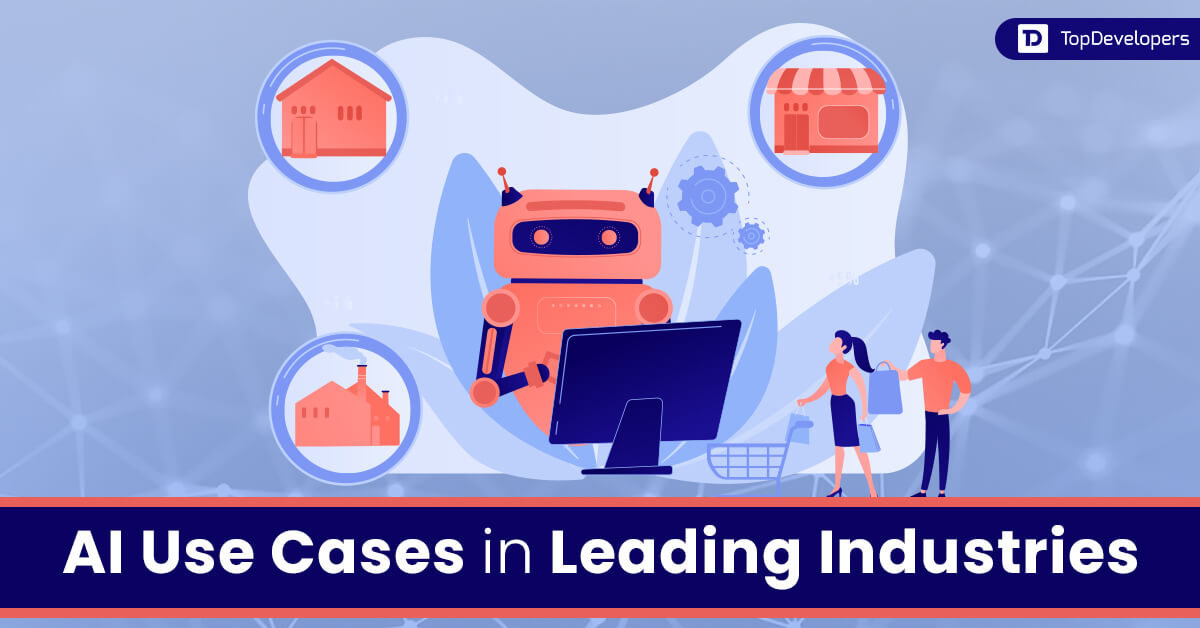
Let’s accept it: every business, regardless of type, size, and niche, faces challenges that impact growth and performance. Thanks to the Industry 4.0 revolution, businesses across different verticals have been able to solve these pressing issues. Artificial Intelligence (AI) is the core of the Industry 4.0 revolution, allowing businesses to innovate and go beyond the competition.
With technological enhancements, leveraging AI strategically in different use cases enables businesses to automate operations, optimize resource utilization and predictive analytics, and make data-driven decisions. According to Grand View Research, the annual growth in AI across different industries is set to grow at 37.3% between 2023 and 2030.
That’s why the market for AI technologies is expected to grow by more than $1.8 Billion by 2030. The stunning growth signals that businesses use AI as air to sustain, develop, and outdo the competition. This blog will let you explore the business benefits of using AI in industries, how top industries use Artificial intelligence with different use cases, and how to implement AI in business operations. Browse them all.
Table of Contents
Business Benefits of Using AI Across Different Industry Verticals
Mastering the art of AI implementation in various businesses strategically steers the business in the right direction. Artificial intelligence (AI) can offer a range of benefits to businesses across various industries, including:
Reduced Human Intervention
Human errors are no exception and negatively impact business processes or operations. AI-powered machine intelligence surpasses human capability, enabling businesses to perform actions without human participation. When machines are programmed with pre-trained AI algorithms, it helps solve business challenges with little to no human involvement.
Eliminate Manual Work
Repetitive tasks waste a lot of time and energy for business employees and don’t allow them to work creatively. AI in different industries automates manual tasks that are mundane jobs for employees. It, in turn, improves employees’ productivity.
24/7 Availability
Business employees work in shifts, and ensuring round-the-clock availability is implausible. AI can work incessantly all the time and provide prompt services as required. It’s crucial for customer support services to improve customer experience.
Informed Decision Making
Considering several factors before making decisions is essential, but it eats up a lot of time. In the dynamic world, where decisions are not taken instantly, you lose the opportunity to compete and facilitate insights-based decision-making in real time.
Ensure Operations Continuity in Hazardous Conditions
AI-powered systems can work in places such as on the ground, underwater, or in the air where human beings cannot. In such scenarios, AI solutions ensure the operations get executed even in worse situations. For example, defusing bombs, lifting heavy weights, or other risky conditions.
Which Industries Will Be Impacted the Most by AI?
AI technology with different combinations of technology subsets is revolutionizing various industry verticals. Market-leading innovations in AI use cases integrate intelligence into processes, operations, and workflow. Walk through all the AI use cases and how they impact the industries.
Transportation & Logistics
AI is transforming transportation and logistics by enabling faster deliveries, cost optimization, and real-time visibility across supply chains. The following AI use cases are reshaping logistics operations:
- Route optimization: AI analyzes live traffic data, weather conditions, fuel prices, delivery time windows, and road restrictions to generate the most efficient delivery routes. It continuously adjusts routes in real time to avoid congestion, minimize idle time, and reduce carbon emissions. This improves delivery speed and lowers transportation costs.
- Fleet management: AI-powered systems monitor vehicle health, engine performance, tire pressure, fuel usage, and driver behavior. Predictive analytics helps schedule maintenance before breakdowns occur, improves driver safety, reduces insurance risks, and extends the lifespan of vehicles.
- Demand forecasting: AI evaluates historical shipment data, seasonal trends, customer behavior, and market fluctuations to predict future logistics requirements. This helps companies plan warehouse capacity, manage workforce allocation, and prevent delays caused by sudden demand surges.
- Autonomous logistics: AI enables self-driving trucks, warehouse robots, and drone delivery systems to operate safely with minimal human intervention. These systems use computer vision, sensors, and real-time data processing to navigate environments, avoid obstacles, and complete deliveries efficiently.
- Warehouse optimization: AI automates inventory tracking, order picking, storage placement, and space utilization. Smart algorithms identify fast-moving products, reduce picking errors, speed up fulfillment, and improve warehouse throughput.
Energy
The energy sector uses AI to improve grid efficiency, manage renewable sources, and reduce energy waste. AI-driven systems analyze real-time data from power networks to optimize energy production and distribution.
- Smart grid management: AI balances energy loads by predicting consumption patterns and dynamically adjusting electricity flow. It detects anomalies in the grid and reroutes power automatically to prevent outages and stabilize supply.
- Predictive maintenance: AI analyzes sensor data from turbines, transformers, and pipelines to detect early signs of wear, corrosion, or overheating. This allows timely repairs, reduces costly downtime, and increases equipment lifespan.
- Renewable energy forecasting: AI models predict solar and wind power generation using weather data, satellite imagery, and historical output. This improves energy planning and reduces dependence on fossil fuels.
- Energy demand forecasting: AI predicts peak usage times based on customer consumption behavior, temperature changes, and regional demand patterns. Utilities can adjust generation levels and reduce energy waste.
- Energy efficiency optimization: AI monitors industrial plants, commercial buildings, and data centers to detect energy leaks, recommend efficiency improvements, and reduce overall power consumption.
Utilities
Utilities rely on AI to modernize infrastructure, reduce service disruptions, and improve operational efficiency. AI systems process massive data from smart meters, sensors, and control networks to enable predictive and automated decision-making.
- Fault detection: AI continuously monitors grid and pipeline sensor data to identify voltage irregularities, pressure drops, and abnormal usage patterns. It flags potential equipment failures before they cause service breakdowns, allowing faster response and reduced downtime.
- Outage prediction: AI correlates weather conditions, load stress, and historical outage data to forecast potential service disruptions. Utility providers can deploy maintenance teams proactively, minimizing the impact on customers.
- Demand prediction: AI forecasts electricity, gas, and water usage based on consumption trends, climate data, and population growth. This helps utilities optimize energy generation, water distribution, and network capacity.
- Water loss detection: AI uses pressure, acoustic, and flow data to detect leaks and unauthorized usage in water pipelines. This significantly reduces non-revenue water loss and improves sustainability.
- Customer service automation: AI-powered chatbots and virtual assistants handle billing inquiries, outage alerts, service requests, and complaint tracking, improving response time and customer satisfaction.
Agriculture
AI is transforming agriculture through precision farming, predictive analytics, and automation, helping farmers increase productivity while reducing resource waste.
- Crop health monitoring: AI analyzes drone images, satellite data, and field sensors to detect plant stress, nutrient deficiencies, and pest infestations at an early stage, preventing large-scale crop loss.
- Yield prediction: AI predicts harvest output by evaluating soil quality, weather trends, planting density, and crop growth patterns, allowing farmers to plan supply and pricing strategies.
- Precision irrigation: AI recommends optimal watering schedules based on soil moisture, rainfall forecasts, and crop needs, minimizing water wastage and improving crop quality.
- Automated harvesting: AI-powered machines identify ripe crops using computer vision and harvest them efficiently, reducing labor costs and improving speed.
- Soil analysis: AI evaluates soil composition, pH levels, and nutrient content to suggest fertilizers and crop rotation strategies for higher yield.
Food
AI is optimizing food production, distribution, and quality control across the entire food supply chain.
- Demand forecasting: AI predicts customer demand using historical sales, seasonal trends, and regional preferences, reducing food waste and inventory shortages.
- Quality inspection: AI-powered vision systems detect spoiled, contaminated, or damaged food products during processing, ensuring compliance with safety standards.
- Supply chain optimization: AI tracks inventory levels, temperature conditions, logistics routes, and delivery timelines to maintain food freshness and reduce delays.
- Personalized nutrition: AI recommends diet plans and food products based on individual health goals, allergies, and consumption patterns.
- Automated food preparation: AI-driven machines assist in standardized cooking, portion control, and packaging processes, ensuring consistency and efficiency.
Entertainment & Media
AI is redefining how content is created, distributed, and consumed by enabling hyper-personalization, faster production cycles, and deeper audience insights.
- Content recommendation: AI analyzes viewing history, watch time, content ratings, search behavior, and device usage to suggest movies, shows, music, and articles that match individual preferences. This increases engagement, session duration, and platform retention.
- Automated content editing: AI tools generate video highlights, add subtitles, enhance audio quality, adjust lighting, and perform scene detection automatically. This significantly reduces post-production time and lowers content creation costs.
- Audience analytics: AI evaluates user behavior, engagement trends, demographic data, and content performance metrics to help media companies understand what resonates most with their audience and optimize future content strategies.
- AI-generated content: AI models create scripts, music, graphics, voiceovers, and animations, accelerating creative workflows while maintaining consistency across platforms.
- Sentiment analysis: AI tracks social media mentions, reviews, and viewer comments to measure audience reactions, identify trending topics, and adjust content strategies in real time.
Advertising & Marketing
AI is transforming advertising and marketing through data-driven targeting, predictive analytics, and automated creative optimization.
- Customer segmentation: AI groups customers based on browsing behavior, demographics, purchase history, and engagement patterns. This allows marketers to target the right audience with relevant messages.
- Predictive lead scoring: AI analyzes past conversion data to identify high-value leads and prioritize prospects most likely to convert, improving sales efficiency.
- Campaign optimization: AI continuously monitors ad performance and adjusts bids, channels, creatives, and budgets in real time to maximize return on ad spend (ROAS).
- Personalized advertising: AI delivers customized content, offers, and recommendations across email, social media, search, and display platforms based on individual user preferences.
- Content automation: AI generates ad copy, visuals, headlines, landing page text, and email campaigns at scale, reducing creative turnaround time and improving campaign consistency.
Customer Service
AI is taking the customer service industry to the next level with the following use cases:
- Guide customer service agents: AI tools help businesses improve the productivity and efficiency of customer service agents by allowing them to resolve issues faster with tailored responses. Providing the required knowledge beforehand enables navigating through problems effortlessly.
- Automate workflow: AI helps customer acquisition by intelligently routing customer requests to the right agent based on their intent, sentiment, and language. Ticket context analysis by AI helps provide the right, pre-written responses.
- Improve service quality: AI improves quality assurance by quickly reviewing customer service agents’ performance and suggesting training to fill the knowledge gaps. This evaluation helps reduce customer churning.
- Enhance call management: People still prefer to engage with customer service agents on phone calls when their queries are complicated. AI helps summarize customer interactions and transcribe them, which helps in training agents. This training allows agents to improve phone call interactions.
- Increase revenue: Connecting AI with CRM or other tools allows customer support to improve interactions and increase up-sell or cross-sell. It leads to increased conversion, which grows revenue.
Healthcare
The healthcare industry is taking great strides with AI applications that we will see in different use cases:
- Medical imaging: Quick and accurate analysis of medical images such as X-rays and CT scans allows healthcare professionals to recommend prescriptions in reduced time. AI enables precise analysis that helps diagnose diseases earlier and proactively start treatment.
- Personalized treatment: Tailored treatment plans bring effective results to the patients. AI helps deliver personalized treatment by analyzing the patient’s health history, genetic data, and lifestyle. For example, AI detects the signs of significant health conditions like- cancer and recommends chemotherapy drugs based on the patient’s genetic profile.
- Remote assistance: When patients need remote assistance during a medical emergency, AI-powered virtual assistants enable monitoring the patients and providing treatment remotely. AI chatbots can also handle appointment scheduling and administrative tasks, provide medical tips, and perform more than automated administrative tasks.
- Fraud detection: AI accelerates detecting and preventing fraud by enabling real-time analysis of healthcare data and other activities. AI immediately spots any deviation in the data access or share pattern. For example, AI analyzes healthcare data access trends to flag unauthentic access, ensuring that patients’ data remains secure.
- Accelerate drug discovery: Manual formulations take a lot of time. AI expedites this process with a faster analysis of existing drugs and proposes various formulations to fight diseases. Experts can analyze extensive datasets and identify target drugs at reduced cost.
Manufacturing
Manufacturing-related services and processes that are streamlined with different AI use cases:
- Assembly line integration: AI-driven assembly lines automate processes and ensure error-free production without human intervention. The machines will perform the tasks defined by ML algorithms that improve output and business productivity.
- Quality control: AI empowers quality control at the production lines with visual inspection involving image or video footage comparison to identify the issues. This approach ensures high-quality standards are met during product creation and defects are reduced to zero.
- Manufacturing product design: AI makes suggestions for product designs when raw material, size, weight, cost, and manufacturing methods are entered. It helps manufacturers view, assess, and select the best design that drives expected outcomes, which speeds up the design process.
- Order management: Order management in manufacturing requires making entries for orders, tracking inventory, managing multiple orders across different channels, and planning inventory accordingly. AI automates order management while adapting to market fluctuations and marketing strategies.
- Spot defects: The self-learning capability introduced by AI in conventional manufacturing systems enables finding defects at earlier stages without human involvement. It helps reduce manual checks and false alarms, which improves efficiency.
Retail
Using AI in the industry, especially the retail industry has reshaped how customers sell and purchase products. Following artificial intelligence use cases that lend a hand to the retailers:
- Inventory management: AI allows retailers to optimize inventory levels with demand forecasting based on customers’ buying patterns and trends, seasonal fluctuation, etc. It eliminates out-of-stock or under-stock cases, ensuring the product is always available and resulting in the best customer experience.
- Dynamic pricing optimization: Changing a product’s price is vital, but intelligent adjustments that keep the price competitive are equally important. AI facilitates dynamic price optimization with analysis of market conditions, competitor’s prices, and customers’ demands, which helps maximize profits.
- Personalized shopping experiences: Personalization of shopping experiences stays at the heart of retail shopping. AI enables such experiences with unique insights gathered by analyzing customer behavior, preferences, and buying history. The personalized experiences drive engagement and sales as customers get recommendations for the products they like or prefer.
- Chatbot-powered customer service: Informed order deliveries, instant support, and other assistance are always appreciated by retail customers. AI chatbots provide contextual answers to questions, assist with order tracking, and can handle other queries that increase customer satisfaction, which uplifts loyalty.
- Visual search: In this age, people like to search for products directly with the images they have rather than voice or text. AI-enabled visual search allows customers to search for products by uploading photos, and image recognition technology searches products with great accuracy and automatically showcases product tags.
Finance
AI use cases in banking and finance are increasing productivity and reducing risks with machine intelligence. Here are the AI use cases for industrial transformation:
- Credit scoring: AI calculates credit scores quickly by analyzing customers’ financial information from disparate sources. Accurately assessing customer’s creditworthiness helps banks make lending decisions appropriately.
- Portfolio management: Optimizing investment strategy is not easy for the customers. That’s where AI-driven portfolio management provides customers with personalized financial advice that allows them to make informed decisions and improve portfolio performance with risk assessment.
- Process automation: AI technologies such as OCR help with document scanning and data extraction, automating customer information retrieval, and optimizing financial processes. Such process automation helps financial organizations stay up-to-date with changing compliances and adapt to the changes.
- Contract analysis: Contract management is quite a task that requires continuous review and analysis of legal documents. AI automates this process with NLP technology, wherein important terms, risks, and obligations are extracted from the contract documents. It helps ensure the contract is flawless, complies with regulations, and operational excellence.
- Anti-money laundering: A large amount of transaction data analysis with AI models allows fast detection of unusual patterns. It helps identify and stop anti-money laundering activities earlier, mitigating the risks.
Travel
AI is making the travel industry future-ready with different use cases that customers welcome.
- Trip planning: Planning a trip involves a lot of hassle. AI makes it effortless with intelligent suggestions for popular destinations, restaurants, itineraries, and activities that people can do based on their travel preferences and travel history data. Thereby, AI acting as a travel companion makes travel planning a great experience.
- Assisted bookings: People have many queries before booking their travel from restaurant to flight. Artificial Intelligence immediately assists them by providing details about prices, showcasing quick comparisons, and allowing them to make data-driven decisions according to their preferences and budgets.
- Personalized itineraries: AI-powered ChatGPT has excellent potential to help generate customized itineraries with alternative suggestions for destinations in detail alongside FAQs for travel queries. The destination recommendations are based on the user’s schedule, budget, and preferences.
- Feedback analysis: Reviews shared by travelers are a valuable resource for travel companies to improve their services. AI helps gather and analyze the real-time feedback shared on different platforms. Understanding user sentiments helps customize the offerings to enhance customer satisfaction.
- Simplify revenue management: AI ensures transaction accuracy, effortless payment processing, and financial insights generation that enables data-driven financial planning. It leads to sustainable growth and best revenue management.
Real Estate
AI use cases that are adding unmatched reality to the real estate industry.
- Auto-property management: When real estate owners take care of multiple rental properties, then maintenance scheduling, lease administration, and tenant screening are challenging to handle. AI automates flawless property management, ensuring reduced errors, improved efficiency, and increased customer satisfaction.
- Auto-lead generation: AI enables faster identification of potential leads by analyzing prospects’ data, such as demographics, property preferences, and their conversation. Predictive analytics define priority levels for the leads that determine the efforts to put in for every lead, which results in improved conversion.
- Market research and investment: Real estate professionals look for accurate forecasts for the real estate market to make data-driven decisions regarding pricing strategies and investment. AI streamlines market research and investment strategy creation with predictive analytics that consider market trends, investment history, and economic factors for projections.
- Property valuation: Preventing subjective biases, AI ensures fair property valuation with accurate assessment and analysis of property features, market conditions, and property history. Automated property valuation helps buyers or sellers make data-driven decisions.
- Listing description generation: Creating engaging and informative property listing descriptions is difficult for real estate professionals. AI tools using NLP capabilities help create SEO-optimized content that improves property listing quality and increases search engine visibility.
Education
AI use cases that are adding a new dimension to the education industry:
- Personalized learning: Personalized learning engages the student during learning and increases learning outcomes. AI helps create customized content and tailored learning paths based on student’s performance, interests, and grades, enabling adaptive educational experiences.
- Automated grading: Use of AI in the education industry helps to automate the student’s grading process by enabling auto-assessment of quizzes, exams, and assignments. In addition to assessment automation, consistent feedback is provided, saving valuable time for the staff and encouraging an efficient learning environment.
- AI assistant: AI chatbots assist students, staff, and administration with easier access to knowledgebase, contextual answers to queries, and administrative tasks. Real-time support makes the educational process efficient.
- Enhance curriculum: Curriculum planning is a significant endeavor that involves a lot of time and effort. AI can assist in curriculum planning by quickly analyzing educational trends, standards, and gaps and providing suggestions for updates. It helps make informed decisions, ensure educational content relevancy, and improve education quality.
- Secure assessment: Assessing fairness in online exams is all-important. AI facilitates advanced monitoring and authentication techniques that prevent students from cheating in online exams. Hence, educators can maintain academic integrity and ensure a secure exam environment.
Hospitality
AI use cases allow hoteliers and related businesses to serve their customers better.
- Tailored recommendations: Customers’ preferences for accommodation, dining, activities, and services are unique. AI caters to the preferences of every guest coming to the hotel by analyzing their past booking, current browsing behavior, and booking preferences.
- Smart room automation: Hotels are trying to elevate customer experiences by adjusting room temperature and lighting preferences before they enter the room. AI intelligently adjusts the room automatically, which turns hotel rooms into intelligent rooms.
- Guest sentiment analysis: Guest feedback is invaluable to the hotel and lets them know more about the services. With AI-powered sentiment analysis, hotels can analyze reviews, feedback, and social media mentions to find room for improvement.
- Language translation: In the hospitality industry, language differences between staff and guests are a big difference that negatively impacts services. Language differences lead to communication gaps that are fixed by AI-driven language translation. It ensures stellar communication and better service delivery.
- Revenue management: AI helps hotels manage prices strategically and maximize room occupancy, leading to increased booking. It translates into higher revenue, which is best managed using AI.
Fashion
Different industries use AI to make their customers thrive and grow boundlessly. See how AI allows the fashion industry to keep up with the customers and market through the following use cases.
- Upcoming trends projection: Staying ahead of the trends is essential for businesses in the fashion industry. AI helps them make an informed buying decision for a collection that aligns with emerging trends through the analysis of customer behavior, evolving social preferences, fashion blogs, and historical data.
- Styling visual merchandising: Visual merchandising gets up a notch with AI technology with styling recommendations based on fashion trends and customer preferences. AI recommends outfit ideas and product combinations that engage customers during shopping.
- Product recommendation: Customers like to receive notifications or real-time suggestions for fashion collections. AI analyses customers’ purchase history and current browsing patterns to recommend the product that customers are planning to purchase. Such a personalized recommendation approach increases the conversion rate.
- Customization options: In this dynamic world, more customization options are merrier for the customers. AI allows customers to customize the products’ size, color, and design, enabling them to get unique products. It helps meet the need for self-expression and differentiates the business from the competition.
- Customer service: Routine interactions are time-consuming and do not add value to the fashion business. AI chatbots automate interactions and answer customers’ queries contextually instantly. Reduced response time and enhanced customer satisfaction seizes a competitive edge for the fashion business.
Legal Business
Staying legally compliant with machine intelligence is now possible with different AI use cases:
- Legal research: The research process in the legal industry takes time when done manually. AI expedites this process by analyzing legal text, case laws, and other information. The rich insights help legal professionals to make quick decisions backed by data.
- Contract analysis: Similar to legal research, contract analysis is a time-expensive task. AI can accomplish it in minutes by automating contract review and critical clause extraction.
- Document automation: Creating legal documents is not the work of an average Joe. AI can generate flawless documents in reduced time while ensuring document consistency. It results in efficient legal workflows.
- Litigation forecast: Developing litigation strategies and accelerating settlement negotiations involves risks and errors too. AI allows legal companies to predict litigations that further help in legal proceedings using meaningful insights.
- Risk assessment and compliance: Legal risk management is challenging because it involves continuously assessing changing regulations and then updating contracts to stay compliant with regulations and mitigate risks. AI enhances legal risk management by continuously monitoring regulatory requirements and suggesting changes.
How Can You Implement AI in Your Business?
Successful AI implementation in business operations is ensured when it is applied step-by-step to various business processes. Here are the steps;
- Business needs assessment
- Determine AI goals to achieve
- Data preparation to create AI algorithms
- AI tech stack selection
- AI app integration
- Performance evaluation
- Security and Compliance
- Iterate and improve
Final Thoughts
The future of AI is infinite. Regardless of the industry vertical, businesses are experiencing a paradigm shift with significant changes that AI technology is bringing. AI use cases, from task automation to customer service and personalized offerings to improved productivity, are unleashing boundless possibilities. Unlock the true potential of AI for your business by partnering with a reliable AI development company. Let’s change the game!
Derek Cohen
| Feb 4, 2026
Analyzing business activities and data to formulate the best business development ideas is where I earn appreciations and remunerations. I’m an ardent reader, business adviser, gadget aficionado and an amateur yet an avid writer. My urge for innovative writing evokes every time I come across new gadgets, neo technology and novel technical events.