Conversational AI vs Generative AI: Explained
 By
Derek Cohen
|
Feb 6, 2026 |
Artificial Intelligence
By
Derek Cohen
|
Feb 6, 2026 |
Artificial Intelligence

Artificial intelligence has evolved into two dominant paradigms powering modern applications—Conversational AI and Generative AI. While both rely on advanced machine learning models, their architectures, objectives, and business use cases differ significantly.
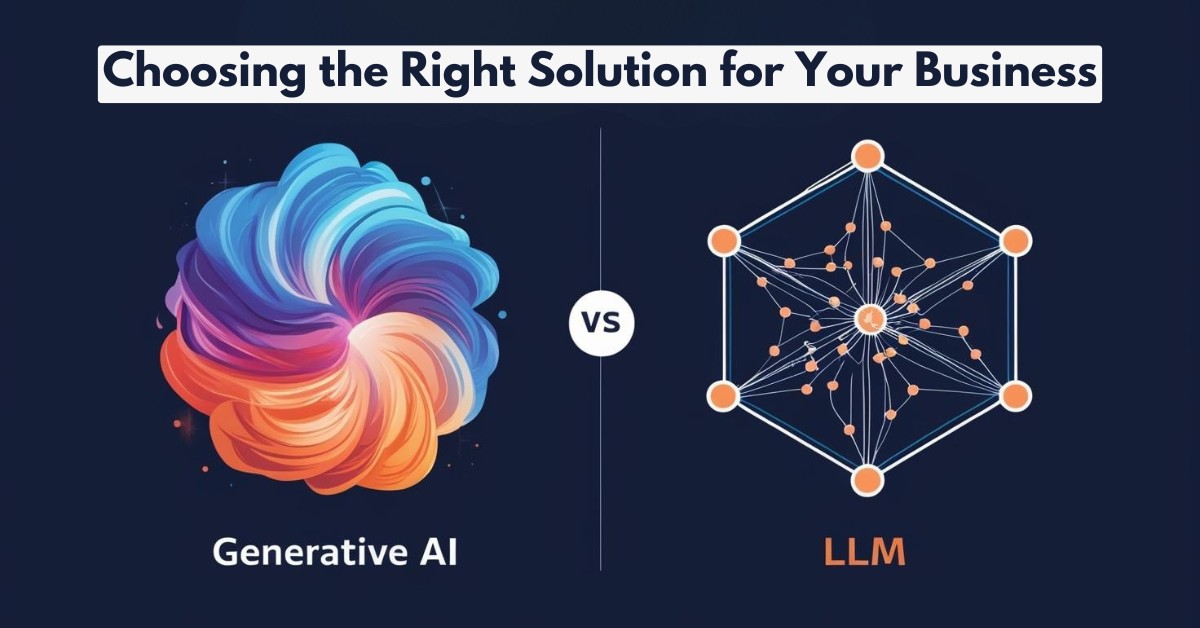
Conversational AI is designed to understand user intent and deliver structured, goal-oriented responses. Generative AI, on the other hand, uses large language models (LLMs) to create original content, synthesize information, and simulate human-like reasoning.
Understanding the difference between these two AI systems is critical for businesses evaluating automation, customer experience optimization, and AI-driven growth strategies.
Table of Contents
What is Generative AI?
Generative AI is a part of the Artificial Intelligence genus. It is capable of producing content faster and more accurately than your best human resource on high wages! The generative AI revenue all over the world is expected to touch US $1.3 trillion by 2032, according to a report.
Today, you can consider generative AI a powerful companion that crafts everything from complex images to lengthy texts. It is like a creative partner who is always there when you need it. With this usefulness, the impact of generative Artificial Intelligence on productivity worldwide cannot be ignored, Statista quotes.
What Are the Benefits of Generative AI?
Generative AI has revolutionized creativity and personalization in content generation like never before. Automatizing design tasks and boosting decision-making through data-driven insights are the primary benefits. It saves a lot of time and this technology potentially amplifies human productivity.
Here are some of the noteworthy benefits:
Enhanced Content Creation
Generative AI has revolutionized content creation. It has enabled quicker generation of unique and top-notch quality materials all across media formats such as texts, images, and motion graphics.
Scaling Personalization
You can scale in personalization and make it hyper-customized to a specific target audience or customers. Tailored products pitched to individuals’ preferences and choices are possible at a massive scale.
Automation of Repetitive Tasks
Mundane tasks? No worries. Generative AI frees up manhours for better creativity and productivity. You focus on more essential tasks while Generative AI handles repetitive ones with ease and accuracy.
Advanced Data Analytics
Generative AI is a magic tool for sophisticated data analysis. It can simply uncover hidden insights and patterns beyond your human analysts’ eyes. Optimize decision-making based on terrific data collection.
Real-Time Decision Support
Generative AI supports real-time information fetching and analyzing. This helps instant responses to dynamic scenarios. Ultimately, you witness unparalleled enhancement in operational efficiency.
Cost Efficiency
You don’t need to shell out millions! With Generative AI at the helm, you significantly save money by streamlining and automatizing business processes with minimum human intervention. Customize resource allocation as well.
Increased Innovation and Creativity
With generative AI tools at your service, your enterprise adapts innovation and creativity at an eye-blinking fast pace. Push your business boundaries to determine what is possible in production or services.
How Does Generative AI Work?
The mechanism of Generative AI is a thoughtful process that involves logically crafted analytics and carefully designed steps that align with your business objectives.
Here are the steps:
Data Collection and Preprocessing
In this essential phase, large datasets are gathered and prepared through cleansing, normalization, and enhancement to train the AI model effectively.
Model Training
In this step, the Artificial Intelligence model learns to predict and produce new data points by tracing patterns in the predefined data using algorithms.
Input Prompting
Input prompting involves providing a prompt or query that AI utilizes as a beginning point to grasp the requirements of tasks and initiate the generating process.
Pattern Recognition and Generation
Here, Artificial Intelligence analyzes the input and identifies hidden patterns and relationships within the information provided. It then starts building content or prediction.
Output Refinement
This phase involves generating output that is refined and assured of accuracy, relevance, and coherence. This often involves multiple iterations to improve the final results or outcome.
Continuous Learning and Fine-Tuning
In this final phase, AI undergoes continuous training with newer information, inputs, and amendments to enhance its performance and adapt to the changing environment.
What is Conversational AI?
Conversational AI means your tech-savvy pal who chats in natural language and makes interactions with machines in a way that feels more human and not robotic. In short, it’s the brain behind those chatting bots who ping you anytime anywhere with ‘What can I do for you?’. The conversational AI sifts through data and picks the best responses in the blink of an eye.
The global conversational AI market touched a whopping US $7.61 billion in 2022 and is charging up itself with a CAGR of 21.6% from 2023 to 2030 according to the Grandview Research in one of its reports.
What are the Benefits of Conversational AI?
Conversational AI is like a digital chameleon that can adapt to any environment based on user interactions. This beautiful AI model can provide a personalized experience as it serves as a wizard at decoding human language and the mood hidden in it. Conversational AI can convert complexity into breezy smooth jobs.
Here are the best benefits of conversational AI:
Improved Customer Experience
Conversational AI can transform user interactions and offer intuitive customer support with an unparalleled experience that feels human-like.
24/7 Availability
Tools powered by the conversational AI model are always on the clock – ensuring end-to-end support without any breaks!
Saves You Bucks
Having conversational AI in your business apps is like having a real penny-pincher. It slashes operational overheads without skimping on quality services.
Hyper-Personalized Interactions
Being a digital chameleon, conversational AI adapts to individual preferences to provide UX par excellence. Your customers feel homely!
Faster Response Time
It’s way quicker than your best human executives on high wages. Conversational AI delivers instant replies keeping pace with the speed of thoughts.
Future-Ready System
Conversational AI-powered tools and solutions grow as your business does. You effortlessly tackle the influx of queries without any sweat.
Data-Driven Strategies
Conversational AI is a treasure trove of user inputs and data to offer fantastic customer service through favorable and logical insights.
How Does Conversational AI Work?
Conversational AI operates on a blend of Natural Language Processing, intent recognition, and other steps. Consider it as a digital partner who works harder to understand human inputs for hidden moods and messages.
Below are the steps that make conversational AI work:
Natural Language Processing
NLP is the tech wizardry step to build conversational AI for any business. It helps machines grasp human lingo and turn your casual talks into something that machines can digest.
Intent Recognition
This is where your conversational AI gets a ‘Sherlock’ avatar and decodes your sentences – reading between the lines and gaining what exactly your intention is.
Dialogue Management
This step is actually conversational AI’s inner conductor that orchestrates the communication flow and keeps you on track no matter how intensely you fluctuate!
Response Generation
The core phase of conversational AI’s task – here your AI will turn into a chatterbox and will craft a reply sharper. If well trained, it’ll make sure that it does spit out robotic replies.
Continuous Learning
Your conversational AI ain’t human; it has a never-ending homework. It keeps learning from its responses and gets smarter than you imagine. So, the next time you meet it’ll be better than before.
Integration With Backend Systems
The final phase of the conversational work mechanism is deploying it at the desired place. It’s the behind-the-scenes grunt job where AI penetrates databases and provides classy services.
Key Differences Between Conversational AI and Generative AI
While both generative AI and conversational AI harness Artificial Intelligence, they serve distinct purposes. Conversational AI is meant to interact with humans in a natural language to simulate the overall conversation; hence, it’s used for virtual assistants and chatbots. On the other hand, generative AI concentrates on new content like code, illustration, or text. Typically, it’s used in content creation.
Let’s see the segmented differences:
Data Input and Output
- Conversational AI: it typically feeds on textual data like conversation transcripts or user inputs. It splits out answers in the form of NLT (Natural Language Text). You can consider this as a chat with your friend.
- Generative AI: this model gobbles up a gamut of datasets from audio to images to texts and even programming code. Generative AI can produce new content in myriad forms such as drawing or writing a poem. Consider this as an artist with algorithms.
Use Cases and Applications
- Conversational AI: this is all about customer services and their involvement. Virtual assistants, chatbots, and language translation systems are some of the examples. Consider them friendly assistants always ready to help you out!
- Generative AI: it is more like a trump card – anything is possible with it such as generative AI in education can customize learning resources attuned to students’ progress. It is like a Swiss Army knife!
Underlying Models and Techniques
- Conversational AI: this AI often depends on sequence-to-sequence transformers and models that are crafted to churn and produce sequential data such as texts. Think of teaching a husky to talk but a bit more complex.
- Generative AI: this AI can undertake myriad models like VAEs (variational autoencoders) and GANs (generative adversarial networks). In this scenario, think of magic tools that can create new content out of almost nothing!
Human Interactions
- Conversational AI: for this section, conversational AI is about human-like talks. Consider it having a conversation with a friend but a kind of machine designed with empathy and grasping power.
- Generative AI: here, it is more of a tool -maybe a keyboard or a paintbrush engineered to help humans build newer things. Not associated with any empathy but it could be superbly creative.
Level of Autonomy
- Conversational AI: in this section, conversational AI is generally limited by the training materials. In most cases, this AI cannot think outside the box and hence it’s difficult for it to be automath (learning things by self).
- Generative AI: it is automatic – learn things automatically, without much help. It can generate ideas out of its environment and can build responses. Call it a creative genius and it can even surprise its makers!
Response Format and Complexity
- Conversational AI: it typically generates responses that are text-based. Consider it as a conversation you have with your friend over text. The responses could be complex or simple based on the tasks.
- Generative AI: this AI can produce myriad content formats including audio, code, images, and texts. Call it a jack-of-all-trades as it is capable of creating anything from anything.
Contextual Understanding
- Conversational AI: it is good at understanding context but this AI model can get a bit confused at times. It’s like a human who follows a conversation but then doesn’t completely get the gist of it.
- Generative AI: here, it is a bit ahead of its buddy. It can understand context and can do better in giving relevant responses. Call it a supercomputer that analyzes huge datasets and finds patterns.
Scalability and Resource Requirements
- Conversational AI: for this section, conversational AI could be scalable but it will also be resource-centric. Call it a small business that grows but necessitates the right infrastructure and tools.
- Generative AI: this AI is more scalable and more resource-based. Consider it as a metro city that grows and along with it also demands infrastructure.
Conversational AI vs Generative AI: A Practical Comparison
Conversational AI and Generative AI hold transformative power for businesses of all kinds and sizes. Generative AI produces novel content; however, conversational AI masters interpret and reply to human languages. Enterprises use either model to transform the entire customer interaction and service automation. As a matter of fact, you can partner with Artificial Intelligence companies to build business solutions for any of these models.
Let’s explore comparing Generative AI and Conversational AI from business views:
Customer Support and Services
- Conversational AI: virtual assistants and chatbots can tackle routine calls and queries. This can free up human agents for better initiatives. This is available 24/7.
- Generative AI: it can generate personalized replies to user inputs and thus remarkably enhance UX. Also, it can analyze feedback and identify trending things for improvement.
Marketing and Content Creation
- Conversational AI: chatbots engage with prospective users and can gather leads. Also, they help you provide personalized recommendations for products and services.
- Generative AI: this model can build high-quality content like blog posts, articles, advertisement copywriting, and social media posts. Also, it can personalize content based on individual preferences.
Sales and Lead Generation
- Conversational AI: chatbots here can qualify leads and also reply contextually to inputs. Also, they can schedule appointments with accuracy and no overlapping. Many also use this to provide customized sales pitches.
- Generative AI: here, it can build customized sales emails and proposals to increase the conversion ratio. Also, it’s possible to analyze customer data to recognize leads.
Data Analysis and Insights
- Conversational AI: here, it can gather user input or customer feedback and insights through NLI (Natural Language Interactions).
- Generative AI: on the other hand, it can analyze large datasets to trace trends and hidden patterns. This provides remarkable insights for decision-making.
Workflow Automation
- Conversational AI: in this field, conversational AI automates routine and repetitive tasks like processing orders or scheduling meetings.
- Generative AI: for workflow automation, generative AI automatizes complex tasks like creating presentations and building reports accurately and quickly.
Employee Training and Development
- Conversational AI: tools backed by conversational AI can provide personalized training and development sessions. This could be tailored to each employee’s requirements and gray areas.
- Generative AI: in this field, this AI can create interactive sessions simulations, and quizzes. This could improve employee involvement and grooming.
Product Design and Innovation
- Conversational AI: it is possible to gather feedback from users and employees to inform product development and refine it based on inputs.
- Generative AI: here, you can build new product ideas and designs keeping innovation and uniqueness at the center.
Personalization and Customer Experience
- Conversational AI: it can make hyper-customized recommendations and support. Overall, there is a remarkable improvement in customer satisfaction.
- Generative AI: it can build personalized content and improve user experience. Also, it is possible to tailor interactions to customer’s choices.
Technical Architecture Comparison
Conversational AI and Generative AI are built on entirely different system architectures, even though both rely on machine learning and natural language processing. These architectural differences affect how each system learns, processes language, handles context, and scales in production.
Core Model Design
Conversational AI systems follow a modular, pipeline-based architecture. Each component performs a fixed role:
- Natural Language Understanding (NLU): classifies user intent and extracts entities
- Dialogue Manager: decides the next action based on predefined logic
- Response Generator: selects or fills response templates
This AI architecture depends heavily on intent taxonomies, training utterances, and rule-based policies.
Generative AI uses end-to-end transformer architectures trained to generate text token by token. Instead of selecting responses from predefined flows, the model creates new output dynamically using self-attention and probabilistic language modeling.
Training & Learning Process
Conversational AI is trained on labeled, structured datasets. Every new use case requires adding intents, examples, and rules. This makes training predictable but rigid.
Generative AI is trained using self-supervised learning on massive unstructured datasets (text, code, and multimodal content). It then undergoes fine-tuning and reinforcement learning from human feedback (RLHF) to align with real-world tasks.
This allows generative models to generalize to unseen queries without explicit intent definitions.
Context Handling & Memory
Conversational AI maintains context through session states, slots, and dialog history. Memory is limited to predefined variables and usually resets between sessions.
Generative AI uses attention mechanisms and embeddings to retain semantic meaning across long conversations. It can reference earlier inputs, adapt tone, and maintain multi-turn context without explicit rules.
Response Generation & Reliability
Conversational AI retrieves pre-approved, deterministic responses, which ensures accuracy but limits flexibility.
Generative AI produces dynamic responses in real time, enabling creativity and personalization. However, without grounding systems such as retrieval-augmented generation (RAG) or safety filters, it can generate inaccurate information.
Infrastructure & Cost Implications
Conversational AI is lightweight and runs efficiently on standard servers. Costs are predictable and scale linearly with traffic.
Generative AI requires GPU/TPU infrastructure and scales based on token usage. Operational costs fluctuate with conversation length, complexity, and volume.
Conversational AI prioritizes control and reliability, while Generative AI prioritizes flexibility and intelligence. Most enterprise systems now adopt a hybrid architecture, where conversational workflows are powered by generative models for natural, context-aware responses.
Which AI Model Is for You?
Conversational AI vs. generative AI has no ending as both are powerful tools that can enhance your business profits. As Artificial Intelligence continues to advance, we can certainly anticipate better innovation and impactful applications of these models; nevertheless, to choose the right one for your business, consider all the factors mentioned above. Depending on that, you can either contact conversational AI companies or generative AI development companies to partner with and build customized business solutions.
Conclusion
Conversational AI and Generative AI are not competing technologies—they are complementary. Conversational systems excel at workflow automation and transactional engagement, while generative models unlock creativity, personalization, and knowledge generation.
Businesses that strategically combine both gain faster resolution times, improved customer satisfaction, and scalable AI capabilities.
As AI adoption accelerates across industries, selecting the right model architecture will define competitive advantage in customer experience, marketing, and enterprise automation.
FAQs regarding conversational AI and generative AI
Is ChatGPT conversational AI or generative AI?
ChatGPT is fundamentally a generative AI system built on a large language model (LLM) architecture. It generates responses dynamically based on patterns learned from vast datasets rather than selecting from predefined scripts. While it is often used in a conversational format, its core technology is generative, not traditional conversational AI.
Which is better for business automation: conversational AI or generative AI?
Conversational AI is more suitable for structured, rule-driven automation such as customer support workflows, appointment scheduling, and order tracking. Generative AI is better for tasks that require flexible language generation, content creation, and knowledge-based assistance. The right choice depends on whether the business needs predictable processes or adaptive responses.
Can conversational AI and generative AI be used together in one system?
Yes, many enterprises use a hybrid approach where conversational AI manages the workflow and business rules, while generative AI produces natural language responses. This combination allows organizations to maintain control over processes while benefiting from the flexibility and intelligence of generative models.
What are the main risks of using generative AI in enterprise applications?
Generative AI can sometimes produce inaccurate or misleading information, known as hallucinations, and may expose sensitive data if not properly secured. There are also concerns around compliance, bias, and lack of transparency in model decisions. These risks can be reduced by using retrieval-augmented generation, access controls, and human review mechanisms.
Does generative AI completely replace traditional chatbots?
Generative AI does not fully replace traditional chatbots, especially in environments that require strict control and reliability. Instead, it enhances chatbot systems by making conversations more natural and context-aware, while traditional rule-based logic continues to handle structured tasks and compliance requirements.
Derek Cohen
| Feb 6, 2026
Analyzing business activities and data to formulate the best business development ideas is where I earn appreciations and remunerations. I’m an ardent reader, business adviser, gadget aficionado and an amateur yet an avid writer. My urge for innovative writing evokes every time I come across new gadgets, neo technology and novel technical events.