OTT Video Streaming App Development Cost in 2025-2026: Features, Process & Models
 By
Derek Cohen
|
Nov 10, 2025 |
App Development
By
Derek Cohen
|
Nov 10, 2025 |
App Development
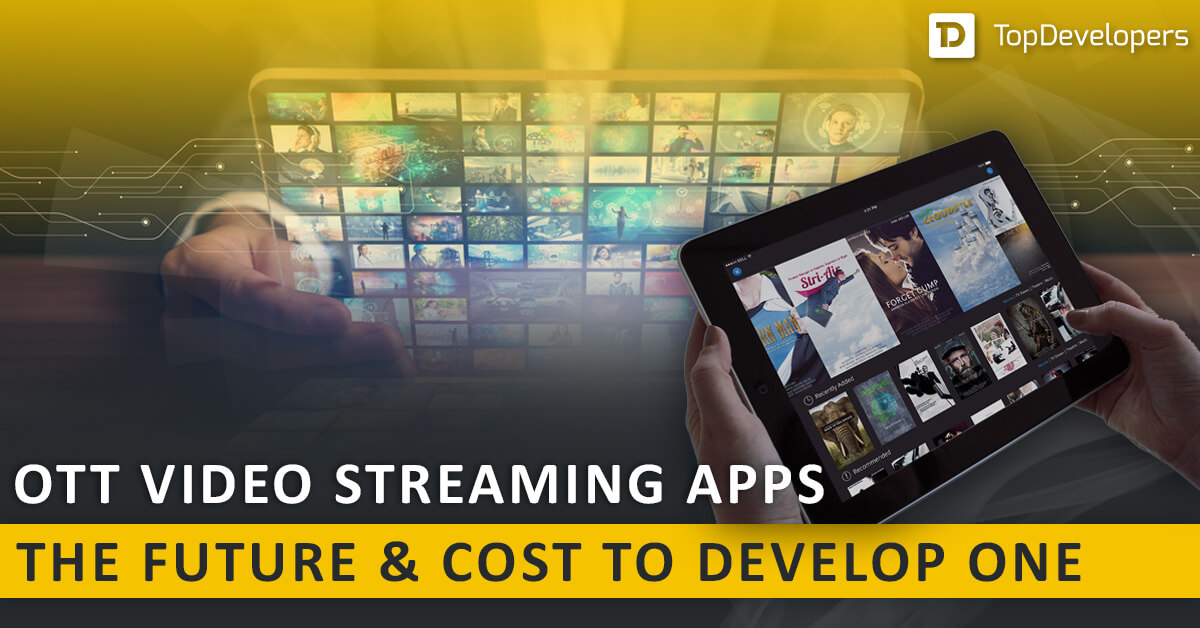
The shift from scheduled television to on-demand streaming has accelerated into full gear. OTT video streaming apps are no longer niche platforms—they are becoming central to how audiences consume video content across devices and geographies. According to recent data, more than 5.27 billion people are estimated to use OTT services in 2025, and the global market revenue is forecasted to exceed US$ 316 billion this year.
For startup founders, media businesses and developers alike, building a competitive OTT video streaming app in 2025 or 2026 means making smart decisions around cost, features, business model and deployment strategy. This guide walks you through what you need to know—from monetization models and key app features to the detailed cost breakdowns and development process for creating a streaming platform.
Whether you are planning to launch a niche streaming app or scale an existing platform globally, understanding the full picture of OTT app development cost is critical to aligning budget, technology stack and long-term strategy.
Table of Contents
What Are OTT Services?
OTT stands for Over The Top and refers to video streaming services that deliver content directly over the internet without depending on traditional cable, satellite, or broadcast networks. According to Wikipedia, OTT media services distribute audio and video content online, bypassing legacy media distribution methods entirely.
Today, OTT platforms allow users to stream their favorite shows, movies, or live events on smartphones, tablets, smart TVs, and laptops. This freedom to choose when and where to watch has completely reshaped media consumption habits. As per eMarketer, global subscription-based OTT video viewers are expected to surpass 2.25 billion by 2025, reflecting a strong demand for flexible streaming experiences.
The popularity of OTT platforms is driven by three defining characteristics.
1. Global Reach and Flexibility
OTT services operate over the public internet, which makes it easier for businesses and developers to distribute content to audiences worldwide. Unlike traditional broadcasting systems, OTT apps can be scaled across multiple devices and markets without major infrastructure investments.
2. Personalized and On-Demand Viewing
Users today prefer content tailored to their interests instead of scheduled programming. OTT platforms allow complete control over playback with options to pause, rewind, resume, and download content. Advanced algorithms recommend videos based on user behavior, improving engagement and retention.
3. Innovative Business Models and Technologies
Modern OTT platforms integrate various monetization models such as subscriptions, advertisements, or hybrid approaches. The integration of 5G connectivity, AI-based recommendations, and multi-CDN content delivery improves performance and viewing quality. As Enveu highlights, the global OTT market continues to expand rapidly, making it an essential segment for businesses entering the digital entertainment space.
Understanding OTT services and how they differ from traditional television systems is essential before estimating app development costs or planning the features of a new video streaming platform.
Importance of OTT Video Streaming App Development
OTT video streaming apps have become a primary medium for global entertainment, offering users freedom, flexibility, and personalization that traditional television cannot match. With worldwide OTT video revenue projected by Statista to surpass 400 billion US dollars by 2027, investing in OTT app development has become a strategic move for businesses seeking higher engagement, brand visibility, and diversified revenue opportunities.
1. Expanding Market Reach
OTT apps enable businesses to reach audiences across geographies without relying on physical distribution, providing a scalable and cost-efficient content delivery model.
2. Targeted Audience Engagement
Advanced analytics and dynamic ad placement allow precise audience segmentation, ensuring that every advertisement or recommendation reaches the right viewer.
3. Data-Driven Growth
Built-in analytics help track user behavior and performance metrics, allowing businesses to refine content and marketing strategies based on measurable insights.
4. Multiple Monetization Options
Subscription, advertisement, and transactional models offer flexibility to design revenue streams that suit audience behavior and market demands.
5. Personalized User Experience
AI-powered recommendations, multilingual content, and watchlists enhance user satisfaction, improving customer retention and long-term loyalty.
6. Seamless Cross-Device Integration
From smartphones to smart TVs, OTT platforms provide a consistent viewing experience across multiple devices, strengthening brand reach and engagement.
Investing in OTT app development today allows businesses to establish stronger digital presence, create recurring revenue models, and deliver content experiences aligned with modern consumer expectations.
Why Are OTT Apps Better Than Traditional Cable Services?
Convenience
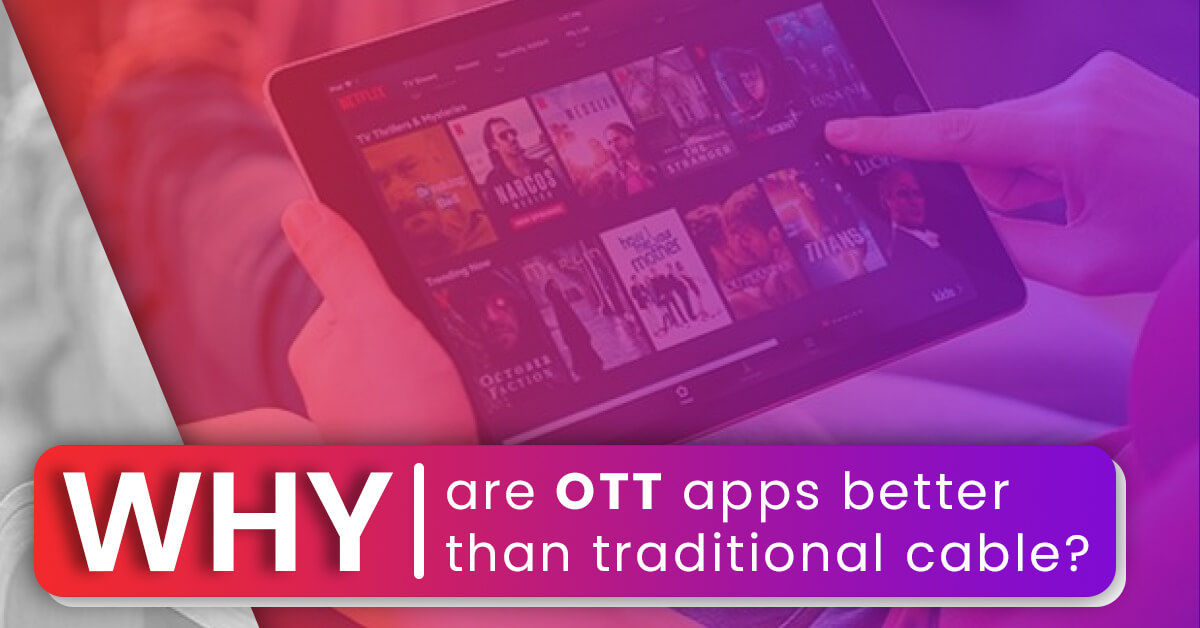
OTT video streaming apps allow users to stream anywhere. This is a very important benefit as compared to regular cable television which does not provide such freedom to the user. Moreover, in the case of TV, conflict arises when different members of the family want to watch different content at the same time.
For example, some people might want to watch cartoons while others might want to watch sports or any other program at a particular time. With OTT apps, individuals can watch their favorite content without disturbing other members. The user just needs a stable internet connection to stream the OTT content on their devices.
No Ads
Commercial advertisements are a big turn-off for most users. Traditional TV services thrive on advertisement revenue, hence it is very difficult to part with this income in exchange for better user engagement.
OTT app development has opened up the possibility for ad-free content as the users pay for the subscription service and the number of users using OTT services is expected to be much larger as compared to those using cable services. The number is big because earlier a single cable connection would suffice for members of a family, but now each member can take up different OTT subscriptions. This is the reason why OTT platforms are investing heavily into acquiring new customers and not boring the customers with advertisements because they know that the growth opportunity is huge with Over-The-Top streaming services.
Customization Options
With OTT streaming apps, the choice of content depends on the viewers as they are not limited to whatever is being broadcast at that moment. The viewers can customize their viewing experience to the content of their choice from the titles available.
Leading OTT Video Streaming Applications
There are many popular OTT mobile apps all across the world. The popularity of OTT video streaming services has risen to astronomical levels after the pandemic and the trend is not showing any signs of fatigue. Because of this sudden rise and demand for OTT in the entertainment industry, many OTT streaming platforms became very popular.
Let us know some of the leading OTT video streaming apps that are popular in the entertainment industry.
- Netflix
- Hulu
- Apple TV
- Peacock TV
- Disney+ Hotstar
- Amazon Prime
Different Business Models for OTT Platforms
There are many monetization models available that help to generate revenue for OTT platforms. Hence, Before developing an OTT video streaming app, one has to decide the kind of video streaming revenue model that the app will work upon.
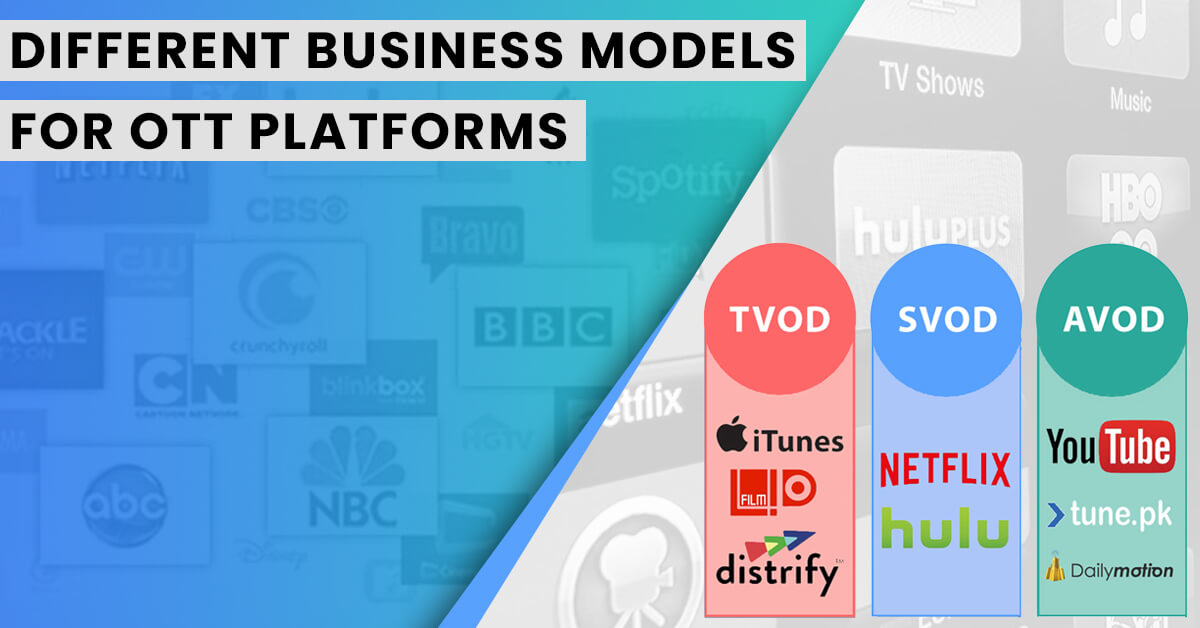
There are three major types of Video-on-Demand (VOD) models, namely;
AVOD
AVOD is an Advertising-based video-on-demand model for OTT video streaming apps. It is an Advertisement-centric content delivery network. This type of VOD business model depends upon advertisement revenue to cover the cost of producing content. YouTube is the best example of the AVOD model as it has moved its subscription-based Premium content to an ad-based model.
TVOD
TVOD stands for Transaction Video On Demand model. In this type of VOD service, the users have to pay-per-view to watch their favorite videos on online video platforms (OVPs). Apple’s iTunes, Sky Box Office, and Amazon’s video store are some of the TVOD service providers.
SVOD
SVOD also known as the Subscription video on-demand model, is the most popular form of VOD business monetization model. This type of model is used by most VOD service providers such as Netflix, Hulu, HBO Max, Amazon Prime, and so on. In this model, the subscribers pay a fixed amount of money to be able to view the full range of their video content offering for a particular period of time.
What Is the Process to Develop an OTT Streaming Service App?
Building an OTT app is not an overnight process. It is a thoughtful and strategic method that involves logic, market research, and the pulse of the viewers about what will work among tough competitors. If you want to be a big fish in the pond, you need to plan bigger and foolproof it by reading and implementing every single step written in this guide.
Let’s get on to the steps to build OTT app development process:
Plan
Planning is the pillar of OTT app development process. It is a strategic blueprint of your project. In this phase, you need to outline the app’s concept by keeping target audience in mind. Also, you need to jot down what content and technical requirement will arise for OTT streaming app development process now and later. The initial step of gathering information about the market trends and consumer demands, you need to ensure a structured approach to build a user-centric streaming app.
Design
The design stage is where the base of an OTT platform is built. It includes crafting a user-centric design to ensure that the audio-video streaming service providing app has intuitive navigation and a plan for scalable content delivery. This stage is essential to define the overall UX and set the next step for technical development.
Development
Here, in this technical stage, OTT application developers work on building the platform’s basic infrastructure. Hence, this phase includes coding or programming the OTT app and setting up the database while integrating streaming protocols. Your development partner will also insist on taking stringent security measures to protect user data and keep unauthorized access at bay.
Deployment
This phase is all about deploying the OTT app to some network or satellite and keeping it up and running flawlessly. It includes server setup content deploying and final release to viewers or customers. Stringent app testing is carried out to ensure that the OTT streaming platform operates smoothly without any glitches.
Maintenance
Mobile app maintenance is an equally important factor is to keep your OTT alive and kicking to serve viewers flawless entertainment. Post-launch, OTT application platforms need ongoing maintenance in the form of updated content, refined features, and addressing any concerns or fixing bugs. Regular monitoring and user feedback are highly required to maintain a top-quality OTT app.
Key Features to Be Added in an OTT Video App Development
One can think of including the following features while developing the best OTT video app.
Search Bar
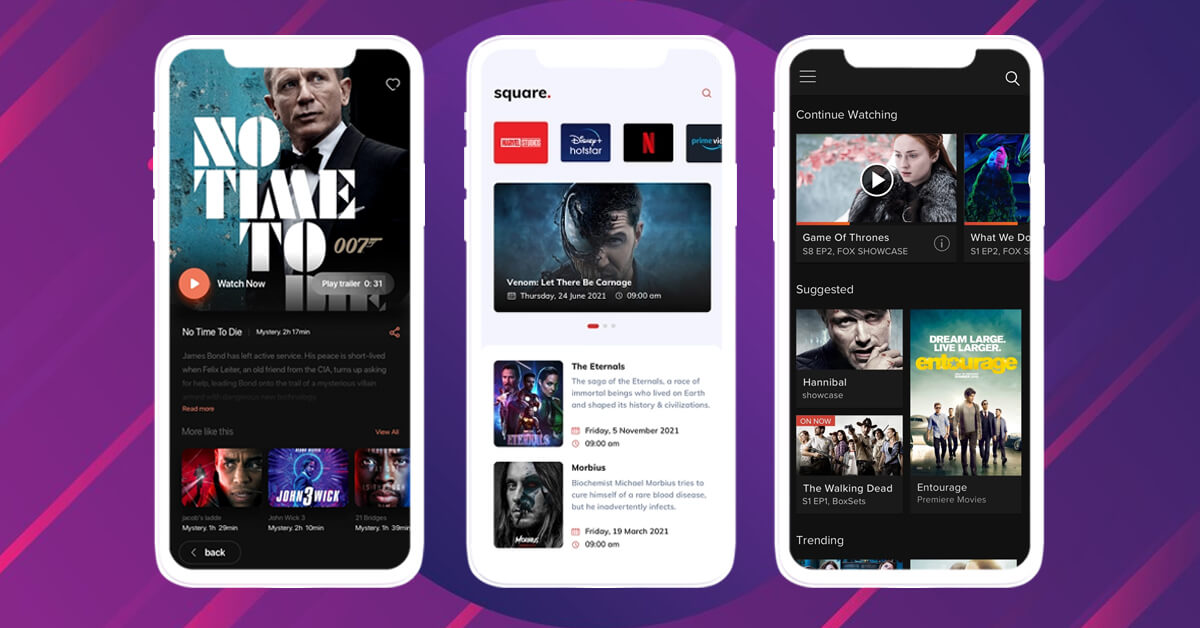
Users do not have time to scroll through all the available titles in an OTT app. A search bar feature that would allow them to search for their favorite titles of Shows, Movies, Series, and more, could prove to be a great user-friendly feature for a video streaming application. It should also provide an option to segregate the content according to various genres. A top mobile app development company can help to add such an important feature to the OTT video streaming app.
User Profile
A user profile feature would help the OTT apps to personalize the user experience. The users should add their favorite titles, rate and review the titles that they have watched and download the content to view it later. The data that the users generate in their user profile would help the Over-the-Top Video Streaming platform to identify each user’s unique taste and suggest content accordingly.
Multilingual Content
Having multilingual content will provide a definitive edge to the OTT video hosting platform over the competitors. Content that proves to be a hit in one language typically generates interest across the world, and users would love to watch the content in their native language. Netflix’s original series “La Casa de Papel” aka Money Heist’s shining success story, is a prime example of a video series breaking the language barriers. The series was watched by over 44 million households worldwide, which makes it the most-watched international Netflix series in a non-English language.
Globalization has improved the flow of content between countries, and people are now more open to consuming content from other cultures. The popularity of Korean and Japanese T.V. shows all over the globe is an example of this phenomenon. An OTT mobile and web app should have a multilingual app development approach to reach wider audiences.
Multi-Platform Compatibility
For any OTT service provider to achieve worthwhile success, it must provide multi-platform compatibility. In the digital era, users have many devices like smartphones, tablets, smart TVs, and laptops. Users want the freedom to experience their favorite content on the device of their choice. An OTT app should deliver a seamless experience on all popular devices and platforms to achieve success.
Watch List
A watch later list can prove to be a great way to retain viewers on the OTT platform. An OTT app’s success depends on binge-watching, and there is no better way to encourage users to binge-watch than to keep a handy ready-to-watch list and notify them with push notifications about it.
Social Sharing
A social sharing feature in an OTT application will enhance the engagement level of the app with its users. The app users should be able to create stories about their favorite shows or discuss the show on various social media platforms. The app users should be able to share some videos like trailers on their social networks. This way, the users will feel more connected with their favorite shows which will help boost the popularity of the OTT apps.
Screen Mirroring
The screen mirroring feature will help the users watch their favorite shows on their TVs and desktops without any hassle. The screen mirroring feature will increase the reach of the OTT video streaming app as many people like watching their favorite shows on the big screen. The users can implement the screen mirroring feature through Amazon fire stick, Google Cast, and AirPlay.
How Much Does It Cost To Develop an OTT Video Streaming App?
The cost to build an OTT video streaming app ranges between $20,000 to $400,000. Whenever video streaming app developers consulted for price estimation, they are found saying that estimation depends on several factors such as platforms, frontend, backend, developers’ rate, and support and maintenance.
The app with basic features such as video playback, user accounts, video search, content library, and video recommendation costs around $40,000. It surges to $100,000 when advanced functionalities such as live streaming, support for multiple devices, personalization, advanced search, parental controls, and others are added. Let’s view the cost breakdown of an advanced OTT video streaming application that leading video streaming app developers provide.
Frontend Development Cost
The appealing UI/UX design of an OTT app improves user engagement and loyalty. However, the intuitive design that intrigues the users, at first sight, comes at a cost. Typically, the frontend design consumes $100 hours which results in $30,00.
Here are the factors that include front-end development costs.
| Parameter | Cost |
|---|---|
| UX research | $5,000- $10,000 |
| Wireframing | $2,000-$3,000 |
| Prototype creation | $2,000-$5,000 |
| Content strategy | $2,000-$8,000 |
| Animation | $3,000-$5,000 |
Backend Development Cost
A robust backend development is required to power OTT platforms so that video streaming continues without a glitch.
Major components that are built under the backend development umbrella along with their cost are-
| Parameter | Cost |
|---|---|
| CMS | $15,000-$30,000 |
| Server streaming | $10,000-$20,000 |
| Authentication system | $5,000-$10,000 |
| Payment gateway integration | $3,000-$5,000 |
| Server infrastructure | $5,00-$1,000 |
| DBMS | $3,000-$5,000 |
| API development | $100-$600 |
Developers Cost
A large portion of OTT video streaming app development cost goes into paying amounts to different members of the development team. The video streaming app developers’ expenses depend on the number of developers and their seniority and specialty level.
Take a glance at the cost that team members are paid for a 6 months project.
| Type of developer | Cost |
|---|---|
| Frontend developer | $30,000-$35,000 |
| UI/UX designer | $25,000-$40,000 |
| Backend developer | $25,000-$50,000 |
| QA and testers | $15,000-$30,000 |
| Project manager | $30,000-$50,000 |
Maintenance and Support Cost
The OTT video streaming app needs regular maintenance and support services to perform to the notch forever.
The developers perform various tasks from bug fixing and rendering updates to continuous testing and other services whose cost ranges in the following ways-
| Maintenance and support tasks | Cost |
|---|---|
| Bug fix | Depends on number of fixes done. |
| Updates | $6,000-$60,000 |
| Server and infrastructure | $5,000-$20,000 |
| Testing | $2,000-$5,000 |
| Analytics | $2,000-$4,000 |
Conclusion
The market overview of OTT streaming services after the pandemic clears up that video content consumption through OTT has become a new norm. jumping on this bandwagon presents a plethora of opportunities for new entrants despite the market being saturated. An in-depth look at the OTT video streaming app development cost determines the budget that entrepreneurs need to set aside to increase revenue. Besides, features, business models, revenue models, and examples of leading OTT service providers give insights into how businesses can remain competitive in the crowded market.
Plan everything carefully, consider the guide, and partner with a reliable video stream app development company to get build an amazing OTT video streaming service app at competitive rates.
What you should know about OTT video streaming app?
What is an OTT platform?
OTT stands for ‘Over the Top,’ and it is a streaming service that delivers content right on the internet. Such a method bypasses traditional media distributing networks such as satellite TV or cable. In recent years, OTT apps and platforms have witnessed a sharp upsurge in use worldwide and terabytes of content have been uploaded every single day making a paradigm shift in the delivery of audio-visual content. In the coming days, as experts believe, there won’t be any cable TV content delivery as everything will be taken over the OTT and internet-based media delivery.
What is the world’s largest OTT platform?
According to Digital Trends, Netflix tops the list of streaming services in the world with a whopping 247+ million subscribers followed by Amazon Prime Video totaling 200 million. The third is Disney+ with 150+ million subscribers and then come Max and Paramount + with 95+ and 63+ million subscribers respectively.
How is OTT Replacing Traditional Media Streaming?
OTT platforms are likely to supplant traditional media as the former ones offer on-demand content and diverse movies, web series, and documentaries from all genres. Moreover, OTT platform content is accessible in all types and sizes of devices and screen sizes on the go. With convenience and variety, OTT platforms are gaining immense popularity.
How To Start a Successful OTT Streaming Service?
You need to identify a niche or genre to create compelling content. Define a business model and find the best OTT app development company. Leverage analytics, secure content, and maintain your OTT platform regularly – this is the key to a successful OTT streaming service.
How do OTT services operate?
OTT service operations is a resourceful task that involves broadcasting videos over the internet that requires an in-house server or cloud-based server, video CMS, video streaming player, and more to work.
How can I develop an OTT video stream app?
Partner with an OTT video stream service app development company that helps you get customized OTT apps with lifetime ownership, various hosting options, and more.
What are the advantages I reap with OTT platform development?
The business benefits of building an OTT platform include- improving accessibility to video content, meeting users’ personalized needs for video content, acquiring and retaining users at scale, and increasing user outreach with a global presence.
What are the revenue models for OTT service applications?
OTT service application helps businesses to earn billions of dollars with SVOD, AVOD, TVOD, SSAI, Catch-up TV, and promotions.
Why Are OTT Apps Better Than Traditional Cable Services?
The entertainment landscape has evolved far beyond the limits of cable TV. OTT (Over-the-Top) platforms offer flexibility, personalization, and accessibility that traditional services can’t match. Here’s why modern viewers and businesses are shifting toward OTT apps:
1. On-Demand Convenience
Unlike fixed TV schedules, OTT apps empower users to stream content anytime, anywhere. Whether it’s catching a favorite show during a commute or watching a new release at midnight, viewers control their own schedule — not the broadcaster’s.
2. Multi-Device Accessibility
OTT platforms are designed for a cross-device experience — smartphones, tablets, smart TVs, laptops, and even gaming consoles. This omnichannel accessibility ensures seamless streaming across devices, something cable can’t deliver.
3. Global Reach & Scalability
Cable networks are geographically limited, while OTT apps reach audiences worldwide with a single digital platform. Businesses can scale faster and localize content for different markets without new infrastructure investments.
4. Personalization & AI-Driven Recommendations
Advanced recommendation engines and user data analytics make OTT apps far more engaging. Platforms like Netflix and Amazon Prime tailor content feeds to each user’s viewing behavior — enhancing retention and watch time.
5. Cost Efficiency
Viewers save money with flexible subscription plans and free ad-supported models, while businesses reduce distribution and infrastructure costs. No need for set-top boxes or complex physical networks.
6. Interactive & Innovative Experiences
OTT apps support features like live chat, polls, and interactive streaming, transforming passive watching into an engaging, social experience. Integrations like multi-language subtitles and voice search add further convenience.
FAQs on OTT App Development Cost
How much does it cost to develop an OTT app?
The cost to develop an OTT app typically ranges between $40,000 to $250,000 or more. The final price to build an ott app depends on multiple factors such as the app’s complexity, features, tech stack, design requirements, and the number of platforms (Android, iOS, Smart TV, Web). A basic MVP version may cost less, while a full-scale, feature-rich app like Netflix or JioHotstar requires a larger investment.
What factors affect the cost of OTT app development?
Key OTT app development cost factors include app design complexity, number of features, backend architecture, cloud infrastructure, third-party integrations (like payment gateways or analytics), and content delivery setup. Additionally, hiring location and hourly developer rates can significantly impact the total cost.
How does the choice of platform influence OTT app development cost?
Developing OTT mobile app for a single platform (Android or iOS) is more cost-effective than going cross-platform. However, for maximum reach, most companies invest in multi-platform development or progressive web apps (PWAs). Building native apps for Smart TVs or Apple TV adds to both cost and development time.
Are there recurring costs after launching an OTT app?
Yes. Businesses should consider ongoing costs such as server hosting, CDN usage, content licensing, app maintenance, bug fixes, software updates, and marketing expenses for their OTT apps. These typically amount to 15–25% of the initial OTT app development cost per year.
How can I reduce the overall cost of OTT app development?
OTT app development costs can be optimized by starting with a Minimum Viable Product (MVP), using ready-made OTT frameworks, and choosing cloud-based streaming services instead of custom setups. Outsourcing development to experienced OTT app development companies can also save both time and resources.
How long does it take to build an OTT app?
The OTT app development timeline generally ranges from 3 to 9 months, depending on the app’s complexity, design, and feature requirements. Building advanced features such as AI-driven recommendations, multi-device sync, or live streaming in your OTT app can extend this timeframe.
Derek Cohen
| Nov 10, 2025
Analyzing business activities and data to formulate the best business development ideas is where I earn appreciations and remunerations. I’m an ardent reader, business adviser, gadget aficionado and an amateur yet an avid writer. My urge for innovative writing evokes every time I come across new gadgets, neo technology and novel technical events.