Top OTT Video Streaming Platforms Explained
 By
Derek Cohen
|
Dec 30, 2025 |
Mobile Apps
By
Derek Cohen
|
Dec 30, 2025 |
Mobile Apps
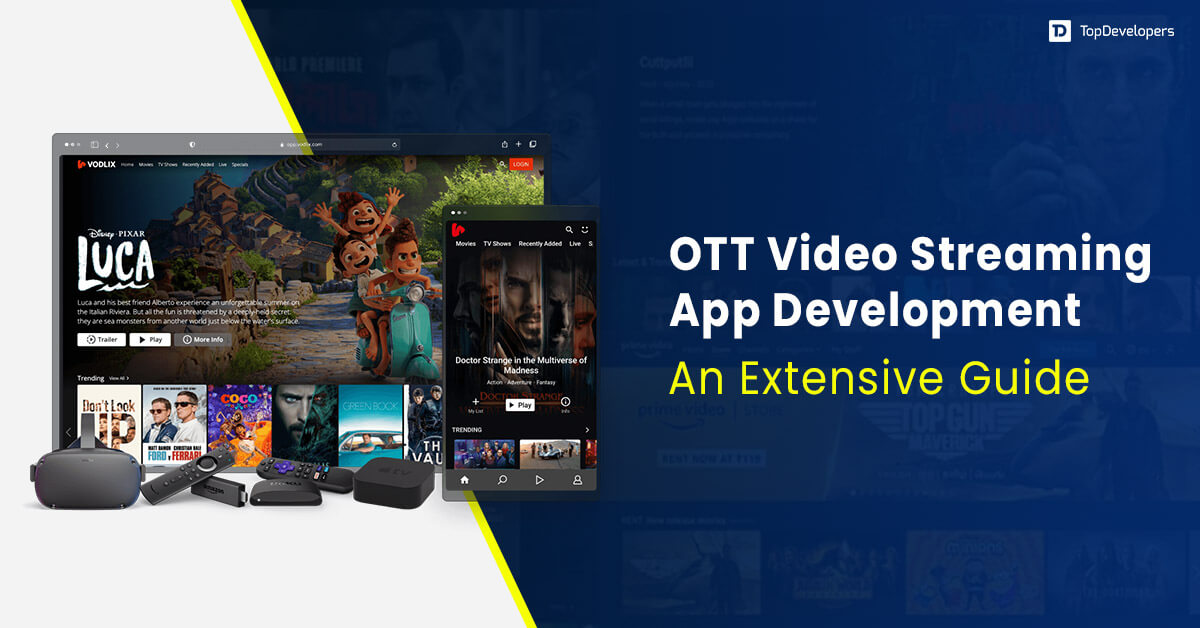
The global OTT (over‑the‑top) video streaming market continues its rapid expansion, with revenue projected to reach around USD 227 billion in 2025 and grow toward USD 404 billion by 2029, reflecting surging demand for digital entertainment and mobile viewing trends in the internet era. In this era of on‑demand entertainment, we break down the list of top OTT video streaming platforms that are shaping how millions of viewers worldwide watch movies, series, and exclusive content. Whether you’re choosing your next binge‑watch destination or comparing features and libraries, this complete list of top OTT video streaming platforms will help guide your decision with the latest insights into the streaming landscape.
Table of Contents
Netflix: Business Overview of a Global OTT Video Streaming Platform
Netflix is a leading OTT video streaming platform that delivers on-demand movies, TV shows, documentaries, and original content to users worldwide. The platform operates in more than 190 countries and follows a subscription-based model. Netflix focuses on original programming and personalized viewing to retain long-term subscribers.
Netflix Business Model and Revenue Strategy
The Netflix business model relies primarily on monthly subscription fees rather than advertising. Users pay a recurring fee based on their selected plan to access the platform’s content library.
This subscription-based OTT model gives Netflix predictable revenue and supports ongoing investment in original content, platform development, and global expansion. By limiting ads on most plans, Netflix maintains a premium viewing experience that encourages customer loyalty.
Netflix Target Audience and Market Reach
Netflix targets a global audience that includes individuals, families, and regional viewers. The platform appeals to users who prefer on-demand, ad-free streaming across multiple devices.
Netflix also invests heavily in local-language content to attract regional markets while maintaining globally popular original series and films.
Current Pricing Plans of Netflix (United States)
Netflix offers several subscription plans in India. Each plan is priced based on video quality, number of screens, and device access.
Netflix Pricing (India):
Mobile Plan: ₹149 per month — Standard Definition (SD) resolution on one mobile or tablet device.
- Basic Plan: ₹199 per month — SD quality on one screen on any supported device.
- Standard Plan: ₹499 per month — High Definition (HD) quality on two devices at the same time.
- Premium Plan: ₹649 per month — Ultra-HD quality on up to four devices concurrently.
Note: Netflix does not currently offer an annual subscription plan in India. Users pay each month, and they can cancel anytime.
optional add-ons such as extra household members. Always confirm current pricing on Netflix’s official website for your region.
Key Business Strengths of Netflix
Netflix maintains a strong market position through technology, scale, and data-driven decision-making.
- Netflix uses viewer behavior data to guide content investment decisions.
- Personalized recommendations increase engagement and watch time.
- Original content reduces dependency on third-party studios.
- The platform supports global scalability with reliable performance.
These strengths help Netflix reduce subscriber churn and increase customer lifetime value.
Netflix Business Challenges and Limitations
Netflix faces several challenges as the OTT market becomes more competitive.
- High content production and licensing costs
- Increasing competition from other OTT video streaming platforms
- Slower subscriber growth in saturated markets
These factors increase pressure to deliver consistent, high-performing content.
Business Lessons Companies Can Learn from Netflix
Netflix provides a strong reference model for subscription-based OTT platforms.
Businesses can apply these lessons:
- Use audience data to guide product and content decisions
- Focus on long-term subscriber retention
- Invest in personalization to increase platform usage
- Balance global expansion with region-specific content strategies
Best Business Use Cases for Netflix
Netflix serves as a useful benchmark for:
- Media companies planning subscription-based OTT platforms
- Businesses targeting international streaming audiences
- Startups studying large-scale video content delivery models
JioHotstar: Business Overview of India’s Largest OTT Video Streaming Platform
JioHotstar is one of India’s most widely used OTT video streaming platforms. It brings together Disney’s content library and Reliance Jio’s digital ecosystem under a single platform. JioHotstar offers movies, TV shows, live sports, regional content, and international titles to a massive Indian audience.
The platform plays a critical role in India’s OTT market by combining premium content with affordable pricing and telecom-backed distribution.
JioHotstar Business Model and Revenue Strategy
The JioHotstar business model follows a hybrid approach that combines subscriptions, advertising, and bundled access through Jio plans.
Revenue comes from:
- Paid subscription plans
- Advertising on selected content and live sports
- Bundled access via Jio mobile and broadband plans
This hybrid OTT model allows JioHotstar to scale quickly while keeping entry costs low for users.
JioHotstar Target Audience and Market Reach
JioHotstar primarily targets the Indian market with a strong focus on mass and regional audiences.
The platform serves:
- Mobile-first users across Tier 1, Tier 2, and Tier 3 cities
- Sports viewers, especially cricket audiences
- Families seeking affordable entertainment
- Regional-language viewers across multiple Indian states
By combining global franchises with local and regional content, JioHotstar reaches a broader audience than most premium-only OTT platforms.
Current Pricing Plans of JioHotstar (India)
JioHotstar offers flexible pricing designed for affordability and reach. Prices may change based on promotions and bundled telecom offers.
- Mobile Plan: ₹149 for 3 months or ₹499 per year. This plan is ad-supported, allows streaming on one mobile device, and streams in standard video quality (typically up to 720p).
- Super Plan: ₹299 for 3 months or ₹899 per year. This plan is also ad-supported, lets you stream on two devices at the same time, and supports viewing on mobile, web, and TV devices with fuller HD quality.
- Premium Plan: ₹499 for 3 months, ₹299 per month, or ₹1,499 per year. This tier offers ad-free streaming on most content (ads may still appear during live sports), lets you watch on up to four devices, and provides higher-quality video resolution (including 4K where supported).
Pricing disclaimer: All plans include access to the full JioHotstar library of movies, TV shows, originals, and sports content, but availability and experience may vary slightly depending on promotions or offers at the time of purchase.
Key Business Strengths of JioHotstar
JioHotstar holds a strong position in India’s OTT ecosystem due to scale and distribution power.
- Deep integration with Jio’s telecom network expands reach rapidly
- Live sports streaming drives high user engagement
- Strong regional language content supports local markets
- Advertising-supported content increases monetization options
These strengths help JioHotstar balance high user volume with multiple revenue streams.
JioHotstar Business Challenges and Limitations
Despite its scale, JioHotstar faces several challenges.
- Heavy reliance on sports rights increases content costs
- Ad-supported viewing may reduce premium user experience
- Competition from global OTT platforms continues to intensify
These challenges require careful cost control and content prioritization.
Business Lessons Companies Can Learn from JioHotstar
JioHotstar offers valuable insights for OTT businesses targeting emerging markets.
Key lessons include:
- Affordable pricing accelerates user adoption
- Telecom bundling lowers customer acquisition costs
- Regional content increases market penetration
- Hybrid monetization improves revenue stability
Best Business Use Cases for JioHotstar
JioHotstar serves as a strong reference model for:
- Businesses targeting high-volume, price-sensitive markets
- OTT platforms combining ads and subscriptions
- Media companies focused on sports and regional content
- Startups building mobile-first video platforms
Amazon Prime Video: Business Overview of a Bundled OTT Video Streaming Platform
Amazon Prime Video is a major OTT video streaming platform that operates as part of the broader Amazon Prime ecosystem. It offers movies, TV shows, originals, and regional content to users worldwide. Unlike standalone streaming services, Amazon Prime Video comes bundled with Amazon Prime membership, which also includes e-commerce delivery and other digital benefits.
This bundled approach helps Amazon Prime Video reach a wide audience while increasing overall customer lifetime value.
Amazon Prime Video Business Model and Revenue Strategy
The Amazon Prime Video business model focuses on bundling rather than standalone subscriptions. Users pay a single Prime membership fee and receive access to video streaming along with shopping, music, and reading benefits.
Amazon also generates revenue through:
- Paid movie rentals and purchases
- Channel subscriptions (third-party content providers)
- Increased customer spending across Amazon’s marketplace
This model reduces churn by locking multiple services into one subscription.
Amazon Prime Video Target Audience and Market Reach
Amazon Prime Video targets a broad audience that includes online shoppers, families, and regional viewers. In India, the platform strongly appeals to price-sensitive users who value bundled services.
The platform also invests in Indian originals and regional language content to increase engagement in local markets.
Current Pricing Plans of Amazon Prime Video (India)
Amazon Prime Video is included with Amazon Prime membership. There is no separate pricing for the video service.
- Monthly Prime Plan: ₹299 per month, which includes Prime Video, free delivery on Amazon orders, Prime Music, and other benefits.
- Quarterly Prime Plan: ₹599 for three months, offering the same bundled benefits.
- Annual Prime Plan: ₹1,499 per year, which provides the best value for long-term users.
Pricing disclaimer: Pricing and benefits may vary during promotions or special offers. Users should confirm current prices on Amazon’s official website.
Key Business Strengths of Amazon Prime Video
Amazon Prime Video holds a strong position due to its ecosystem advantage.
- Bundled pricing lowers customer acquisition costs
- Integration with Amazon shopping increases retention
- Flexible monetization through rentals and channels
- Strong regional content strategy in India
These strengths allow Amazon Prime Video to compete effectively without relying solely on streaming revenue.
Amazon Prime Video Business Challenges and Limitations
Despite its advantages, Amazon Prime Video faces several challenges.
- Streaming is not the primary revenue driver for Amazon
- Discoverability of content can feel complex for users
- Competition from pure-play OTT platforms remains strong
These challenges require Amazon to balance content investment with ecosystem priorities.
Business Lessons Companies Can Learn from Amazon Prime Video
Amazon Prime Video shows how bundling can drive scale and loyalty.
Key lessons include:
- Bundled services reduce churn
- Value pricing increases mass adoption
- Ecosystem integration strengthens retention
- Multiple revenue streams improve stability
Best Business Use Cases for Amazon Prime Video
Amazon Prime Video serves as a strong reference model for:
- Businesses building subscription bundles
- OTT platforms targeting price-sensitive markets
- Companies combining content with commerce
- Media brands seeking diversified revenue streams
Apple TV+: Business Overview of a Premium Original-Content OTT Platform
Apple TV+ is a subscription-based OTT video streaming platform developed by Apple. Unlike most streaming services, Apple TV+ focuses entirely on original movies, TV shows, and documentaries. The platform positions itself as a premium service that prioritizes quality over content volume.
Apple TV+ is tightly integrated into Apple’s ecosystem, which helps drive adoption among existing Apple device users.
Apple TV+ Business Model and Revenue Strategy
The Apple TV+ business model is based on a low-cost subscription with a strong focus on original content. Apple does not rely on advertising and does not license third-party content for this platform.
Revenue from Apple TV+ supports:
- Brand loyalty across Apple devices
- Higher customer retention within the Apple ecosystem
- Long-term value rather than short-term profit
Apple often bundles Apple TV+ with device purchases and Apple One subscriptions to increase usage.
Apple TV+ Target Audience and Market Reach
Apple TV+ primarily targets users who value high-quality storytelling and premium production. The platform appeals strongly to existing Apple customers using iPhones, iPads, Macs, and Apple TVs.
In India, Apple TV+ serves a niche audience compared to mass-market OTT platforms, but it continues to grow through competitive pricing and global originals.
Current Pricing Plans of Apple TV+ (India)
Apple TV+ follows a simple and transparent pricing structure.
- Monthly Subscription: ₹99 per month, which provides full access to all Apple TV+ original content.
- Free Trial with Apple Devices: Apple offers a free Apple TV+ trial for a limited period with the purchase of eligible Apple devices.
- Apple One Bundle: Apple TV+ is included in Apple One subscription plans, which bundle multiple Apple services at a discounted price.
Pricing disclaimer: Pricing and free trial availability may vary by region and promotional period. Users should verify current pricing on Apple’s official website.
Key Business Strengths of Apple TV+
Apple TV+ maintains a distinct position in the OTT market.
- Focus on original, exclusive content
- Premium brand trust and global recognition
- Strong ecosystem integration across Apple devices
- Simple pricing without ads or tiers
These strengths help Apple TV+ attract quality-focused audiences rather than volume-driven users.
Apple TV+ Business Challenges and Limitations
Apple TV+ also faces clear limitations.
- Smaller content library compared to competitors
- Limited regional and local content in India
- Lower visibility outside the Apple ecosystem
These factors restrict mass adoption in price-sensitive markets.
Business Lessons Companies Can Learn from Apple TV+
Apple TV+ demonstrates the value of focus and brand alignment.
Key lessons include:
- Quality positioning can differentiate a platform
- Simple pricing reduces decision friction
- Ecosystem bundling increases retention
- Originals strengthen long-term brand value
Best Business Use Cases for Apple TV+
Apple TV+ serves as a strong reference model for:
- Brands building premium OTT platforms
- Businesses targeting high-value users
- Companies leveraging ecosystem-driven growth
- Media platforms focused on originals over volume
HBO Max: Business Overview of a Premium Content-Driven OTT Platform
HBO Max is a premium OTT video streaming platform owned by Warner Bros. Discovery. The service is known for high-quality original series, blockbuster movies, and globally popular franchises. HBO Max focuses on premium storytelling rather than mass-market volume, which positions it as a high-value streaming service.
In several regions, HBO Max now operates under the brand name Max, but the core content and business strategy remain centered on premium entertainment.
HBO Max Business Model and Revenue Strategy
The HBO Max business model follows a subscription-based approach with optional ad-supported plans in select markets. The platform generates revenue primarily through monthly subscriptions and content licensing partnerships.
Key revenue drivers include:
- Subscription fees from premium users
- Advertising revenue on lower-cost plans (where available)
- Licensing HBO content to regional distribution partners
This strategy allows HBO Max to maintain a premium brand while expanding reach through partnerships.
HBO Max Target Audience and Market Reach
HBO Max targets viewers who value high-quality storytelling, award-winning series, and major entertainment franchises. Its audience typically includes mature viewers, film enthusiasts, and premium subscribers.
In India, HBO Max does not operate as a standalone service. HBO content is distributed through local OTT platforms via licensing partnerships, which allows Warner Bros. Discovery to reach Indian audiences without direct market entry.
Current Pricing Plans of HBO Max (Global Markets)
HBO Max pricing varies by country and branding (HBO Max or Max). Typical pricing structures include:
- Ad-Supported Plan: Lower monthly fee with advertisements, available in select regions.
- Ad-Free Plan: Higher monthly cost with uninterrupted streaming and full content access.
- Ultimate / Premium Plan: Highest-tier plan offering 4K resolution, Dolby Atmos, and multiple device support.
Pricing disclaimer: HBO Max pricing differs by region, currency, and availability. Users should check the official Max or HBO website for region-specific pricing details.
Key Business Strengths of HBO Max
HBO Max holds a strong position in the OTT market due to its content reputation.
- Premium, award-winning original content
- Strong global franchises and studio-backed films
- Loyal subscriber base with high engagement
- Flexible distribution through direct and partner-led models
These strengths support higher subscription value and strong brand perception.
HBO Max Business Challenges and Limitations
HBO Max also faces notable challenges.
- Limited direct availability in some international markets
- Higher content production and licensing costs
- Slower mass adoption compared to ad-supported platforms
These factors make HBO Max better suited for premium segments rather than volume-driven growth.
Business Lessons Companies Can Learn from HBO Max
HBO Max highlights the importance of content quality and brand positioning.
Key lessons include:
- Premium content can justify higher pricing
- Strong franchises drive long-term subscriber loyalty
- Regional partnerships can reduce market entry risk
- Brand consistency builds trust over time
Best Business Use Cases for HBO Max
HBO Max serves as a reference model for:
- Premium OTT platforms focused on storytelling
- Media companies with strong content libraries
- Businesses targeting high-value subscribers
- Brands expanding globally through licensing partnerships
Hulu: Business Overview of an Ad-Supported OTT Video Streaming Platform
Hulu is a U.S.-based OTT video streaming platform owned by Disney. It is widely known for offering current TV shows, original series, movies, and live television options. Hulu differentiates itself by focusing on ad-supported streaming and next-day access to popular TV content.
Hulu plays a key role in the OTT market by combining traditional television viewing with modern streaming flexibility.
Hulu Business Model and Revenue Strategy
The Hulu business model relies on a mix of subscription fees and advertising revenue. Unlike fully ad-free platforms, Hulu places strong emphasis on ads as a core revenue stream.
Hulu earns revenue through:
- Monthly subscription plans
- Advertising on ad-supported tiers
- Live TV subscriptions with premium pricing
This hybrid model allows Hulu to keep entry prices low while generating consistent ad revenue.
Hulu Target Audience and Market Reach
Hulu targets viewers who want access to current TV shows shortly after they air. The platform appeals to cord-cutters who still want a traditional TV experience without cable.
Hulu primarily operates in the United States, which limits its international reach but allows strong content partnerships with U.S. broadcasters.
Current Pricing Plans of Hulu (United States)
Hulu offers flexible pricing plans that cater to different viewing preferences.
- Hulu with Ads: $7.99 per month. This plan includes full access to Hulu’s content library with advertisements.
- Hulu without Ads: $17.99 per month. This plan offers ad-free streaming for most on-demand content.
- Hulu + Live TV with Ads: $76.99 per month. This plan includes live TV channels, on-demand content, and ads.
- Hulu + Live TV without Ads: $89.99 per month. This plan removes ads from on-demand content and includes live TV access.
Pricing disclaimer: Pricing and content availability may change over time. Users should verify current prices on Hulu’s official website.
Key Business Strengths of Hulu
Hulu maintains a strong market position through its television-focused strategy.
- Next-day TV episodes attract consistent viewers
- Ad-supported plans create strong monetization potential
- Live TV option replaces traditional cable services
- Strong backing from Disney improves content access
These strengths make Hulu attractive to advertisers and TV-focused audiences.
Hulu Business Challenges and Limitations
Hulu also faces several challenges.
- Limited availability outside the United States
- Ads may reduce user experience for some viewers
- High competition from ad-free OTT platforms
These limitations restrict Hulu’s appeal in global markets.
Business Lessons Companies Can Learn from Hulu
Hulu demonstrates how advertising can coexist with subscriptions.
Key lessons include:
- Ad-supported tiers lower entry barriers
- TV-first content drives habitual viewing
- Live TV options increase revenue per user
- Hybrid monetization improves profitability
Best Business Use Cases for Hulu
Hulu serves as a reference model for:
- OTT platforms focused on advertising revenue
- Businesses targeting TV-style content delivery
- Media companies transitioning from cable to OTT
- Platforms offering live TV streaming
Peacock: Business Overview of an Ad-First OTT Video Streaming Platform
Peacock is an OTT video streaming platform owned by NBCUniversal. It offers a mix of movies, TV shows, originals, live sports, news, and reality content. Peacock stands out by focusing on affordability and advertising-supported streaming rather than premium-only subscriptions.
The platform is designed to attract a wide audience by lowering entry barriers and monetizing through ads.
Peacock Business Model and Revenue Strategy
The Peacock business model centers on advertising-supported streaming with optional paid upgrades. Unlike premium-first OTT platforms, Peacock prioritizes scale and advertiser reach.
Peacock generates revenue through:
- Advertising on free and low-cost plans
- Subscription fees from premium tiers
- Sports and live event streaming partnerships
This approach allows Peacock to balance high user volume with diversified revenue streams.
Peacock Target Audience and Market Reach
Peacock targets viewers who want affordable access to entertainment, news, and sports. The platform appeals to casual viewers, sports fans, and audiences comfortable with ads.
Peacock primarily operates in the United States, with limited availability in select international markets through partnerships.
Current Pricing Plans of Peacock (United States)
Peacock follows a simple pricing structure focused on accessibility.
- Peacock Free: $0 per month with ads and limited content access.
- Peacock Premium: $5.99 per month with ads, offering full access to movies, TV shows, originals, and live sports.
- Peacock Premium Plus: $11.99 per month with minimal ads, allowing offline viewing and expanded content access.
Pricing disclaimer: Plan features and pricing may change over time. Users should confirm current details on Peacock’s official website.
Key Business Strengths of Peacock
Peacock holds a strong position among ad-supported OTT platforms.
- Free tier accelerates user acquisition
- Strong sports, news, and reality content
- Advertising-first monetization increases revenue potential
- Backing from NBCUniversal strengthens content supply
These strengths make Peacock attractive to advertisers and mass-market audiences.
Peacock Business Challenges and Limitations
Peacock also faces several limitations.
- Lower perceived premium value compared to ad-free platforms
- Heavy reliance on advertising revenue
- Limited global expansion compared to competitors
These challenges require continuous growth in user base and advertiser demand.
Business Lessons Companies Can Learn from Peacock
Peacock highlights the value of ad-supported OTT strategies.
Key lessons include:
- Free tiers drive rapid adoption
- Ads can subsidize lower subscription costs
- Live sports improve engagement
- Media backing strengthens content consistency
Best Business Use Cases for Peacock
Peacock serves as a reference model for:
- Ad-supported OTT platforms
- Businesses targeting mass audiences
- Media companies monetizing through advertising
- Platforms combining entertainment, news, and sports
Paramount+: Business Overview of a Franchise-Led OTT Video Streaming Platform
Paramount+ is an OTT video streaming platform owned by Paramount Global. It combines movies, original series, live sports, and news under one subscription. The platform relies heavily on well-known franchises and television networks such as CBS, MTV, Nickelodeon, and Paramount Pictures.
Paramount+ positions itself as a value-driven streaming service that blends traditional TV content with on-demand viewing.
Paramount+ Business Model and Revenue Strategy
The Paramount+ business model follows a hybrid approach that combines subscriptions and advertising. The platform offers both ad-supported and ad-free plans to attract different audience segments.
Paramount+ generates revenue through:
- Monthly subscription fees
- Advertising on lower-cost plans
- Live sports and event-based content
- Franchise-driven content retention
This model allows Paramount+ to balance affordability with premium content value.
Paramount+ Target Audience and Market Reach
Paramount+ targets families, sports fans, and viewers who enjoy established television brands. The platform appeals to users looking for a mix of entertainment, kids’ content, and live sports such as football and soccer.
Paramount+ operates primarily in the United States, with international availability in select regions through direct launches and local partnerships.
Current Pricing Plans of Paramount+ (United States)
Paramount+ offers straightforward pricing with clear plan differentiation.
- Essential Plan (with Ads): $5.99 per month or $59.99 per year. This plan includes ads and access to most content, including NFL games and live sports.
- Paramount+ with SHOWTIME: $11.99 per month or $119.99 per year. This plan removes ads from most on-demand content and includes SHOWTIME originals and movies.
Pricing disclaimer: Prices and features may vary by region and promotional period. Users should confirm current pricing on Paramount+’s official website.
Key Business Strengths of Paramount+
Paramount+ benefits from strong media ownership and recognizable brands.
- Established franchises reduce content discovery friction
- Live sports increase engagement and retention
- Ad-supported plans support flexible monetization
- Network-backed content ensures consistent releases
These strengths help Paramount+ compete effectively in a crowded OTT market.
Paramount+ Business Challenges and Limitations
Paramount+ also faces several challenges.
- Heavy competition from larger OTT platforms
- Content overlap with other services
- Limited premium differentiation outside franchises
These challenges require careful content positioning and partnership strategies.
Business Lessons Companies Can Learn from Paramount+
Paramount+ demonstrates the value of brand familiarity in streaming.
Key lessons include:
- Franchises lower customer acquisition costs
- Live sports strengthen recurring engagement
- Hybrid pricing attracts wider audiences
- Network libraries provide long-term content value
Best Business Use Cases for Paramount+
Paramount+ serves as a reference model for:
- Franchise-driven OTT platforms
- Media companies transitioning from TV to streaming
- Businesses combining live sports with on-demand content
- Platforms balancing ads and subscriptions
Discovery+: Business Overview of a Niche-Focused OTT Video Streaming Platform
Discovery+ is an OTT video streaming platform owned by Warner Bros. Discovery. It focuses on non-fiction content such as documentaries, lifestyle shows, reality series, food, travel, nature, science, and home improvement. Unlike broad entertainment platforms, Discovery+ targets viewers who prefer factual and interest-based programming.
The platform positions itself as a niche OTT service built for consistent, long-term viewing rather than viral hits.
Discovery+ Business Model and Revenue Strategy
The Discovery+ business model is primarily subscription-based, with optional ad-supported plans in select markets. The platform monetizes through recurring subscriptions while keeping content costs lower than scripted entertainment platforms.
Discovery+ generates revenue through:
- Monthly and annual subscriptions
- Advertising on lower-priced tiers
- Licensing and bundling through regional partners
This model supports stable margins due to lower production and licensing costs.
Discovery+ Target Audience and Market Reach
Discovery+ targets viewers interested in factual entertainment and lifestyle content. The audience includes adults, families, and niche communities focused on education, hobbies, and real-world storytelling.
Discovery+ operates mainly in the United States and select international markets. In India, Discovery+ content is no longer offered as a standalone service and is distributed through local OTT partnerships.
Current Pricing Plans of Discovery+ (United States)
Discovery+ offers simple and affordable pricing options.
- Discovery+ with Ads: $4.99 per month or $49.99 per year. This plan includes full access to the content library with advertisements.
- Discovery+ Ad-Free: $8.99 per month or $69.99 per year. This plan removes ads from most on-demand content.
Pricing disclaimer: Pricing and plan availability may vary by region and over time. Users should confirm current details on Discovery+’s official website.
Key Business Strengths of Discovery+
Discovery+ holds a strong niche position in the OTT market.
- Focused content strategy lowers production costs
- High repeat viewing for lifestyle and factual shows
- Loyal audience with strong interest alignment
- Scalable library with long content shelf life
These strengths support steady subscriber retention and predictable engagement.
Discovery+ Business Challenges and Limitations
Discovery+ also faces several limitations.
- Limited appeal beyond non-fiction audiences
- Lower mass-market visibility compared to entertainment platforms
- Increasing consolidation within parent company platforms
These factors restrict rapid audience expansion.
Business Lessons Companies Can Learn from Discovery+
Discovery+ shows the value of niche positioning in OTT.
Key lessons include:
- Focused content reduces competition pressure
- Evergreen content improves long-term ROI
- Lower production costs improve margins
- Loyal niches can outperform broad audiences
Best Business Use Cases for Discovery+
Discovery+ serves as a reference model for:
- Niche OTT platforms
- Educational and lifestyle streaming services
- Businesses targeting interest-based audiences
- Platforms prioritizing content longevity over volume
List to Hire Best Video Streaming App Developers
Crunchyroll: Business Overview of a Niche Anime-Focused OTT Platform
Crunchyroll is a specialized OTT video streaming platform focused on anime, manga, and Japanese entertainment. Owned by Sony Group Corporation, Crunchyroll serves a global fanbase that values simulcast releases, exclusive titles, and community-driven content.
The platform succeeds by targeting a clearly defined niche rather than competing with general entertainment OTT platforms.
Crunchyroll Business Model and Revenue Strategy
The Crunchyroll business model combines subscriptions, advertising, and merchandise-driven revenue. The platform offers both free ad-supported access and paid subscription tiers for premium users.
Crunchyroll generates revenue through:
- Monthly and annual subscriptions
- Advertising on free content
- Licensing and distribution partnerships
- Merchandise sales and event-based monetization
This diversified model reduces dependency on a single revenue stream.
Crunchyroll Target Audience and Market Reach
Crunchyroll targets anime fans across age groups, with a strong presence among Gen Z and millennial audiences. The platform appeals to viewers who want fast access to new anime episodes, often shortly after their release in Japan.
Crunchyroll operates globally, including North America, Europe, Asia, and India, making it one of the most internationally accessible niche OTT platforms.
Current Pricing Plans of Crunchyroll
Crunchyroll pricing varies slightly by region but follows a consistent tier structure.
- Free Plan: ₹0 / $0 with ads and limited access to content.
- Fan Plan: Approx. ₹99 per month in India or $7.99 per month globally. This plan removes ads and allows streaming on one device.
- Mega Fan Plan: Approx. ₹119 per month in India or $9.99 per month globally. This plan supports multiple devices and offline viewing.
- Ultimate Fan Plan: Approx. $14.99 per month (availability varies by region). This plan includes merchandise discounts and special perks.
Pricing disclaimer: Prices, features, and availability may vary by country and promotional period. Users should confirm current pricing on Crunchyroll’s official website.
Key Business Strengths of Crunchyroll
Crunchyroll holds a strong competitive position within its niche.
- Clear focus on anime reduces competition pressure
- Loyal global fanbase drives recurring subscriptions
- Simulcast releases increase engagement and urgency
- Community-driven brand builds long-term retention
These strengths allow Crunchyroll to dominate a specific content category rather than compete on volume.
Crunchyroll Business Challenges and Limitations
Crunchyroll also faces several limitations.
- Limited appeal outside anime audiences
- Dependency on licensing agreements with Japanese studios
- Smaller content variety compared to general OTT platforms
These factors restrict mass-market expansion but reinforce niche dominance.
Business Lessons Companies Can Learn from Crunchyroll
Crunchyroll demonstrates how niche OTT platforms can scale globally.
Key lessons include:
- Clear audience focus improves retention
- Speed of content delivery increases loyalty
- Community engagement strengthens brand value
- Niche dominance can outperform broad competition
Best Business Use Cases for Crunchyroll
Crunchyroll serves as a reference model for:
- Niche OTT platforms
- Fandom-driven streaming services
- Global content licensing businesses
- Platforms targeting Gen Z audiences
YouTube: Business Overview of the World’s Largest Ad-Supported Video Platform
YouTube is the world’s largest video streaming platform and a key part of Google’s ecosystem. Unlike traditional OTT platforms, YouTube operates primarily as a creator-driven platform that hosts user-generated, professional, and live content. It reaches billions of users every month across mobile devices, desktops, smart TVs, and connected devices.
For businesses, YouTube represents scale, discovery, and advertising power rather than a pure subscription OTT model.
YouTube Business Model and Revenue Strategy
The YouTube business model is built around advertising, creator monetization, and optional subscriptions. Most users access YouTube for free, while advertisers fund the platform through video ads.
YouTube generates revenue through:
- Video advertising (pre-roll, mid-roll, display ads)
- YouTube Premium subscriptions
- YouTube TV subscriptions (in select markets)
- Revenue sharing with content creators
This model allows YouTube to scale rapidly while supporting millions of creators globally.
YouTube Target Audience and Market Reach
YouTube targets a global audience across all age groups. It serves casual viewers, creators, educators, brands, and businesses. The platform is especially strong among Gen Z and millennial users who prefer short-form and on-demand video content.
YouTube operates worldwide and is deeply integrated into Android devices, smart TVs, and Google services, giving it unmatched distribution reach.
Current Pricing Plans of YouTube
YouTube offers free access along with optional paid plans. Pricing may vary by country.
- YouTube Free: ₹0 / $0 with ads and full access to user-generated and creator content.
- YouTube Premium: ₹129 per month in India or $13.99 per month in the United States. This plan removes ads, enables background play, and allows offline downloads.
- YouTube Music Premium: ₹99 per month in India or $10.99 per month in the United States. This plan focuses on music streaming without ads.
- YouTube TV: $72.99 per month in the United States. This plan offers live TV channels and cloud DVR (not available in India).
Pricing disclaimer: Plans, features, and availability differ by region. Users should verify current pricing on YouTube’s official website.
Key Business Strengths of YouTube
YouTube dominates the video streaming market through scale and accessibility.
- Massive global user base
- Strong advertising and analytics ecosystem
- Low content acquisition costs due to creator model
- High discoverability through search and recommendations
These strengths make YouTube essential for brand visibility and video marketing.
YouTube Business Challenges and Limitations
YouTube also faces notable challenges.
- Heavy dependence on advertising revenue
- Content moderation and copyright management issues
- Limited control over creator quality and consistency
These challenges require strong policy enforcement and platform governance.
Business Lessons Companies Can Learn from YouTube
YouTube demonstrates how platforms can grow through creators and ads.
Key lessons include:
- Free access drives massive adoption
- Creator ecosystems scale faster than studio models
- Advertising supports low-cost user acquisition
- Data and algorithms power content discovery
Best Business Use Cases for YouTube
YouTube serves as a reference model for:
- Ad-supported video platforms
- Creator-driven OTT services
- Brands using video for marketing and education
- Businesses building large-scale content platforms
ESPN+: Business Overview of a Sports-First OTT Video Streaming Platform
ESPN+ is a subscription-based OTT video streaming platform focused exclusively on sports content. Owned by Disney, ESPN+ delivers live sports, original shows, documentaries, and exclusive events that are not available on traditional ESPN cable channels.
The platform plays a strategic role in Disney’s streaming ecosystem by monetizing sports fans directly rather than relying only on cable subscriptions.
ESPN+ Business Model and Revenue Strategy
The ESPN+ business model centers on paid subscriptions with limited advertising. Unlike general entertainment platforms, ESPN+ focuses on high-frequency live content that encourages regular viewing and renewals.
ESPN+ generates revenue through:
- Monthly and annual subscription fees
- Advertising during live sports and studio programming
- Bundled subscriptions with Disney+ and Hulu (in select markets)
This model allows ESPN+ to maximize revenue from highly engaged sports audiences.
ESPN+ Target Audience and Market Reach
ESPN+ targets dedicated sports fans who want access to live events, niche leagues, and exclusive coverage. The platform appeals to viewers who follow multiple sports and are willing to pay for premium access.
ESPN+ primarily operates in the United States, where sports broadcasting rights and fan demand are strongest.
Current Pricing Plans of ESPN+ (United States)
ESPN+ follows a straightforward pricing structure.
- Monthly Plan: $10.99 per month, providing full access to live sports, originals, and exclusive events.
- Annual Plan: $109.99 per year, offering a discounted rate for long-term subscribers.
- Disney Bundle: Starting at $14.99 per month, which includes ESPN+, Disney+, and Hulu with ads.
Pricing disclaimer: Pricing and bundle availability may change based on promotions or region. Users should confirm current pricing on ESPN’s official website.
Key Business Strengths of ESPN+
ESPN+ holds a strong position in the sports streaming market.
- Live sports drive frequent and repeat usage
- Exclusive rights increase subscriber loyalty
- Sports content supports premium pricing
- Bundling improves customer retention
These strengths help ESPN+ maintain high engagement and predictable revenue.
ESPN+ Business Challenges and Limitations
ESPN+ also faces several challenges.
- High sports rights acquisition costs
- Limited appeal for non-sports audiences
- Regional restrictions due to licensing agreements
These challenges require careful rights management and pricing strategies.
Business Lessons Companies Can Learn from ESPN+
ESPN+ shows how focused content can outperform broad libraries.
Key lessons include:
- Live content increases retention
- Exclusive rights justify paid access
- Bundles reduce churn
- Niche audiences can deliver high lifetime value
Best Business Use Cases for ESPN+
ESPN+ serves as a reference model for:
- Sports-focused OTT platforms
- Subscription services built on live content
- Media companies monetizing fan loyalty
- Platforms bundling entertainment and sports
Viki: Business Overview of a Community-Driven Asian Content OTT Platform
Viki is an OTT video streaming platform focused on Asian entertainment, including Korean dramas, Chinese series, Japanese shows, and other regional content. Owned by Rakuten, Viki differentiates itself through its strong community-driven approach and multilingual subtitle support.
The platform serves a global audience interested in Asian culture and international storytelling, making it a strong niche OTT player.
Viki Business Model and Revenue Strategy
The Viki business model combines advertising, subscriptions, and community participation. The platform offers free ad-supported access alongside paid subscription tiers that unlock premium content and early access.
Viki generates revenue through:
- Advertising on free content
- Paid subscriptions under the Viki Pass program
- Licensing and distribution of regional content
This hybrid model allows Viki to keep entry barriers low while monetizing highly engaged niche audiences.
Viki Target Audience and Market Reach
Viki targets international viewers who actively seek Asian dramas, movies, and TV shows. The platform is especially popular among fans of Korean dramas and East Asian entertainment.
Viki operates globally and supports content access in more than 200 languages through its community subtitle system, which significantly expands international reach.
Current Pricing Plans of Viki
Viki pricing is affordable and varies slightly by region.
- Viki Free: ₹0 / $0 with ads and limited access to selected content.
- Viki Pass Standard: Approx. ₹199 per month or $4.99 per month. This plan removes ads and unlocks a larger content library.
- Viki Pass Plus: Approx. ₹399 per month or $9.99 per month. This plan includes premium content, early access to new episodes, and exclusive titles.
Pricing disclaimer: Pricing, content availability, and features may vary by country and promotional period. Users should confirm current pricing on Viki’s official website.
Key Business Strengths of Viki
Viki maintains a strong position in the niche OTT market.
- Community-created subtitles reduce localization costs
- Clear focus on Asian content limits direct competition
- Strong global fan engagement and loyalty
- Multilingual support increases international adoption
These strengths allow Viki to scale globally without heavy content production spending.
Viki Business Challenges and Limitations
Viki also faces certain limitations.
- Limited appeal outside Asian content audiences
- Dependence on licensing agreements with regional studios
- Smaller content volume compared to mass-market OTT platforms
These factors restrict broad audience expansion but reinforce niche leadership.
Business Lessons Companies Can Learn from Viki
Viki shows how community and niche focus can drive global growth.
Key lessons include:
- Community involvement lowers operating costs
- Localization is critical for international expansion
- Niche platforms can build strong loyalty
- Engagement matters more than volume
Best Business Use Cases for Viki
Viki serves as a reference model for:
- Niche OTT platforms
- Asian content streaming services
- Global platforms targeting fandom-driven audiences
- Businesses leveraging community-powered localization
iQIYI: Business Overview of an Asia-Focused OTT Video Streaming Platform
iQIYI is a leading OTT video streaming platform based in China. It offers a wide range of TV dramas, movies, variety shows, anime, and original content, with a strong focus on Asian entertainment. Often described as the “Netflix of China,” iQIYI serves hundreds of millions of users across Asia and international markets.
The platform combines large-scale content production with technology-driven personalization to support high user engagement.
iQIYI Business Model and Revenue Strategy
The iQIYI business model follows a hybrid approach that combines subscriptions, advertising, and content licensing. The platform offers both free ad-supported viewing and premium subscription plans.
iQIYI generates revenue through:
- Monthly and annual subscriptions
- Advertising on free and lower-tier plans
- Licensing original content to international platforms
- IP monetization through games, merchandise, and adaptations
This diversified model reduces reliance on a single revenue source and supports long-term growth.
iQIYI Target Audience and Market Reach
iQIYI primarily targets viewers interested in Chinese and Asian entertainment, including dramas, romance series, fantasy shows, and anime. The platform appeals strongly to younger audiences and fans of serialized storytelling.
iQIYI operates mainly in China but also serves users in Southeast Asia, North America, and other global markets through localized apps and subtitles.
Current Pricing Plans of iQIYI
iQIYI pricing varies by region and subscription tier. Typical plans include:
- Free Plan: ₹0 / $0 with advertisements and limited access to content.
- VIP Monthly Plan: Approx. ₹199 per month or $7.99 per month. This plan removes most ads and provides early access to new episodes.
- VIP Annual Plan: Approx. ₹1,999 per year or $79.99 per year, offering discounted pricing for long-term subscribers.
Pricing disclaimer: Pricing, features, and availability vary by country and promotions. Users should verify current pricing on iQIYI’s official website.
Key Business Strengths of iQIYI
iQIYI holds a strong competitive position in the Asian OTT market.
- Strong original content pipeline
- Large, highly engaged user base
- Advanced recommendation and personalization systems
- Multiple monetization channels beyond subscriptions
These strengths help iQIYI scale content rapidly and maintain high viewing frequency.
iQIYI Business Challenges and Limitations
iQIYI also faces notable challenges.
- High content production costs
- Heavy competition in the Asian OTT market
- Limited brand recognition outside Asia
These factors require continued investment in content quality and international expansion.
Business Lessons Companies Can Learn from iQIYI
iQIYI demonstrates how regional OTT platforms can scale globally.
Key lessons include:
- Local content can drive massive engagement
- Hybrid monetization improves revenue stability
- IP expansion increases lifetime content value
- Personalization supports long viewing sessions
Best Business Use Cases for iQIYI
iQIYI serves as a reference model for:
- Asia-focused OTT platforms
- Regional content streaming services
- Businesses monetizing entertainment IP
- Platforms combining ads and subscriptions
MX Player: Business Overview of a Free Ad-Supported OTT Video Streaming Platform
MX Player is a popular OTT video streaming platform in India that operates primarily on a free, ad-supported model. Originally known as a media player app, MX Player has evolved into a full-scale OTT platform offering movies, web series, TV shows, and regional content in multiple Indian languages.
The platform focuses on high user volume rather than paid subscriptions, making it one of the most widely accessed streaming services in India.
MX Player Business Model and Revenue Strategy
The MX Player business model is centered on advertising rather than subscriptions. Most of the platform’s content is available for free, with revenue generated through ads shown during video playback.
MX Player generates revenue through:
- In-stream video advertising
- Brand integrations and sponsored content
- Content licensing partnerships
This ad-first OTT strategy allows MX Player to attract a large audience without charging users upfront.
MX Player Target Audience and Market Reach
MX Player targets mass-market, mobile-first users across India. The platform appeals strongly to viewers in Tier 2 and Tier 3 cities who prefer free entertainment in regional languages.
MX Player offers content in Hindi, Tamil, Telugu, Bhojpuri, Punjabi, Marathi, and other Indian languages, which helps it reach a broad and diverse audience.
Current Pricing Plans of MX Player (India)
MX Player does not charge users for most of its content.
- Free Plan: ₹0. Users can watch movies, web series, and shows with advertisements.
- MX Gold (limited availability): Pricing varies by promotion and region. This plan offers reduced ads and access to selected premium content.
Pricing disclaimer: MX Player pricing and premium offerings may change based on partnerships or promotions. Users should verify availability within the app or on MX Player’s official website.
Key Business Strengths of MX Player
MX Player holds a strong position in India’s ad-supported OTT market.
- Free access drives massive user adoption
- Regional content increases reach and engagement
- Mobile-first experience supports high daily usage
- Advertising model scales well with audience size
These strengths make MX Player attractive to advertisers targeting large Indian audiences.
MX Player Business Challenges and Limitations
MX Player also faces several challenges.
- Heavy dependence on advertising revenue
- Limited premium positioning compared to paid OTT platforms
- High competition from other free and low-cost services
These factors require continuous audience growth to maintain revenue levels.
Business Lessons Companies Can Learn from MX Player
MX Player demonstrates how free OTT platforms can succeed at scale.
Key lessons include:
- Free access lowers customer acquisition costs
- Regional content drives mass adoption
- Advertising can replace subscriptions in price-sensitive markets
- Scale is critical for ad-supported success
Best Business Use Cases for MX Player
MX Player serves as a reference model for:
- Ad-supported OTT platforms
- Mobile-first video services
- Businesses targeting mass-market audiences
- Platforms monetizing through advertising at scale
Sony LIV: Business Overview of a Sports-Led and Entertainment-Focused OTT Platform
Sony LIV is a leading OTT video streaming platform in India owned by Sony Pictures Networks India. It offers a mix of movies, original web series, TV shows, live sports, and regional content. Sony LIV stands out for its strong sports portfolio combined with popular entertainment programming.
The platform plays a key role in India’s OTT market by targeting users who want both live sports and on-demand entertainment in one subscription.
Sony LIV Business Model and Revenue Strategy
The Sony LIV business model follows a hybrid approach that combines subscriptions and advertising. Users can access limited content for free, while premium content requires a paid subscription.
Sony LIV generates revenue through:
- Paid subscription plans
- Advertising on selected content
- Live sports streaming rights
- Content licensing and partnerships
This model allows Sony LIV to balance affordability with premium sports and entertainment offerings.
Sony LIV Target Audience and Market Reach
Sony LIV targets a broad Indian audience that includes sports fans, TV show viewers, and regional content consumers. The platform appeals strongly to users who follow cricket, football, wrestling, and international sports leagues.
Sony LIV also supports multiple Indian languages, which helps it reach audiences across different regions and demographics.
Current Pricing Plans of Sony LIV (India)
Sony LIV offers flexible subscription plans designed for different usage needs.
- Sony LIV Mobile Only: ₹299 per year. This plan supports streaming on one mobile device and includes ads.
- Sony LIV Premium (Monthly): ₹299 per month. This plan offers ad-free access to most content and supports multiple devices.
- Sony LIV Premium (Annual): ₹999 per year. This plan provides the best value for long-term users with full access to movies, shows, and live sports.
Pricing disclaimer: Pricing, features, and ad availability may vary based on promotions or content type. Users should confirm current pricing on Sony LIV’s official website.
Key Business Strengths of Sony LIV
Sony LIV holds a strong competitive position in India’s OTT ecosystem.
- Live sports drive frequent and repeat usage
- Well-known TV shows and originals increase retention
- Hybrid monetization improves revenue stability
- Strong brand backing from Sony ensures content consistency
These strengths allow Sony LIV to compete effectively with both premium and mass-market OTT platforms.
Sony LIV Business Challenges and Limitations
Sony LIV also faces several challenges.
- High costs associated with sports broadcasting rights
- Intense competition from other sports-focused OTT platforms
- Content discovery can feel complex for new users
These challenges require careful content prioritization and user experience improvements.
Business Lessons Companies Can Learn from Sony LIV
Sony LIV highlights how sports content can anchor an OTT strategy.
Key lessons include:
- Live sports increase daily active users
- Hybrid pricing attracts wider audiences
- Familiar TV brands support fast adoption
- Annual plans improve revenue predictability
Best Business Use Cases for Sony LIV
Sony LIV serves as a reference model for:
- Sports-focused OTT platforms
- Media companies combining TV and streaming
- Businesses targeting Indian sports audiences
- Platforms using hybrid monetization models
ZEE5: Business Overview of a Regional-First OTT Video Streaming Platform
ZEE5 is a leading OTT video streaming platform owned by Zee Entertainment Enterprises. It focuses strongly on regional-language content while also offering movies, TV shows, originals, and international titles. ZEE5 operates across multiple countries and serves both Indian audiences and the global Indian diaspora.
The platform’s core strength lies in its deep regional reach and multilingual content strategy.
ZEE5 Business Model and Revenue Strategy
The ZEE5 business model follows a hybrid approach that combines subscriptions and advertising. Users can access a portion of content for free with ads, while premium content is available through paid plans.
ZEE5 generates revenue through:
- Paid subscription plans
- Advertising on free and selected premium content
- Content syndication and international distribution
- Partnerships with telecom and smart TV providers
This model allows ZEE5 to scale across regions while maintaining flexible monetization.
ZEE5 Target Audience and Market Reach
ZEE5 primarily targets regional-language audiences across India. The platform supports more than 10 Indian languages, including Hindi, Tamil, Telugu, Bengali, Marathi, Malayalam, Kannada, and Punjabi.
ZEE5 also has a strong presence in international markets such as the United States, Middle East, and Southeast Asia, where it serves overseas Indian viewers.
Current Pricing Plans of ZEE5 (India)
ZEE5 offers affordable subscription options designed for mass and regional audiences.
- ZEE5 Premium (Monthly): ₹149 per month with access to movies, originals, and TV shows across languages.
- ZEE5 Premium (Annual): ₹699 per year, offering the best value for long-term users.
- Free Tier: ₹0 with ads and limited access to selected content.
Pricing disclaimer: Pricing, features, and ad availability may vary by region, promotions, and content type. Users should confirm current pricing on ZEE5’s official website.
Key Business Strengths of ZEE5
ZEE5 holds a strong position in India’s regional OTT ecosystem.
- Deep regional-language content library
- Strong TV network backing ensures steady content flow
- International reach among Indian diaspora
- Hybrid monetization improves revenue flexibility
These strengths help ZEE5 maintain consistent engagement across diverse audiences.
ZEE5 Business Challenges and Limitations
ZEE5 also faces several challenges.
- Intense competition in the regional OTT space
- Lower premium perception compared to global platforms
- Content discovery can be complex due to volume
These challenges require ongoing focus on content curation and user experience.
Business Lessons Companies Can Learn from ZEE5
ZEE5 demonstrates how regional focus can drive scale.
Key lessons include:
- Regional content unlocks underserved markets
- Language diversity increases adoption
- TV-to-OTT transition strengthens content pipelines
- Affordable pricing supports mass reach
Best Business Use Cases for ZEE5
ZEE5 serves as a reference model for:
- Regional-language OTT platforms
- Media companies expanding beyond Hindi content
- Businesses targeting Indian diaspora audiences
- Platforms balancing scale with affordability
Conclusion
The OTT industry offers massive opportunities for businesses ready to invest in video streaming. Leading OTT platforms prove that success comes from clear positioning, smart monetization, and a strong user experience. Whether you plan to launch a subscription-based OTT platform, an ad-supported streaming service, or a niche content app, learning from established platforms can help you avoid costly mistakes.
Partnering with an experienced OTT development company can make the difference between a slow launch and a scalable streaming business. With the right strategy and technology, businesses can turn OTT platforms into long-term revenue channels.
Derek Cohen
| Dec 30, 2025
Analyzing business activities and data to formulate the best business development ideas is where I earn appreciations and remunerations. I’m an ardent reader, business adviser, gadget aficionado and an amateur yet an avid writer. My urge for innovative writing evokes every time I come across new gadgets, neo technology and novel technical events.