Top Features to Have in Your Insurance Application
 By
Avantika Shergil
|
May 15, 2026 |
App Development
By
Avantika Shergil
|
May 15, 2026 |
App Development
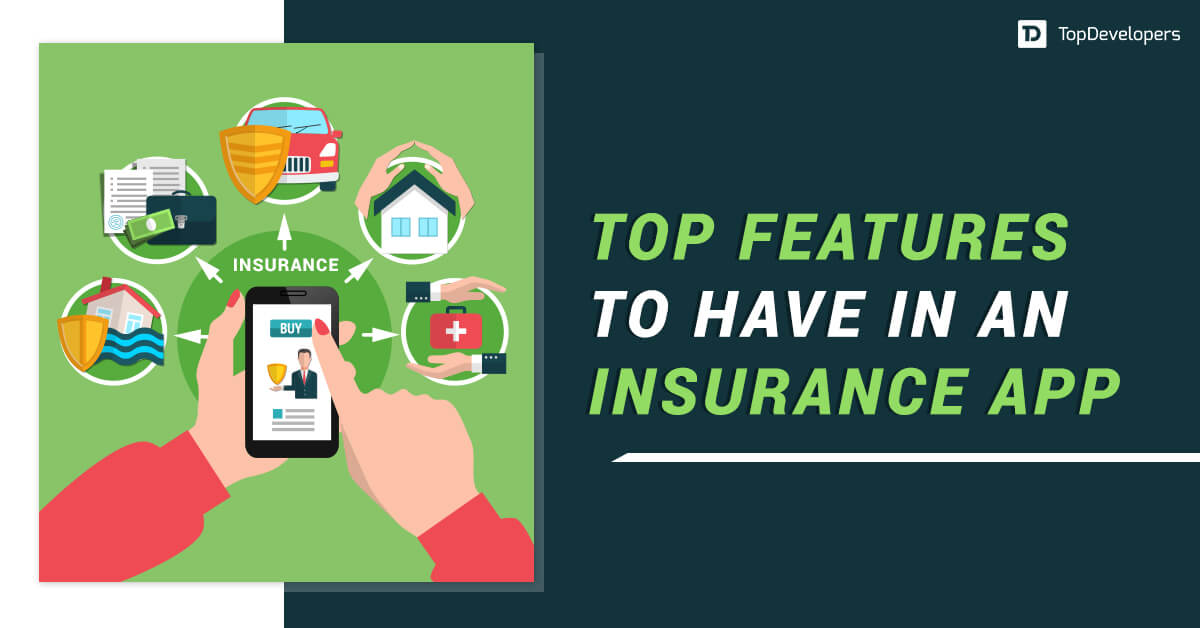
Insurance mobile apps can benefit your insurance business in several ways. They can help you reach more customers, provide better service, and increase customer loyalty. Customized insurance mobile app development can also reduce operational costs, streamline workflows, and improve data security.
By offering a convenient and personalized way for customers to access their policies, claims, and other information, insurance mobile apps can enhance your brand image and reputation. Insurance mobile apps are not only beneficial for your customers but also for your agents and employees. With customized insurance app development, you can easily communicate with customers, access relevant data, and perform tasks more efficiently. Insurance mobile apps can give you a competitive edge in the insurance market and help you grow your business.
Here, we have added niche-specific capabilities in addition to the typical functionality that every mobile insurance app must include. These must-have features for your insurance app will help to appeal to your targeted audience and provide you with all the necessary information to increase your user base and RoI.
Table of Contents
Why Businesses Are Investing in Insurance App Development?
Digital transformation is reshaping the insurance industry across every segment. Customers now prefer mobile-based insurance services that allow them to purchase policies, file claims, track approvals, and communicate with insurers directly through smartphones. Businesses that fail to provide convenient digital experiences often struggle with customer retention and operational inefficiencies.
Modern insurance mobile app development enables insurers to automate manual processes, improve customer communication, accelerate claim settlements, and reduce administrative workloads. Mobile insurance applications also provide businesses with valuable customer insights, helping them personalize services and improve engagement.
Insurance companies are also adopting AI-powered insurance applications to automate underwriting, detect fraud, improve risk analysis, and optimize customer support operations. These technologies help businesses improve scalability while enhancing overall service quality.
For startups, enterprises, and insurance providers, the development of insurance app solutions has become an important investment for long-term growth and digital competitiveness.
Core User Features Every Insurance App Should Have
The success of an insurance app largely depends on the user experience it delivers. Customers expect insurance applications to provide fast access to policies, secure payment systems, transparent claim tracking, and seamless communication. Businesses developing insurance apps should focus on user-centric features that simplify insurance processes and improve accessibility.
Core insurance app features are designed to improve customer convenience, reduce friction during onboarding and claims processing, and create a self-service insurance ecosystem. These features also help businesses strengthen customer relationships and improve retention.
AI-Powered Policy Recommendations
AI-powered recommendation engines analyze customer demographics, behavior, financial preferences, policy history, and risk profiles to suggest personalized insurance plans.
This feature improves customer engagement by helping users discover relevant insurance products quickly without manually comparing multiple plans. Artificial intelligence can also identify upselling and cross-selling opportunities based on user behavior.
For example, a health insurance app can recommend family coverage plans based on the number of dependents, while a vehicle insurance app can suggest premium upgrades based on driving patterns.
Businesses that develop insurance applications with AI-driven personalization can improve conversion rates and customer satisfaction significantly.
Quick Digital Onboarding and eKYC
Modern customers expect instant access to digital services, including insurance platforms. Quick onboarding systems allow users to create accounts, verify identity, upload documents, and purchase policies directly through the app.
Integrating eKYC technology simplifies customer verification by automating identity checks using Aadhaar verification, document scanning, facial recognition, or OTP authentication.
Fast onboarding reduces paperwork, improves operational efficiency, and accelerates customer acquisition for insurance businesses. This feature is especially important for businesses building scalable insurance mobile apps targeting large customer bases.
Multi-Factor Authentication and Biometric Login
Security is one of the most critical requirements in insurance app development because insurance applications store highly sensitive customer data.
Multi-factor authentication combines multiple verification methods such as passwords, OTP verification, device recognition, and biometric authentication to improve account security.
Biometric login features like fingerprint scanning and facial recognition improve user convenience while reducing unauthorized access risks. Strong authentication systems also help businesses maintain compliance with financial security and data protection regulations.
Smart Insurance Quote Calculator
A smart insurance quote calculator allows users to estimate premiums instantly based on various factors such as age, location, health condition, property value, driving history, or insurance type.
This feature improves pricing transparency and helps customers compare different insurance plans before making purchase decisions.
Advanced quote calculators can also use AI algorithms and dynamic pricing engines to provide real-time premium calculations. Businesses creating insurance applications can use quote calculators to improve lead generation and customer engagement.
Personalized User Dashboard
A personalized dashboard centralizes all important information related to policies, payments, claims, customer support, and notifications.
Users should be able to view policy summaries, premium due dates, renewal reminders, claim status updates, and digital documents from a single interface.
Insurance companies can also use dashboards to display AI-based recommendations, personalized offers, and policy suggestions.
A well-designed dashboard significantly improves user experience and application usability.
Real-Time Claim Tracking
Claim transparency is one of the most important expectations among insurance customers. Real-time claim tracking allows users to monitor the progress of claims from submission to settlement.
Customers can receive notifications related to claim verification, assessment updates, document approvals, and settlement status directly through the insurance mobile app.
This feature reduces customer frustration, minimizes support requests, and improves overall trust in the insurance provider. Businesses can also improve operational efficiency by automating claim communication workflows.
One-Tap Claim Filing
One-tap claim filing simplifies the insurance claim process by allowing users to submit claims directly through the app.
Customers can upload photos, videos, invoices, location details, and supporting documents without visiting branch offices or filling out lengthy paperwork.
Insurance companies can use OCR and AI technologies to extract and verify information automatically. This feature accelerates claim processing and improves customer satisfaction significantly.
Secure Digital Document Vault
Insurance customers frequently need access to policy agreements, invoices, ID proofs, claim receipts, and payment records.
A secure document vault allows users to store and retrieve these files safely from any device. Cloud-based storage systems ensure data synchronization and backup while improving accessibility.
Businesses developing insurance applications can reduce manual documentation processes through digital file management systems.
Automated Policy Renewals
Policy renewal automation helps insurance businesses improve customer retention and reduce policy lapses.
The application can send automated reminders through push notifications, SMS alerts, and email messages before renewal deadlines.
Recurring payment options further simplify the renewal process for users. This feature improves customer convenience while helping businesses maintain recurring revenue streams.
Premium Payment with Multiple Payment Options
Modern insurance applications should support multiple payment methods to improve customer convenience. Users should be able to pay premiums using UPI, credit cards, debit cards, net banking, digital wallets, and recurring payment systems.
Secure payment gateways and encrypted transaction systems are essential for maintaining trust and financial security. Flexible payment systems also improve payment completion rates and reduce transaction abandonment.
Push Notifications and Renewal Reminders
Push notifications help insurance companies maintain continuous communication with users. Businesses can send reminders for premium due dates, policy renewals, claim updates, document verification, payment confirmations, and promotional offers.
Timely communication improves engagement and encourages customers to interact regularly with the insurance app. Well-structured notification systems can also improve customer retention and upselling opportunities.
In-App Chat Support and AI Chatbot
Customer support plays a major role in the success of an insurance application.
AI-powered chatbots can provide instant responses to common customer queries related to policies, claims, payments, renewals, and account management.
Live chat support further improves customer assistance for complex issues requiring human interaction.
Businesses using AI chatbots can reduce support workloads and improve response efficiency.
Self-Service Policy Management
Self-service functionality allows users to manage insurance policies independently without relying heavily on customer support teams.
Customers should be able to update personal details, modify coverage, add beneficiaries, download documents, renew policies, and check payment history directly through the app.
This improves user convenience and reduces operational workload for insurance providers. Self-service systems are becoming essential in modern insurance mobile app development.
Policy Comparison Tool
A policy comparison feature helps users evaluate multiple insurance plans based on premiums, coverage, exclusions, claim limits, and benefits.
This feature simplifies decision-making and improves transparency during policy selection. Businesses can improve customer trust and engagement by offering easy-to-understand comparisons. Comparison tools are especially useful for health insurance, life insurance, and travel insurance applications.
OCR-Based Document Scanning
OCR technology enables users to scan documents directly using smartphone cameras.
The system automatically extracts information from documents such as ID cards, invoices, vehicle registrations, and medical records.
OCR improves onboarding speed, minimizes manual data entry errors, and accelerates claim verification. This feature is widely used in modern insurance app development solutions.
Family and Group Insurance Management
Many customers manage insurance coverage for family members or employees under a single account.
Insurance applications should support multi-user profile management for handling multiple policies efficiently.
Users should be able to view coverage details, payment schedules, and claim status for all dependents. This feature improves convenience and simplifies policy administration.
Multi-Language Support
Insurance businesses operating across different regions should provide multilingual support within their mobile applications.
Localized interfaces improve accessibility for users who prefer regional languages. Multi-language support also helps businesses expand market reach and improve customer engagement. This feature is particularly valuable for insurance companies targeting diverse customer demographics.
Offline Access to Insurance Documents
Offline access enables users to view important insurance documents even without internet connectivity.
This can be useful during emergencies, travel situations, or low-network areas. Users should be able to access policy certificates, claim receipts, emergency contact details, and digital ID cards offline. Offline functionality improves user convenience and application reliability.
Appointment Booking with Insurance Advisors
Some customers prefer expert consultation before purchasing insurance products or filing claims.
Appointment scheduling features allow users to book consultations with insurance advisors through calls, video meetings, or in-person appointments.
This improves customer communication and strengthens relationship management.
Businesses can also improve lead conversion rates through advisor consultation systems.
Emergency Assistance and SOS Support
Emergency assistance features are highly valuable for health insurance and vehicle insurance applications.
Users should be able to request ambulance services, roadside assistance, towing support, emergency claim assistance, or hospital directions directly through the app.
Geo-location integration can further improve response efficiency during emergencies. This feature improves customer trust and strengthens service reliability.
Advanced Insurance App Features
Advanced insurance app features help businesses create intelligent, scalable, and future-ready insurance ecosystems. Modern insurers are increasingly adopting technologies like artificial intelligence, blockchain, IoT, predictive analytics, telematics, and automation to improve customer experience and operational efficiency.
These advanced capabilities help insurance providers automate underwriting, personalize customer experiences, detect fraud, improve risk analysis, and accelerate claims processing. Businesses that invest in advanced insurance mobile app development can gain a competitive advantage in the growing insurtech industry.
AI-Based Fraud Detection
Insurance fraud can cause significant financial losses for insurance providers. AI-powered fraud detection systems help businesses identify suspicious activities by analyzing customer behavior, claim patterns, transaction history, and anomalies in real time.
Machine learning algorithms continuously improve fraud detection accuracy by learning from historical data and identifying unusual claim activities.
This feature helps insurance companies reduce financial risks, improve operational security, and accelerate claim verification processes.
Usage-Based Insurance and Telematics Integration
Usage-based insurance models use telematics technology to monitor driving behavior and calculate personalized premiums.
Insurance applications can collect data such as mileage, acceleration, braking habits, speed, and driving patterns through connected devices or mobile sensors.
This feature enables insurers to offer fair pricing models and personalized policy plans based on actual driving behavior.
Telematics integration is becoming increasingly important in vehicle insurance app development.
Wearable Device Integration for Health Insurance
Health insurance applications can integrate with wearable devices such as fitness bands and smartwatches to monitor wellness activities.
The app can collect health metrics including heart rate, physical activity, sleep patterns, calorie tracking, and exercise routines.
Insurance providers can use this data to encourage preventive healthcare and offer reward-based insurance programs.
This feature improves customer engagement while supporting personalized health insurance services.
Geo-Location Based Claim Assistance
Geo-location integration helps insurance companies provide faster assistance during emergencies and accidents.
Users can share their real-time location while requesting roadside support, ambulance services, hospital assistance, or emergency claims support.
Insurance applications can also help users locate nearby hospitals, repair centers, or service providers.
This feature improves response efficiency and enhances customer safety.
Voice Search and Voice Assistant Integration
Voice-enabled insurance apps improve accessibility and simplify user interaction.
Users can search policies, check claim status, access support services, and receive information using voice commands.
Voice assistant integration is particularly useful for elderly users and customers who prefer hands-free navigation.
This feature improves user convenience and modernizes the insurance application experience.
Predictive Risk Assessment
Predictive analytics helps insurance providers evaluate customer risks more accurately using AI and machine learning algorithms.
The system analyzes customer history, demographics, behavioral patterns, medical data, and external risk factors to estimate future risks.
This feature improves underwriting accuracy and helps insurers optimize premium pricing strategies.
Predictive risk analysis also supports faster decision-making during policy approvals.
Blockchain-Based Data Security
Blockchain technology improves transparency, security, and trust in insurance operations.
Blockchain systems can create tamper-proof transaction records, automate smart contracts, and reduce fraud risks during claims processing.
Insurance providers can also improve document verification and policy validation through decentralized systems.
This feature is becoming increasingly valuable in enterprise insurance app development.
Cloud-Based Data Synchronization
Cloud integration enables insurance businesses to store, access, and synchronize customer data securely across multiple devices and systems.
Cloud infrastructure improves scalability, operational flexibility, and disaster recovery capabilities.
Businesses developing insurance applications can also reduce infrastructure costs through cloud-based deployment models.
Real-time synchronization improves accessibility for both customers and internal teams.
Smart Analytics and Reporting Dashboard
Analytics dashboards provide insurance companies with real-time insights into customer behavior, claim trends, policy performance, and operational efficiency.
Businesses can use these insights to optimize services, improve customer retention, and make data-driven decisions.
Advanced reporting systems also help organizations monitor financial performance and identify operational bottlenecks.
This feature supports long-term business growth and strategic planning.
API Integration with Hospitals, Banks, and Third-Party Services
Modern insurance ecosystems rely heavily on third-party integrations to improve operational efficiency.
Insurance apps should support APIs for payment gateways, hospital systems, banking services, identity verification platforms, CRM tools, and customer support systems.
Seamless API integration helps businesses automate workflows and improve customer convenience.
This feature is essential for scalable insurance mobile app development.
Digital Signature Integration
Digital signatures simplify policy approvals and documentation processes by allowing users to sign agreements electronically.
Customers can complete onboarding, policy acceptance, and claim approvals without physical paperwork.
This improves operational efficiency and accelerates insurance workflows.
Digital signature systems also improve compliance and document security.
In-App Video Consultation for Claims and Support
Video consultation features enable customers to communicate directly with insurance advisors, claim specialists, or customer support teams.
This helps businesses provide personalized support while reducing the need for physical visits.
Video-based claim assessments can also accelerate claim verification and improve communication transparency.
This feature strengthens customer relationships and service quality.
Personalized Insurance Offers Using AI
Artificial intelligence can analyze customer preferences, purchase history, behavior patterns, and demographics to deliver personalized insurance offers.
Targeted recommendations improve customer engagement and increase policy conversion rates.
Businesses can also use AI-based personalization to improve upselling and cross-selling opportunities.
This feature enhances customer experience while increasing revenue potential.
Customer Behavior Analytics
Customer behavior analytics help insurance providers understand how users interact with the application.
Businesses can analyze user activity, feature usage, claim patterns, and customer preferences to improve services and user experience.
Behavioral insights also help organizations optimize customer engagement strategies.
This feature supports data-driven business decisions and retention strategies.
Secure Data Encryption and Compliance Management
Insurance applications manage highly sensitive customer information, making data security a top priority.
End-to-end encryption, secure APIs, role-based access control, and compliance management systems help protect customer data from cyber threats.
Insurance companies must also comply with regulatory standards related to privacy and financial security.
Strong security systems improve customer trust and reduce compliance risks.
Automated Underwriting System
Automated underwriting systems use AI and machine learning algorithms to evaluate insurance applications and assess risk automatically.
This reduces manual processing time and accelerates policy approvals.
Automation also improves underwriting consistency and minimizes human errors.
This feature is becoming increasingly important in modern insurance app development.
IoT Device Integration for Property Insurance
IoT-enabled insurance applications can integrate with smart home devices such as smoke detectors, water leak sensors, and security systems.
These devices help insurers monitor property conditions and identify potential risks before major damage occurs.
IoT integration supports preventive risk management and faster claim validation.
This feature improves operational efficiency and customer protection.
Real-Time Vehicle Damage Assessment
AI-powered image recognition technology can analyze uploaded vehicle images to assess accident damage automatically.
The system can estimate repair costs, identify damage severity, and accelerate claim processing.
This reduces manual inspections and improves claim settlement speed.
Real-time damage assessment improves customer convenience and operational productivity.
Claim Settlement Automation
Claim settlement automation streamlines the entire claims lifecycle through AI-driven workflows and automated processing systems.
Insurance providers can reduce processing delays, improve accuracy, and minimize manual intervention.
Automated workflows also improve communication transparency during claims handling.
This feature enhances customer satisfaction and operational scalability.
Cross-Platform Insurance Mobile App Support
Insurance businesses should build applications compatible with Android, iOS, tablets, and web platforms.
Cross-platform development improves accessibility and helps businesses reach wider customer audiences.
Using cross-platform frameworks can also reduce development and maintenance costs.
This approach improves scalability and long-term platform consistency.
Business and Admin Features for Insurance Applications
In addition to customer-facing capabilities, insurance applications also require powerful backend and administrative systems. Business and admin features help insurance companies manage customers, agents, workflows, analytics, security, and operational processes more efficiently.
Most insurance mobile app development projects focus heavily on customer features, but backend management systems are equally important for scalability and operational efficiency. Businesses that invest in strong admin infrastructure can improve workflow automation, team productivity, and customer management.
Agent Management Dashboard
Insurance businesses often work with multiple agents, brokers, and sales teams.
An agent management dashboard helps businesses monitor sales performance, commissions, customer interactions, and lead management activities.
Managers can track agent productivity, assign leads, and monitor policy conversions from a centralized system.
This feature improves operational visibility and team coordination.
CRM Integration for Insurance Businesses
CRM integration helps insurance companies manage customer relationships more effectively.
Businesses can track customer communication, policy renewals, support requests, and sales activities from a unified dashboard.
CRM systems improve customer engagement and help organizations build long-term relationships.
This feature also supports personalized marketing and customer retention strategies.
Customer Segmentation and Targeting
Customer segmentation tools allow insurance businesses to categorize users based on demographics, location, policy preferences, spending behavior, or engagement patterns.
This helps businesses create targeted marketing campaigns and personalized insurance offers.
Segmentation also improves lead conversion and customer retention.
This feature is valuable for both startups and enterprise insurance providers.
Commission and Payout Management
Commission management systems automate the calculation and distribution of commissions for agents and brokers.
Businesses can track payouts, monitor earnings, and generate financial reports efficiently.
Automation reduces manual accounting errors and improves payment transparency.
This feature simplifies financial operations within insurance organizations.
Role-Based Admin Access
Role-based access control helps businesses manage permissions based on employee responsibilities.
Different access levels can be assigned to administrators, agents, managers, customer support teams, and finance departments.
This improves security and prevents unauthorized access to sensitive customer information.
Role-based systems are essential for secure insurance app development.
Automated Workflow Management
Workflow automation helps insurance companies streamline approvals, claim processing, notifications, underwriting, and internal operations.
Automated workflows reduce manual workloads and improve operational efficiency.
Businesses can also improve process consistency and reduce human errors.
This feature supports scalable insurance operations.
Customer Retention and Loyalty Programs
Insurance companies can improve customer retention through loyalty programs, rewards, discounts, and referral systems.
Retention tools encourage long-term customer engagement and repeat policy renewals.
Businesses can also use personalized offers and reward points to improve customer satisfaction.
This feature helps insurance providers strengthen customer relationships.
Marketing Automation Integration
Marketing automation tools help insurance businesses manage email campaigns, push notifications, lead nurturing, and customer engagement activities.
Businesses can automate promotional campaigns based on customer behavior and policy lifecycle stages.
Marketing automation improves communication efficiency and lead conversion.
This feature supports scalable customer acquisition strategies.
Analytics for Claim and Policy Performance
Advanced analytics tools help businesses evaluate claim trends, policy performance, customer acquisition, and operational metrics.
Organizations can use these insights to optimize services, reduce claim risks, and improve profitability.
Analytics systems also support strategic planning and performance monitoring.
This feature improves data-driven decision-making.
Centralized Customer Data Management
Centralized customer databases help insurance businesses manage customer information securely across multiple departments and systems.
Employees can access policy records, communication history, payment details, and claim information from a single platform.
This improves operational coordination and customer support efficiency.
Centralized data management also improves scalability and regulatory compliance.
Common Insurance App Features
Features make an app usable and sellable. You can find mobile app development companies that excel in building customized apps as per your business needs and select the best one. Specifically, for insurance app development, including basic and advanced features is mandatory. This makes the app useful to stakeholders of all kinds including insurance companies, agents, and all the end-users.
Here is the list of common insurance app features.
Customer Dashboard
Customers and users of insurance app can access an intuitive self-service interface with the following features:
User Registration
This insurance mobile app feature allows users to set up their accounts and store their personal and contact details safely.
Manage Profile
Via this insurance app feature, users can manage their information, including contact information, complaints that have been lodged, insurance claims, and more.
Document Repository
The digital version of the insurance information, prior payments, and current and old policy documents are all displayed in the policy management section. Additionally, it enables users of the insurance mobile app to look up additional policies offered by agencies, request quotations, and choose products that fit their needs and interests.
Premium Payment
This module includes a built-in payment gateway that enables insurers to pay their premiums using various options. They can also set up automated payment instructions and reminders for upcoming premium payments here.
Claim Management
Users and policyholders should be able to report claims, add significant documents, and check the progress of their insurance claims via the application. Via this feature of your insurance mobile app, customers can submit and monitor their claims in real time. For instance, they can rapidly take a photo and share it with the app’s necessary documentation in situations like an accident or a home invasion.
Policy Management
This feature is an insurance mobile application that allows users to manage their policies directly at the touch of their screen. Users can view, update and manage the policies and insurance programs conveniently from the insurance app.
Policy Quotes
Depending on the insurance and preferred coverage alternatives, users of the insurance app should be able to get insurance policy estimates.
Premium Payment Options
This insurance app feature offers users to have preferences to buy premiums, examine their payment history and establish automated payments.
Notifications and Alerts
This feature of the insurance app provides prompt alerts to the user regarding changes in claim progress, premium due dates, new policies, and policy renewals.
Safety Aspects
Robust safety and security measures like two-factor authentication, biometric authentication, and data encryption should be implemented in the Insurance app. Having a safety feature in your insurance app helps insurers to feel safe as their data is secure with you.
Customer Support and Assistance
The Insurance app should provide different ways for policyholders and app users to get in touch with customer support with features such as live chat, and email. You can make live chat with the in-app calling option available in your insurance application. It lets users communicate with customer support representatives about their insurance, premiums, claims, and other inquiries.
Payment Gateway Integration
The app for insurers should have a feature for multiple payment options so users can choose their preferred way of payment. For instance credit/ Debit cards, eWallet, Online payment portals, and more.
In-app Calculator
Users can check policies and calculate the premium itself using such a feature. This increases the user experience for your insurance app.
Admin Panel
The admin panel is one of the essential parts of an insurance app development. You can have an end-to-end admin panel that offers complete control of the business alongside a live dashboard to track key KPIs. It also allows the administrator to edit the following functionalities.
Manage Users
From here, you can browse, add, and manage agent and client profiles containing business and private information. Admin can provide or restrict access to additional features of the mobile insurance app thanks to role-based access.
Document Repository
This insurance app feature enables the upload, management, and storage of electronic documents such as registration forms, insurance policies, claim resolution agreements, payment receipts, billing, and more.
Policy and Claim Management
Admin users can set and modify policy data for private persons, businesses, organizations, and groups. They can also handle workflows for policies, check cancellations and renewals, processes for expired policies, claim assessment and processing, and more.
Manage Payment
This feature of the insurance app will allow insurance agencies to manage recurring billing for consumers, set up commissions for agents and brokers, and create fast payment receipts. Through this, it is also possible to assist in implementing different payment mechanisms to allow customers to make payments via net banking, credit/debit cards, or mobile wallets.
Reporting and Analytics
With the addition of this feature in your insurance app, it is possible to interact with external systems like Customer Relationship Management (CRM), Enterprise Resource Planning (ERP), and more. It makes creating and downloading custom reports about business performance, reporting by region, customer profiling, and other topics easier.
To have a better understanding of the key indicators this advanced feature is provided to the admin panel. Indicators like client acquisition and retention rates, claim processing duration, and premium costs are the tools provided at the administrator’s end to check analytics.
Furthermore, As an Insurance service provider, you can choose to implement technologies such as Artificial Intelligence (AI), IoT (Internet of Things), and Cyber Security in your application.
Apart from the access as mentioned above, there are also various other vital features which include notification management, alert and push notifications, insurance telematics, appointment management, and geolocation management.
Advanced niche-specific Features
There are various types of insurance; hence, it is essential to figure out the type of insurance business to find the ideal advanced features for the insurance application.
Life Insurance
- The insurance agent’s mobile app would have a policyholder profile with all pertinent data on the insured person or thing.
- List of policies for the final client to look through all available choices and make an informed choice
- Utilization of policies outlining all possible use scenarios together with restrictions
- Insurance activation and deactivation are on-demand in the event that the user wants to upgrade, switch, or stop.
- Geolocation
Real Estate and Property Insurance
- Reminders for periodic asset and property maintenance.
- Telematics to monitor leaks, malfunctions, and anticipated failures that could cause expensive damages
Vehicle Insurance
- Vehicle Insurance Listings of services specialized to automobiles to help users quickly and accurately decide
- In the event of an accident, policyholders can use geolocation to inform the whereabouts of the insurance agent immediately.
- Connectivity with a mapping tool to track repair services, petrol stations, and related assistance right away
- Tracking the vehicle’s speed, braking style, and driving habits using sensors to send alerts and support the claim process
- File claim on the spot
- Accident site picture and video upload
Health Insurance
- Search tools to help you select the suitable health plan
- Search tools to help you locate the best physicians, doctors, and specialties
- Create appointments using a built-in calendar and get reminders.
- Choose which doctor to see based on your symptoms. Pharmacy checks to see if your insurance will cover your prescriptions.
Travel Insurance
- Travel guides with itineraries that have been verified to provide a complete customer experience
- Listings of services for hassle-free and seamless adventures
- Use the in-app map to explore new locations safely.
- Use the in-app chat feature to address issues like loss of travel documents, lost luggage, flight delays, hospitalization, etc.
- Making travel simple, enjoyable, and safe through language translation
- Tracking claims for clear and stress-free processing
Business Insurance
- Short quotes that explain what is covered
- Dependable authentication to confirm user credentials and identity
- Easily navigable dashboard for getting acquainted with all policy features
- Easy and quick access to relevant information thanks to intuitive search functionality
- Processing claims automatically for efficient risk management
- Suitable package selection based on business size and associated risks
Additionally, you can also go for the implementation of cutting-edge features like:
- Advanced search
- Multilingual support
- Hospital mapping
- Claim filing automation
- Medical history tracking and more
Tips: How to Choose a Mobile App Development Company to Build an Insurance App
Assure the Insurance App now!
In conclusion, an insurance app offers many benefits to your customers, such as convenience, security, and savings. Stay competitive, and have a mobile app for your insurance company because, through your insurance mobile app, your clients can access their policy details, make claims, and get personalized recommendations anytime and anywhere. As an insurance company, you can also enjoy enhanced protection with advanced encryption and fraud prevention features through customized insurance apps.
Avantika Shergil
| May 15, 2026


Avantika Shergil is a technology enthusiast and thought leader with deep expertise in software development and web technologies. With over 8 years of experience analyzing and evaluating cutting-edge digital solutions, Avantika has a knack for demystifying complex tech trends. Her insights into modern programming frameworks, system architecture, and web innovation have empowered businesses to make informed decisions in the ever-evolving tech landscape. Avantika is passionate about bridging the gap between technology and business strategy, helping businesses build customized software and website, and understand about different tools to leverage effectively for their ventures. Explore her work for a unique perspective on the future of digital innovation.