How AI Can Help Businesses Manage Holiday Season Demand?
 By
Derek Cohen
|
Nov 19, 2026 |
Artificial Intelligence
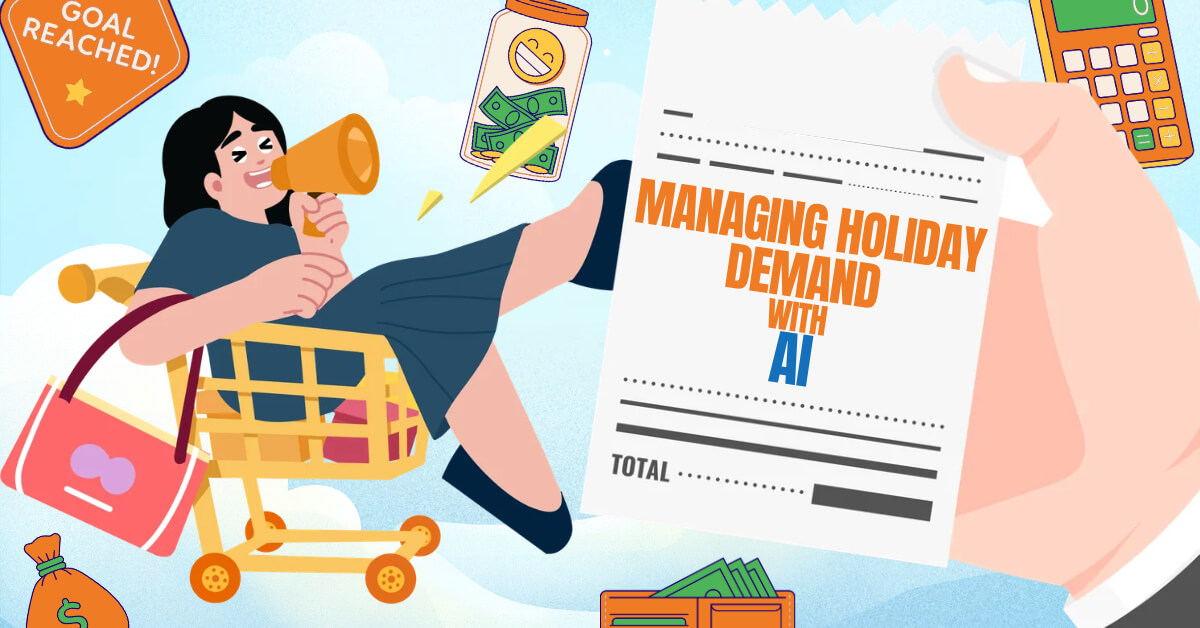
The holiday season brings a significant increase in customer demand, creating opportunities as well as operational pressure for businesses. Retailers, eCommerce companies, restaurants, travel providers, and other businesses must manage higher order volumes, changing customer preferences, inventory requirements, and increased service requests within limited timeframes. Meeting these expectations requires accurate planning and efficient coordination across business operations.
AI in business processes helps businesses respond to these seasonal fluctuations by analyzing historical sales, predicting customer demand, automating repetitive tasks, and supporting faster operational decisions. These applications of AI technology allow businesses to identify purchasing patterns, recommend inventory adjustments, personalize customer interactions, and optimize order fulfillment based on changing demand.
From demand forecasting and inventory management to customer support and delivery optimization, AI offers several ways to handle seasonal business requirements. Its applications can help businesses make informed decisions, respond to customer needs, and coordinate resources more effectively throughout the holiday season.
Table of Contents
Top Ways AI Manage Seasonal Business Demand
Managing holiday-season demand requires businesses to anticipate customer needs, maintain product availability, handle increased transactions, and coordinate multiple operations simultaneously. AI helps address these requirements by analyzing business data, identifying demand patterns, and automating decisions across different operational activities. Businesses can apply AI in several ways to respond to seasonal demand more efficiently and maintain consistent customer experiences.
Predicting Holiday Season Demand and Sales
AI-powered demand forecasting helps businesses estimate how customer demand may change during the holiday season. Machine learning models analyze historical sales records, previous holiday purchases, customer browsing behavior, market trends, seasonal patterns, and promotional activities to identify factors that influence purchasing decisions. These insights help businesses estimate future sales volumes and prepare their operations accordingly.
For example, an eCommerce business can use AI to identify which product categories are likely to experience higher demand during Black Friday, Christmas, or New Year sales. The system can compare previous seasonal sales with current browsing activity, search trends, and purchasing patterns to generate demand forecasts. Businesses can use these predictions to plan inventory purchases, allocate warehouse capacity, and prepare fulfillment operations before orders increase.
AI forecasting systems can also process changing market conditions and update predictions as new sales and customer behavior data becomes available. This allows businesses to respond to unexpected demand spikes instead of relying entirely on historical estimates. According to Deloitte, its 2026 Retail Industry Global Outlook reported that 38% of surveyed retailers were using AI for demand planning and forecasting.
By using AI for sales and demand prediction, businesses can make more informed decisions about seasonal product availability, purchasing requirements, and operational capacity.
Managing Inventory and Stock Availability
AI helps businesses maintain appropriate inventory levels by analyzing product demand, current stock, sales velocity, supplier availability, and replenishment timelines. Machine learning models use these inputs to identify products that may experience increased demand and estimate the quantities required to meet upcoming orders. This helps businesses plan stock replenishment and reduce the chances of running out of popular products during the holiday season.
For example, an online retail store can use AI to identify products that are selling faster than usual during Christmas promotions. Based on current sales trends and predicted demand, the system can recommend increasing stock levels for high-demand products while avoiding unnecessary purchases of slower-moving items. AI-powered inventory management can also generate replenishment alerts when stock levels approach predefined thresholds.
AI can further support inventory distribution across multiple warehouses and retail locations. By analyzing regional purchasing patterns, local demand, and available stock, these systems can recommend where products should be stored to meet customer requirements more efficiently. Businesses implementing such capabilities can work with top AI companies to develop systems that connect demand forecasting with inventory management and distribution processes.
According to the DHL 2025 E-Commerce Trends Report, 43% of surveyed retailers identified real-time inventory updates as a technology they were likely to use. AI-supported inventory systems can build on this capability by using changing stock and demand information to support replenishment and distribution decisions.
Automating Customer Support and Handling Inquiries
Customer inquiries often increase during the holiday season as shoppers seek information about product availability, discounts, delivery timelines, payment options, and return policies. AI-powered chatbots and virtual assistants help businesses handle this increased workload by responding to common questions without requiring employees to manage every interaction manually. These systems use natural language processing (NLP) to understand customer queries and provide relevant responses through websites, mobile applications, and messaging platforms.
For example, an online store can deploy an AI chatbot to answer questions about holiday offers, check order statuses, explain shipping policies, and assist customers with product-related queries. When a customer needs help with a more complicated issue, the chatbot can transfer the conversation to a human support representative along with the relevant interaction history. This reduces repetitive work for support teams while allowing employees to concentrate on issues that require individual attention.
AI-powered customer support can also analyze incoming inquiries to identify recurring problems, common complaints, and frequently requested information. Businesses can use these insights to update their FAQs, improve product information, and address issues that generate unnecessary support requests. Integrating AI chatbots with eCommerce platforms and customer relationship management (CRM) systems can further help businesses maintain consistent customer information across support channels.
According to Deloitte’s 2026 Retail Industry Global Outlook, 42% of surveyed retailers reported using AI-powered customer service chatbots. This adoption reflects how businesses are applying conversational AI to manage customer interactions and support operations.
These capabilities are particularly relevant to AI in eCommerce, where customer interactions across digital shopping channels can increase considerably during seasonal promotions.
Personalizing Customer Experiences and Product Recommendations
Customer preferences and purchasing behavior can change significantly during the holiday season as shoppers search for gifts, seasonal products, special offers, and personalized shopping experiences. AI helps businesses understand these changing preferences by analyzing browsing history, previous purchases, search queries, product interactions, and customer interests. Based on this information, recommendation engines can suggest relevant products, display personalized offers, and tailor shopping experiences to individual customers.
For example, an eCommerce platform can use AI to recommend gift products based on a customer’s previous purchases, preferred categories, and recently viewed items. If a shopper frequently browses electronics, the platform can prioritize relevant gadgets, accessories, and holiday bundles instead of displaying unrelated products. AI can also adjust recommendations during a shopping session based on newly viewed products, cart activity, and interactions with promotional offers.
AI-powered personalization can also help businesses create targeted holiday marketing campaigns. By segmenting customers according to purchasing patterns, spending preferences, and engagement history, businesses can deliver relevant product suggestions, promotional messages, and discounts through email, mobile applications, and websites. These personalized interactions can make product discovery more relevant while helping businesses respond to different customer requirements during peak shopping periods.
According to Salesforce’s 2025 holiday shopping research, AI and AI agents influenced approximately 20% of global retail sales during the holiday season, representing around $262 billion in revenue. This highlights the growing role of AI-driven product discovery and personalized shopping interactions in retail commerce.
These capabilities are closely connected with AI in eCommerce, where recommendation engines and customer behavior analysis help businesses adapt digital shopping experiences to individual preferences.
Optimizing Holiday Pricing and Promotional Offers
Holiday shopping periods often involve frequent price changes, seasonal discounts, flash sales, and promotional campaigns. AI helps businesses optimize these pricing decisions by analyzing product demand, competitor prices, inventory levels, historical sales, and customer purchasing behavior. Machine learning models can identify pricing patterns and recommend adjustments that reflect changing market conditions and business objectives.
For example, an online retailer can use AI to monitor the demand for popular products during Black Friday or Christmas sales. If a particular product experiences higher demand while its available stock decreases, the system can recommend adjusting its promotional pricing based on inventory requirements and pricing rules. Similarly, AI can identify products with slower sales and suggest targeted discounts or bundled offers to encourage purchases.
AI can also help businesses evaluate the performance of different holiday promotions. By analyzing customer responses, conversion rates, order values, and campaign performance, these systems can identify which offers generate stronger engagement and sales. Businesses can use these insights to adjust promotional campaigns, personalize discounts, and allocate marketing budgets toward offers that align with customer demand.
According to Deloitte’s 2026 Retail Industry Global Outlook, 48% of surveyed retailers reported using AI for pricing and promotions optimization. This reflects the growing application of AI in helping retail businesses make pricing and promotional decisions using market and customer data.
AI-driven pricing systems can also support AI in big data analytics by processing large volumes of sales, market, and customer information to identify pricing opportunities and changing purchasing patterns.
Streamlining Order Processing and Fulfillment
Higher order volumes during the holiday season can put pressure on order processing systems, warehouse operations, and fulfillment teams. AI helps businesses manage these activities by automating order verification, prioritizing processing tasks, monitoring fulfillment progress, and coordinating inventory across different sales channels. These capabilities help businesses process incoming orders more efficiently and maintain visibility throughout the fulfillment process.
For example, an eCommerce business can use AI to categorize incoming orders based on product availability, delivery deadlines, shipping locations, and fulfillment requirements. The system can prioritize orders with approaching delivery commitments and recommend the most suitable warehouse for processing them. AI can also identify potential order discrepancies, flag unusual requests, and notify employees when an order requires manual review.
AI-powered warehouse management systems can further improve fulfillment by coordinating picking, packing, and dispatch operations. Predictive algorithms can estimate warehouse workloads, identify potential processing delays, and recommend adjustments to task allocation. When integrated with inventory management and order management platforms, AI can provide businesses with a connected view of stock availability, order status, and fulfillment activities.
These applications are particularly useful for businesses operating across multiple online and offline sales channels. Integrating AI with eCommerce development companies and their technology solutions can support connected shopping and order management systems that handle increased seasonal transactions.
Optimizing Delivery Routes and Logistics
Increased order volumes during the holiday season can create logistical challenges for businesses, particularly when delivery networks handle more shipments across multiple locations. AI helps businesses coordinate transportation activities by analyzing delivery addresses, traffic conditions, weather forecasts, shipment volumes, vehicle availability, and delivery schedules. These insights allow logistics teams to identify efficient delivery routes, allocate vehicles, and adjust transportation plans according to changing conditions.
For example, a delivery company can use AI-powered route optimization to determine the most efficient sequence of delivery stops for each vehicle. The system can consider traffic congestion, road closures, delivery deadlines, and shipment priorities to recommend alternative routes when conditions change. This helps delivery teams manage larger shipment volumes while reducing unnecessary travel and potential delays.
AI can also predict transportation demand by analyzing historical shipment data and current order volumes. Logistics businesses can use these predictions to plan vehicle availability, distribute shipments across fulfillment centers, and allocate delivery personnel according to expected workloads. When integrated with warehouse management and shipment tracking systems, AI can provide real-time updates about delivery progress and identify shipments that may require intervention.
These capabilities are particularly relevant for businesses managing multiple distribution locations and delivery networks during peak shopping periods. AI-powered logistics solutions can also use AI in big data analytics to process traffic, shipment, and operational information for better transportation planning.
Managing Workforce and Resource Allocation
Holiday-season demand can increase workloads across customer support, warehouses, retail stores, delivery operations, and other business departments. AI helps businesses estimate workforce requirements by analyzing historical workloads, expected sales volumes, order patterns, employee availability, and operational schedules. These predictions allow managers to allocate employees and resources according to anticipated demand rather than relying entirely on fixed staffing arrangements.
For example, a retail business can use AI to predict which store locations or departments will experience higher customer traffic during holiday sales. Based on these forecasts, the system can recommend employee schedules, shift adjustments, and staffing levels to maintain adequate coverage. AI can also help warehouse managers estimate picking and packing workloads to distribute tasks across available employees.
AI-powered workforce management systems can further monitor operational workloads and identify areas where additional resources may be required. Businesses can use these insights to adjust employee schedules, assign tasks, and coordinate temporary staffing during peak periods. This helps maintain operational continuity while reducing the risk of overloading particular teams.
Detecting Fraud and Suspicious Transactions
Increased online shopping and payment activity during the holiday season can create additional opportunities for fraudulent transactions, unauthorized purchases, account takeovers, and payment abuse. AI-powered fraud detection systems analyze transaction histories, purchasing behavior, device information, payment patterns, and other risk indicators to identify activities that differ from normal customer behavior. Machine learning models can flag suspicious transactions for further verification before businesses process them.
For example, an eCommerce platform can use AI to identify unusual purchasing activity, such as multiple high-value orders from a newly created account, repeated payment failures, or transactions involving unexpected changes in device or location information. The system can assign risk scores to these activities and trigger additional authentication or manual review when necessary. This helps businesses identify potential fraud while minimizing unnecessary interruptions to legitimate purchases.
AI systems can also monitor transaction patterns continuously and update their fraud detection models as new threats emerge. Businesses should combine these systems with secure payment gateways, identity verification, and human oversight to avoid relying entirely on automated risk assessments. Proper monitoring is particularly important because inaccurate fraud detection can also affect genuine customers during high-volume shopping periods.
These applications make data protection and AI risks in mobile apps relevant considerations for businesses using AI-powered shopping and payment systems. Security controls, transaction monitoring, and responsible data handling help businesses manage suspicious activity without compromising customer trust.
Managing Customer Retention and Repeat Purchases
Holiday promotions can attract new customers, but businesses also need to maintain relationships with existing customers after seasonal purchases. AI helps businesses analyze purchase frequency, product preferences, customer engagement, feedback, and previous interactions to identify customers who are likely to make repeat purchases. These insights allow businesses to create targeted retention campaigns based on individual customer behavior.
For example, an online retailer can use AI to identify customers who purchased festive decorations, electronics, or seasonal gifts and recommend complementary products based on their previous orders. The system can also determine suitable times to send follow-up offers, replenishment reminders, and personalized product suggestions. This helps businesses maintain relevant customer interactions beyond the initial holiday shopping period.
AI can also analyze customer feedback, support conversations, and purchase patterns to identify signs of declining engagement. Businesses can use these findings to improve customer experiences, address recurring concerns, and create retention strategies for different customer segments. By connecting customer data with CRM and marketing automation platforms, AI helps businesses maintain consistent communication throughout and after the holiday season.
Conclusion
Managing holiday-season demand requires businesses to coordinate inventory, customer support, pricing, order fulfillment, logistics, and workforce operations while responding to changing customer expectations. AI helps businesses handle these requirements by analyzing demand patterns, automating repetitive activities, and providing insights that support timely operational decisions. Its applications across different business functions can help organizations manage increased workloads and maintain consistent service during peak shopping periods.
Businesses can apply AI according to their operational requirements, existing technology infrastructure, and seasonal demand patterns. Integrating AI-powered solutions with inventory management, eCommerce platforms, CRM systems, and other business applications can create more connected operations. With appropriate data, system integration, and human oversight, businesses can use AI to manage holiday demand more effectively and maintain customer relationships beyond the festive season.
Derek Cohen
| Nov 19, 2026
Analyzing business activities and data to formulate the best business development ideas is where I earn appreciations and remunerations. I’m an ardent reader, business adviser, gadget aficionado and an amateur yet an avid writer. My urge for innovative writing evokes every time I come across new gadgets, neo technology and novel technical events.