Best Keyword Research Tools For SEO in 2027
 By
Avantika Shergil
|
Sep 28, 2026 |
SEO

Ask any SEO expert and they will tell you how important it is to have a strong keyword strategy.
The right keyword strategy is not only identifying the seed keywords for your brand. It is to map out a smart keyword mix that includes primary, secondary, and long tail keywords. This helps you draft a content strategy that aligns with your service industry and build your online presence among your target audience.
- But how do you sort out the best keywords for your business?
- Which keywords will direct traffic to your website?
- What is the intent of the keywords you are targeting?
- What is the volume, CPC and keyword difficulty of your seed keywords?
These questions may seem simple. But the one who knows how to rank understands its importance.
You must define these factors in order to build a winning content strategy. And you cannot define these without a keyword tool.
Keyword research tools are platforms that enable you to conduct in-depth keyword research and analysis. It helps you to sort out the best keywords according to their demographics, volume, intent, SERP features, and more.
Additionally, keyword research tools for SEO give you an insight into customer queries. This helps you understand the common queries your customers have, their pain points, and preferences.
Keyword gap, competitor analysis, keyword clusters, and questions are added bonuses that you get with the best keyword research tools.
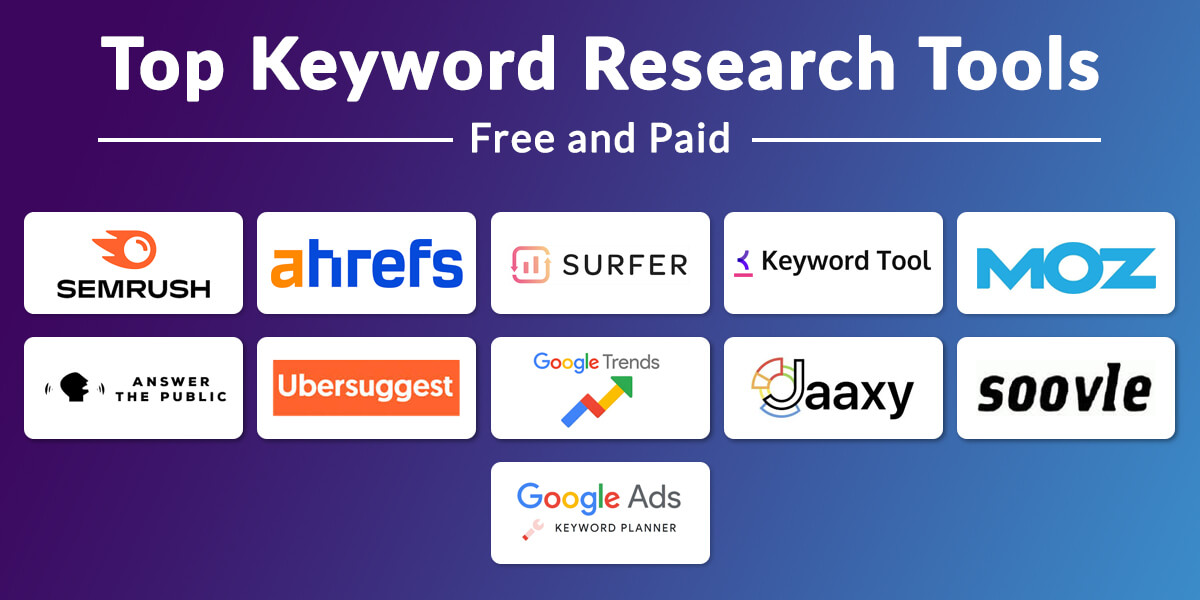
In this blog, we have curated a list of the best keyword planner tools (both paid and free) to help you find the one that fits your needs.
Table of Contents
What Makes the Best Keyword Research Tool?
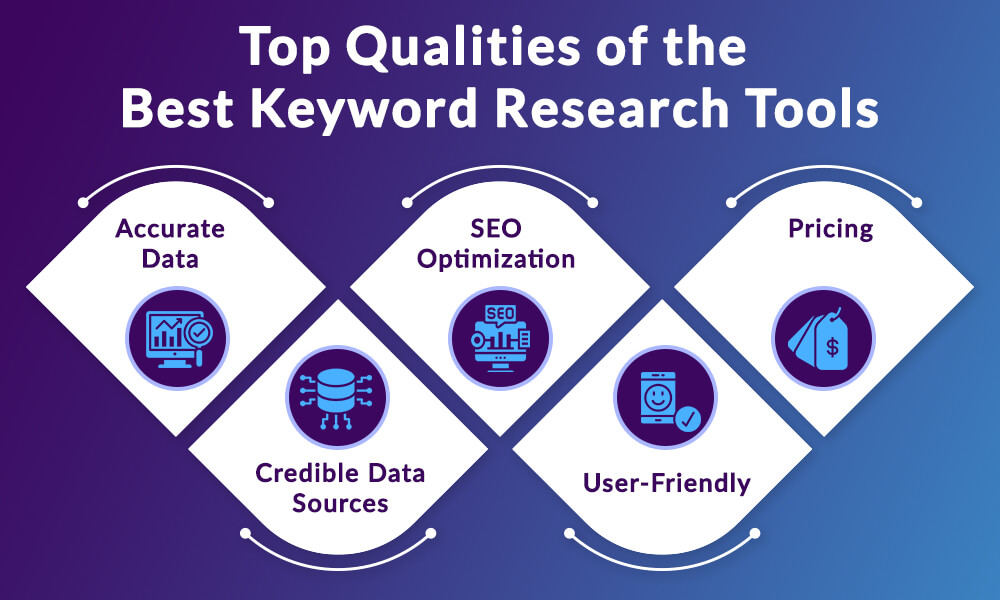
There are hundreds of keyword research tools in the market. Finding the one that is easy-to-use, gives accurate data, and offers SEO optimization tips has become hectic.
So, what makes a keyword tool ideal for SEO purposes?
Accurate Data: The Foundation of Effective Keyword Research
The core purpose of a keyword planner is to offer accurate and credible data. It’s a simple process – you enter the keywords and it gives you all the data related to it.
You get demographically categorized volume, keyword difficulty, related keywords, faqs, top-ranking pages, CPC, intent, and more. The more the data, the better it is for your analysis.
So, you should go for the keyword planner that provides you with all the data you need to rank your website.
Credible Data Sources: Ensuring Trustworthy Keyword Insights
Data is useful only if it comes from trusted sources. The keyword tool you use should be extracting data from reliable sources.
Most of the top keyword research platforms get their data from Google Analytics and Google Search Console.
If the platform is using unreliable sources to pull in data, it won’t help you rank on Google SERP.
SEO Optimization: How a Good Tool Enhances Your SEO Strategy
Best keyword research tools not only help with keyword planning but also SEO optimizations. The top-most SEO audit tools conduct an overall SEO analysis of your website and offer suggestions for improvement.
Tools like Semrush and Ahrefs help you:
- Evaluate site speed
- Analyze technical SEO
- Check backlink quality
- Track organic keyword positionings
- Analyze website traffic
- Offers tips for on-page SEO improvements
- Plan ad campaigns
- Analyze competitor’s social media metrics
- Conduct topic research
…and more
This additional data helps you keep in check the overall SEO of your website. Plus, it also assists you in planning your marketing strategies that build your brand identity and boost your online visibility.
User-Friendly Interface: Making Keyword Research Simple and Efficient
The purpose of any tool is to make our work simple. So, when it comes to keyword tools with several features, user-friendliness is a necessity.
What is the use of SEO optimization features, and keyword analysis data when you cannot figure out how to access them?
That is why the best keyword planner tool is the one which you can easily navigate. You should be able to access the features and utilities. Plus, the SEO data should be structured in a way that’s easy for you to understand.
Also, backlinks, on-page SEO, technical SEO, social media, competitor analysis, and others should be categorized as separate features. So, that you are not overloaded with all the data on one screen. You can use these features as and when required and focus more on one aspect at a time.
Pricing: Finding a Keyword Tool That Fits Your Budget
All the goodies come with a cost. Top keywords research tools like Semrush, Moz, Ahrefs, and Keyword Surfer have monthly and annual subscription plans. Plus, the plans are divided as per the use cases. There are different plans for individuals, SEO companies, and enterprises.
However, there are free keyword research tools as well. The top ones include Google Keyword Planner, Google Search Console, Jaxy, and Google Trends.
Some keyword planner tool also offers limited free usage. After it’s exhausted, you will have to take a subscription to use the services.
So, you should find a keyword tool that is your one-stop destination for all SEO purposes and fits your budget. So, that you don’t require any additional paid tools or extensions to help you with digital marketing strategies.
Best Free and Paid Keyword Research Tools
Allintitle KW Explorer
Allintitle KW Explorer is a useful keyword research tool for finding long-tail keywords, questions, and search opportunities that may not appear in a basic keyword planner. It combines data from sources such as Google Auto Suggest, Bing, YouTube, Amazon, Quora, and advertising platforms to generate keyword ideas.
What makes KW Explorer interesting for SEO research is its focus on real-time keyword discovery. You can enter a seed keyword and uncover related phrases along with metrics such as search volume, CPC, competition, and search intent.
The tool also provides keyword clustering features that can help businesses group related terms into topics. This can make it easier to plan content around primary keywords, related keywords, and long-tail variations instead of creating separate pages for every similar query.
Allintitle also provides an Allintitle and Keyword Golden Ratio checker. These features can help SEO professionals assess the level of competition around specific search terms and identify opportunities that may be easier to target.
Key features of Allintitle KW Explorer:
- Long-tail keyword discovery
- Real-time keyword suggestions
- Keyword search volume
- Keyword difficulty and competition data
- Search intent identification
- Keyword clustering
- Allintitle checker
- Keyword Golden Ratio checker
- People Also Ask research
- CSV keyword export
Allintitle KW Explorer Pricing: Free KW Explorer is available. Paid Allintitle plans start at $30/month for 600 tokens, with higher plans available.
SISTRIX
SISTRIX is a comprehensive SEO platform that combines keyword research with competitor analysis, visibility tracking, SERP analysis, content research, and other SEO capabilities. It is particularly useful for businesses that want keyword data alongside a broader view of organic search performance.
Its Keyword Discovery tool lets you enter a seed keyword and find related terms based on the selected country. The results include useful keyword metrics such as search volume, estimated organic clicks, trend information, competition, and CPC.
SISTRIX can also help businesses investigate competitor keywords and identify opportunities that may have been overlooked in their existing SEO strategy. Its large keyword database and historical data can be useful when researching established markets or evaluating changes in search demand.
For larger SEO teams, SISTRIX also combines keyword research with keyword tracking, content planning, domain analysis, and reporting. This makes it suitable for businesses that need more than a standalone keyword research tool.
Key features of SISTRIX:
- Keyword Discovery
- Search volume data
- Keyword competition
- CPC data
- Keyword trends
- Competitor keyword analysis
- SERP analysis
- Keyword tracking
- Content Planner
- Visibility Index
SISTRIX Pricing: €119/month for Start, €239/month for Plus, €419/month for Professional, and €799/month for Premium, plus applicable taxes.
Keyword Tool
Keyword Tool is a popular keyword suggestion tool designed to uncover search phrases from autocomplete data across multiple platforms. Instead of relying only on Google, it can generate keyword ideas from platforms such as YouTube, Bing, Amazon, TikTok, Instagram, Reddit, Pinterest, and others.
To use it, enter a seed keyword and select the platform, country, and language you want to research. The tool then generates related search queries that can help businesses identify long-tail keywords, question-based searches, product searches, and other variations.
The Pro version adds keyword metrics such as search volume, CPC, competition, historical trends, and device data. You can also upload keyword lists for bulk search volume analysis and export your research for further content planning.
This makes Keyword Tool particularly useful for content marketers and businesses that want to understand how people search across different platforms. It can also help generate keyword ideas before validating them through deeper SERP and competitor analysis.
Key features of Keyword Tool:
- Google keyword suggestions
- YouTube keyword research
- Amazon keyword research
- Long-tail keyword discovery
- Search volume data
- CPC and competition data
- Historical keyword trends
- Bulk search volume analysis
- Keyword export
- API and AI integration
Keyword Tool Pricing: A free version is available. Paid plans currently start at $68/month when billed annually, with Growth at $148/month, Scale at $308/month, and Agency at $628/month.
QuestionDB
QuestionDB is a keyword research tool focused on finding questions and topic ideas around a particular keyword. It can be useful for businesses and content teams that want to understand the problems, questions, and information needs behind a search query.
Enter a seed keyword and QuestionDB generates question-based keyword ideas that can be used for blog posts, FAQ pages, landing pages, and supporting content. This approach is useful when you want to move beyond broad keywords and identify more specific search intent.
The platform also provides search volume, keyword difficulty, and CPC data on its paid plans. These metrics allow businesses to evaluate potential topics instead of choosing content ideas based only on the wording of a question.
QuestionDB can therefore fit well into a content marketing workflow where the goal is to find useful questions first and then prioritize them according to SEO metrics.
Key features of QuestionDB:
- Question-based keyword discovery
- Long-tail keyword ideas
- Search volume data
- Keyword difficulty
- CPC data
- Content topic research
- CSV export
- Image export
QuestionDB Pricing: Free plan with 5 searches/month; Solo $9.99/month, Business $29.99/month, and Enterprise $69.99/month.
Wordtracker
Wordtracker is an established keyword research platform designed to help marketers find keyword ideas, analyze competition, and identify opportunities in the long tail. It can be used to research keywords across different markets and territories.
The platform provides keyword suggestions along with search and competition metrics, making it useful for businesses that want to build a broader keyword list before selecting terms for their SEO strategy.
Wordtracker also supports competitor research, allowing users to examine the keywords associated with competing domains. Its territory coverage can help businesses perform keyword research for different geographic markets rather than relying on one general dataset.
For businesses that need keyword research at scale, Wordtracker also provides an API that can be used to integrate keyword data into custom applications and SEO workflows.
Key features of Wordtracker:
- Keyword discovery
- Long-tail keyword research
- Keyword competition metrics
- Competitor keyword analysis
- Domain keyword analysis
- Multiple geographic territories
- Ranking keyword research
- Google Search Console integration
- Keyword API
- Keyword reporting
Wordtracker Pricing: Bronze starts at $24/month when billed monthly or $17/month when billed annually; Silver is $69/month or $38/month annually, and Gold is $99/month or $54/month annually.
Exploding Topics Keyword Tool
Exploding Topics Keyword Tool is a free keyword research tool that combines keyword suggestions with basic SEO metrics and trend information. It is particularly useful when you want to identify search terms that are gaining or losing popularity.
Enter a keyword to see related terms along with metrics such as search volume, keyword difficulty, CPC, number of search results, and search trends. This gives content marketers a quick way to evaluate potential keywords before developing a larger content plan.
The tool can be useful for finding newer and trending keyword opportunities. For example, a business entering a growing market can use keyword trends to identify topics that are gaining interest rather than relying only on established search terms.
Exploding Topics also offers a broader trend research platform for businesses interested in emerging topics, products, and market opportunities. Its keyword tool itself is free, making it accessible to beginners and small businesses starting their SEO research.
Key features of Exploding Topics Keyword Tool:
- Free keyword research
- Keyword suggestions
- Search volume
- Keyword difficulty
- CPC data
- Search trend analysis
- Related keyword discovery
- Trending topic research
- Easy-to-use interface
- Keyword database
Exploding Topics Keyword Tool Pricing: The Keyword Tool is free. Exploding Topics Pro starts at $39/month for the Entrepreneur plan.
Mangools KWFinder
Mangools KWFinder is a popular keyword research tool designed to make keyword discovery easier for beginners, bloggers, marketers, and small businesses. Its interface focuses on finding relevant keywords without the complexity of some larger SEO platforms.
You can enter a seed keyword to discover related search terms and review metrics such as search volume, keyword difficulty, and historical trends. KWFinder also supports competitor-based research, which can help you find keywords that other websites are already ranking for.
One useful feature is its focus on long-tail keywords and lower-competition opportunities. Businesses can use these terms to build content around specific search intent instead of targeting only highly competitive short-tail keywords.
KWFinder is also part of the broader Mangools SEO toolkit, which includes SERPChecker, SERPWatcher, LinkMiner, and SiteProfiler. This gives users access to SERP analysis, rank tracking, backlink research, and website metrics within the same subscription.
Key features of Mangools KWFinder:
- Keyword discovery
- Long-tail keyword research
- Keyword difficulty
- Search volume trends
- Competitor keyword research
- SERP analysis
- Keyword rank tracking
- Backlink analysis
- Site analysis
- Keyword lists and exports
Mangools KWFinder Pricing: Mangools plans start at $29/month when billed monthly, with annual pricing available at a lower monthly equivalent. All plans include KWFinder and the other Mangools SEO tools.
LowFruits
LowFruits is a keyword research tool built around finding low-competition search opportunities. It is especially useful for businesses, bloggers, and smaller websites that may not have the authority needed to compete for highly competitive keywords.
The tool can generate long-tail keyword ideas from Google autocomplete and analyze the search results for those keywords. Its SERP analysis helps identify opportunities where weaker or less authoritative websites are already ranking.
LowFruits also supports competitor keyword research. You can extract keywords from competing websites, identify their ranking terms, and look for relevant opportunities that could be added to your own SEO strategy.
The platform goes beyond keyword discovery with features such as rank tracking, competitor analysis, domain exploration, and pre-calculated SERP scores. This makes it useful for finding keyword opportunities where search volume and ranking difficulty can be evaluated together.
Key features of LowFruits:
- Low-competition keyword discovery
- Long-tail keyword research
- Google autocomplete keyword ideas
- SERP analysis
- SERP difficulty scoring
- Competitor keyword extraction
- Competitor sitemap analysis
- Keyword rank tracking
- Domain Explorer
- Keyword opportunity analysis
LowFruits Pricing: Standard starts at $29.90/month or $20.75/month when billed annually. Premium costs $79.90/month or $62.45/month annually. Pay-as-you-go credits are also available.
Semrush
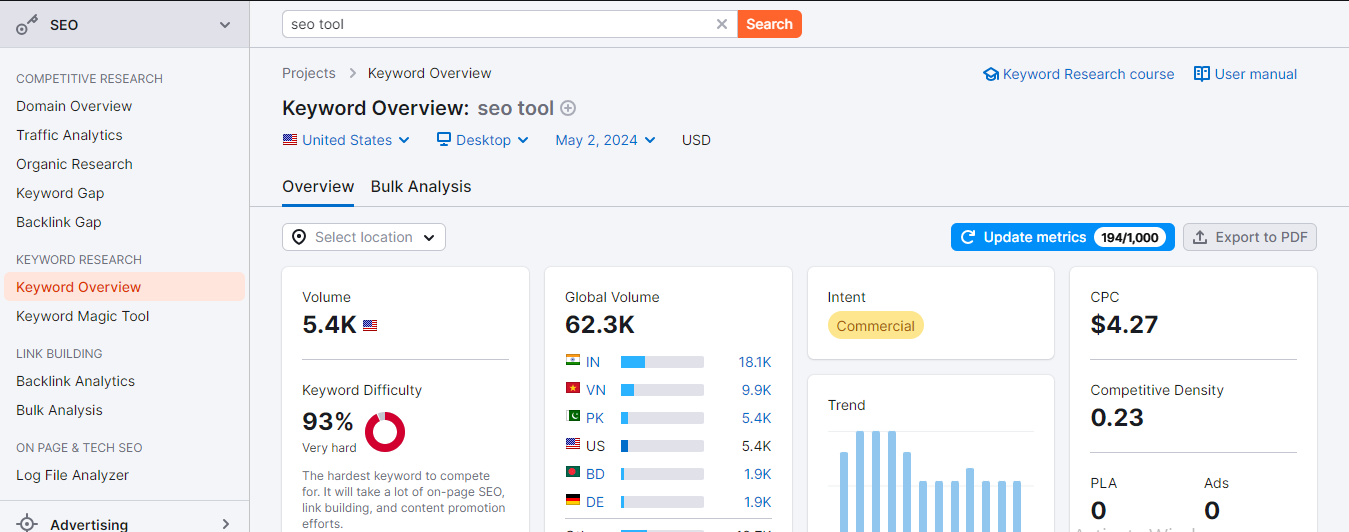
Semrush is one of the best keyword research tools in the market right now. It is not because of the in-depth keyword analysis it offers. But its additional features like competitor research, position tracking, traffic insights, link building, local SEO, market analysis and more.
What you will like about Semrush is its Keyword magic tool. This is where you will find the real gem.
All you need to do is enter your seed keyword and target location. Once you click on the search button, you will get an overview of the keyword with its volume, traffic cost and other metrics.
Along with an overview, you also get questions related to that keyword, similar phrases, broad match, phrase match, languages and more. Plus, you can set advanced filters to sort out the keywords as per your needs.
These insights help you find the keywords your competitors are already ranking for and which are easy to rank.
For example, the “Yoga poses” keyword is difficult to rank when you have competitors with lots of quality content on it. But “Yoga poses for back pain” is easier to rank as there is less competition.
Key features of Semrush:
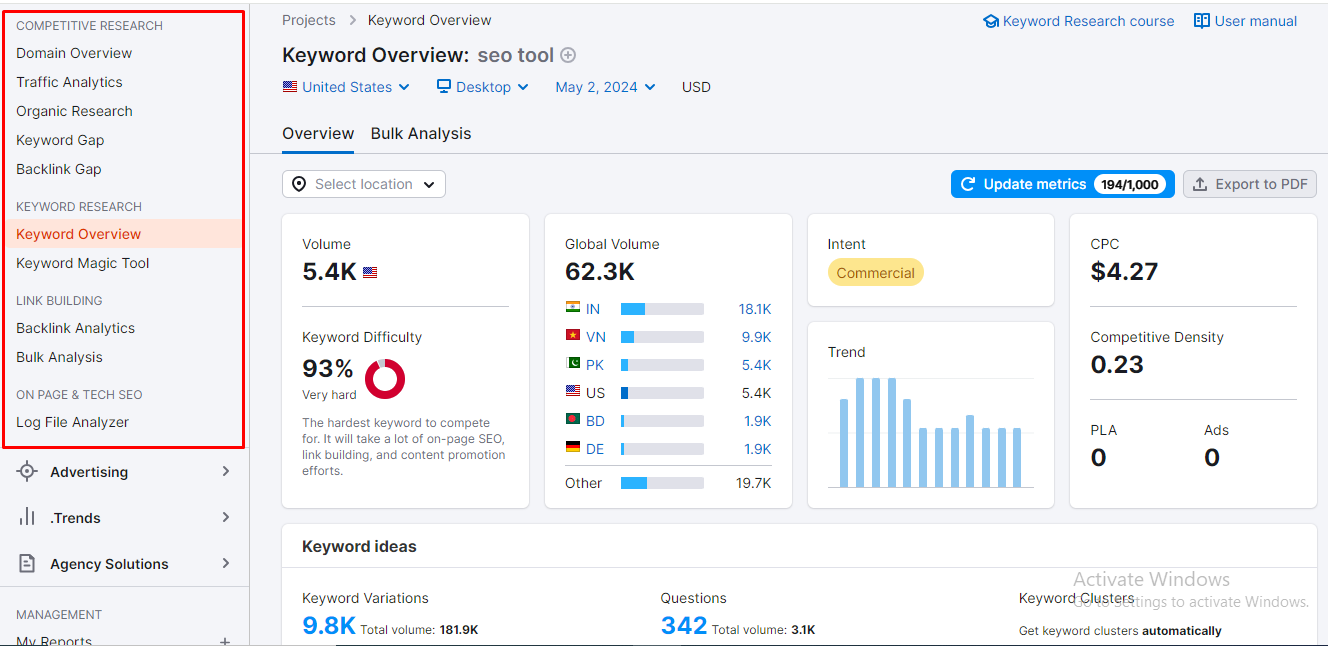
- SEO dashboard
- Keyword Magic Tool
- Traffic analytics
- Organic research
- Competitor analysis
- Keyword gap
- Backlinks audit
- Backlinks building
- Local SEO
- Content Marketing
Pricing: $99.95-$449.95/month, Pro $129.95 monthly, Guru $249.95 monthly, Business $499.95 monthly
Ahrefs
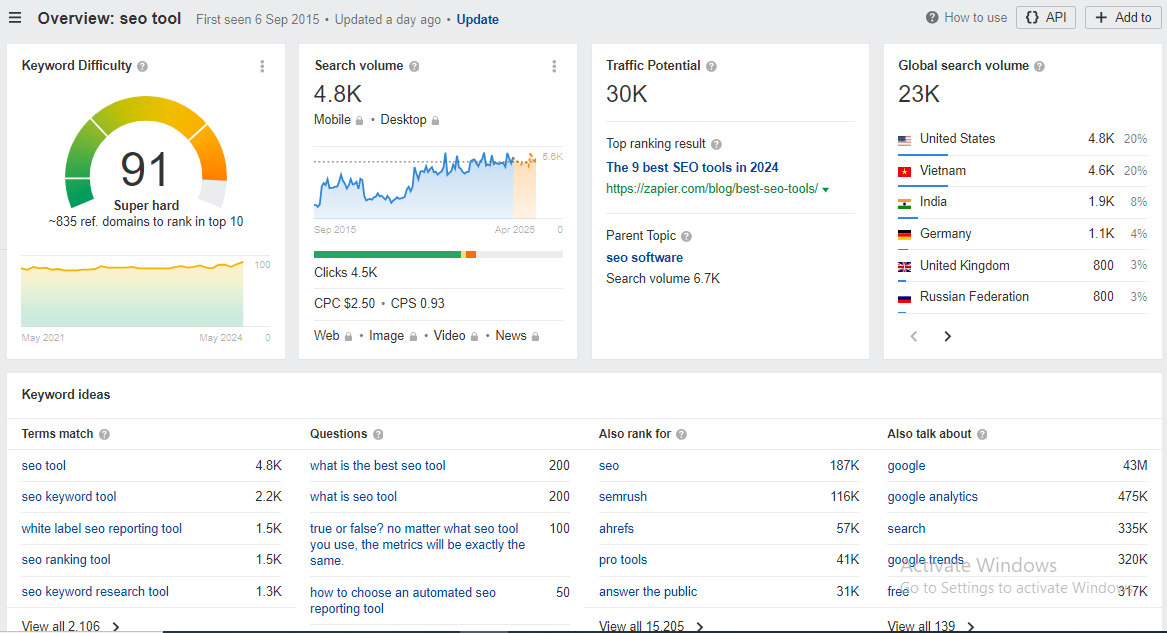
Ahrefs is the best-paid keyword research tool for digital marketing experts. Similar to Semrush, Ahrefs also offers keyword research, organic research, competitor analysis, backlink audit and more.
But one that differentiates Ahrefs from Semrush is its highly detailed data projection. For example, not all searches convert to real page visits. Semrush only gives you keyword search volume. But Ahrefs shows you “with clicks” and “without clicks” data.
This helps you find keywords that would bring people to your website. So, assisting you in narrowing down the target keyword list to more specific and result-oriented terms.
Also, the content marketing features in Ahrefs are far better than Semrush. From finding low-competition topics to content gaps, guest post blogging opportunities, and popular content, you can draft a content marketing strategy that generates traffic and leads for your website.
The crazy part is that you can also monitor your competitor’s publishing frequency. This enables you to plan your content calendar and churn out quality content pieces to outshine them.
Key Features of Ahrefs:
- Rank tracking
- Keyword research
- Competition analysis
- Content gap
- Content research
- Site audit
Pricing: Lite $129/mo, Standard $249/mo, Advanced $449/mo
Keyword Surfer
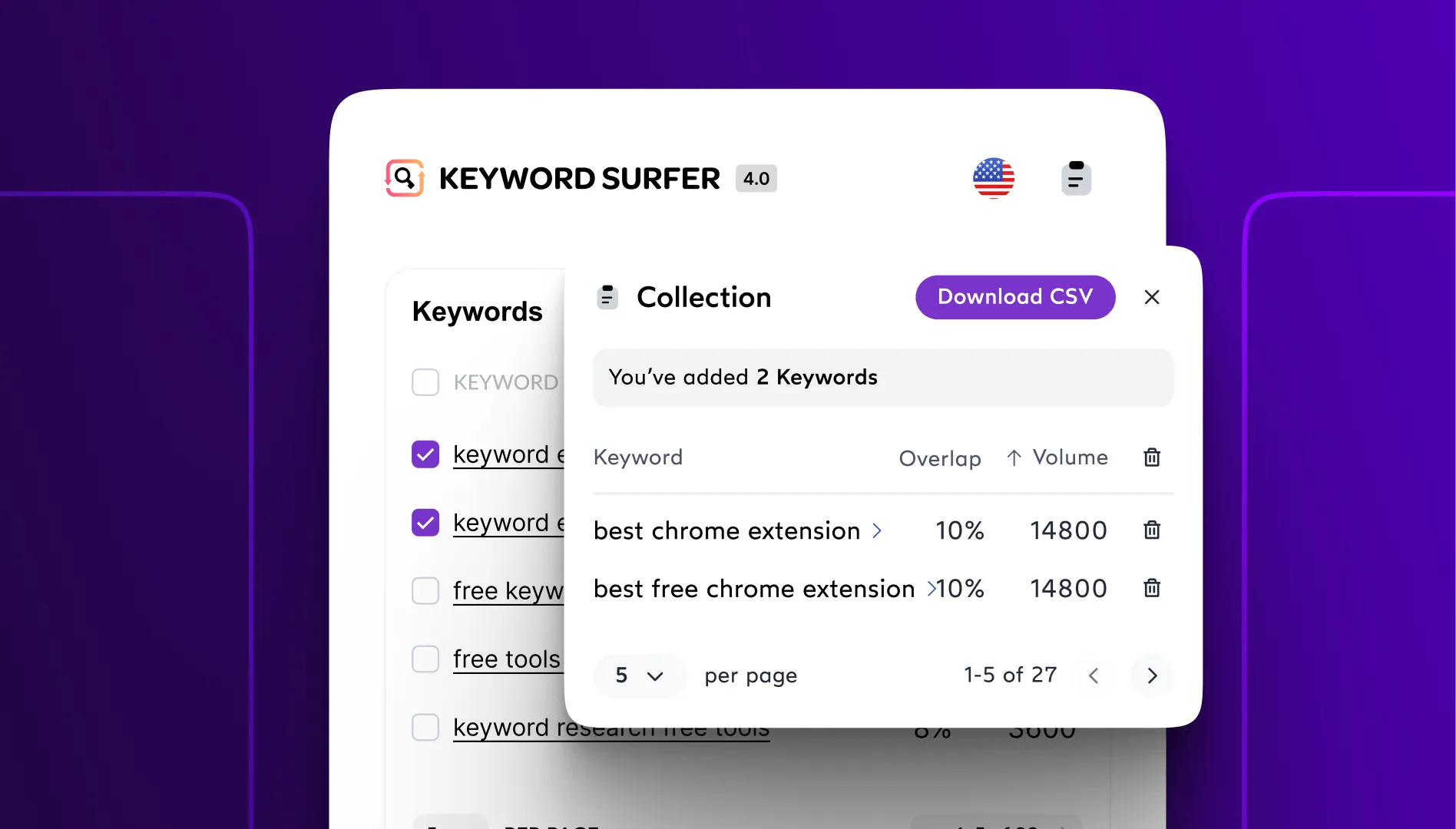
Keyword Surfer is a simple keyword explorer tool that works as a Chrome extension. You download and install it to your Chrome and then search for the keywords on Google.
Upon installation, the tool is visible on the right side of your SERP. It gives you keywords related to your search query with their volume and overlap.
Plus it also gives you the traffic, word count, number of keyword appearances, and title change if Google has changed the title tag for each page on the SERP.
It is a very affordable tool that lets you uncover hidden data about your SERP results.
Key Features of Keyword Surfer:
- Keyword research
- Keyword counter
- Word count
- SERP overview
Pricing: ESSENTIAL $89 per month, SCALE $129 Per month, SCALE AI $219 per month
ESSENTIAL plan For small business owners and freelancers starts from $89 per month. SCALE For mid-sized agencies & marketing teams begins at $129 per month. SCALE AI For agencies and teams looking to scale up with AI is of $219 per month. Also, contact for ENTERPRISE plan For large agencies & marketing teams Customized per month, billed yearly
SpyFu
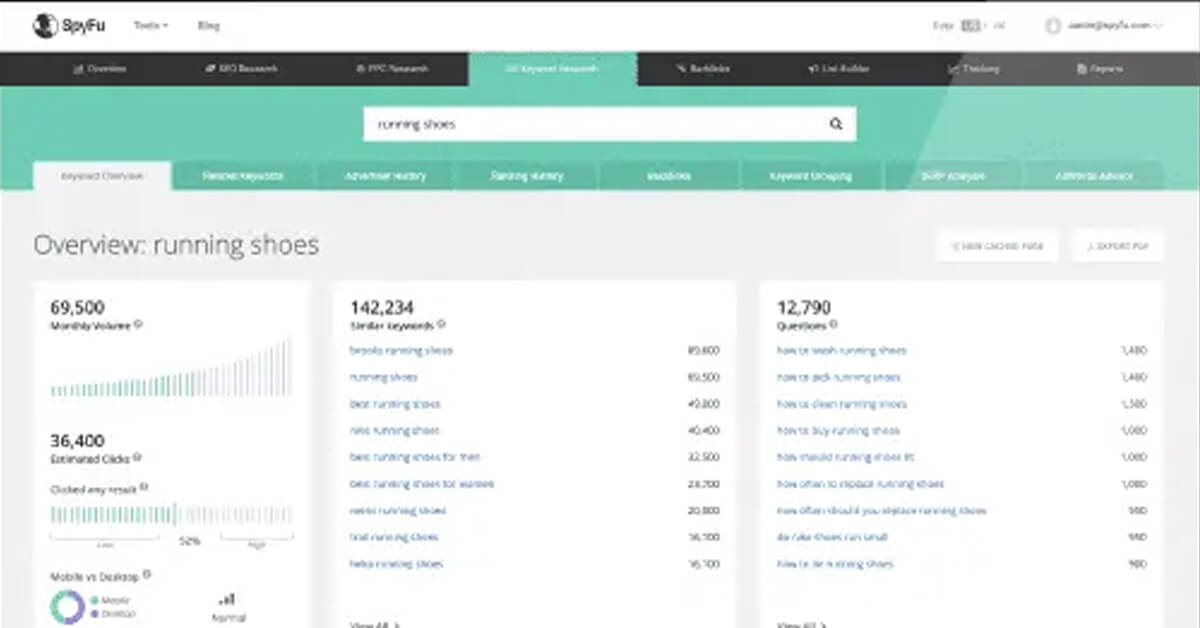
SpyFu is a versatile and powerful keyword research tool designed to give you a comprehensive look into your competitors’ strategies. It’s not just about finding keywords, but understanding the competitive landscape. SpyFu allows you to explore the keywords your competitors are ranking for, see their ad spend, and track their performance over time.
What makes SpyFu stand out is its Keyword Research & Competitor Analysis feature. By simply entering your competitor’s domain, SpyFu provides a list of the top keywords they’re ranking for, along with important metrics like search volume, CPC, and competition level.
SpyFu’s Keyword Research section goes beyond just finding keywords. You get valuable insights into the keywords’ cost-per-click (CPC) data, historical trends, and ranking difficulty. This helps you understand the competition and identify opportunities for easy wins.
Key Features of SpyFu:
- Keyword Research & Competitor Analysis
- Backlink analysis
- AdWords and SEO research tools
- Domain analysis
- SERP analysis
- Rank tracking
Pricing: Plans start at $39/month for the Basic plan, $79/month for the Professional plan, and $299/month for the Agency plan.
Serpstat
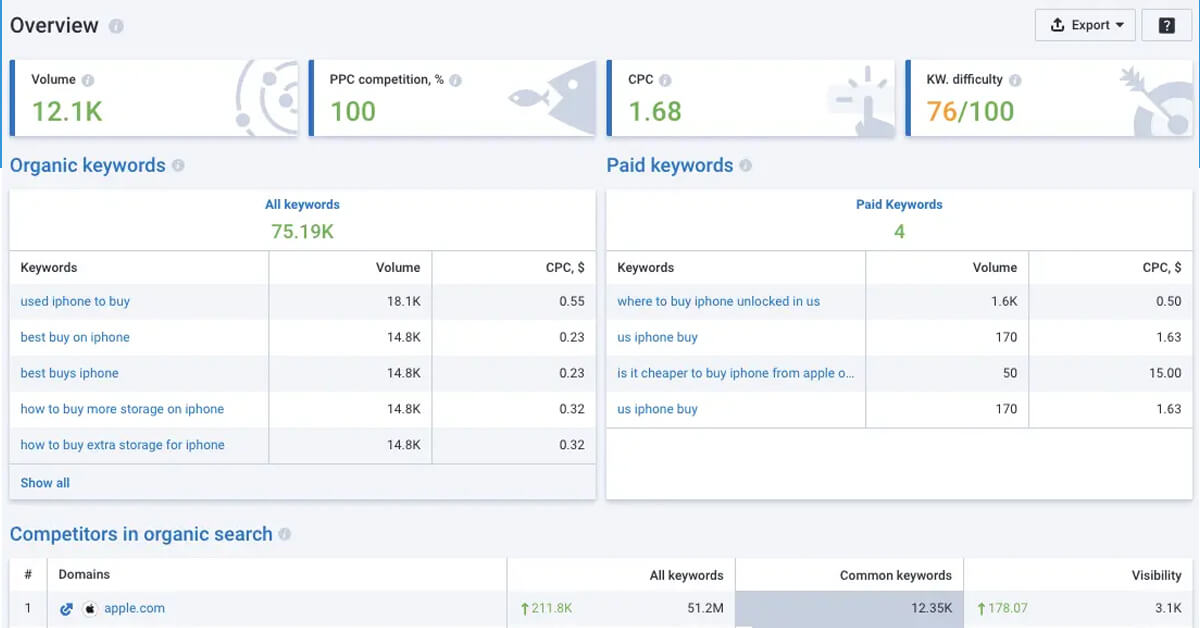
Serpstat is an all-in-one SEO platform that combines keyword research, competitor analysis, and site audit in one powerful tool. It helps you find profitable keywords, track rankings, and improve SEO performance with ease.
Serpstat’s Keyword Research tool is one of its standout features. It helps you find high-traffic keywords with low competition by using metrics like search volume, keyword difficulty, and CPC. Plus, Serpstat offers Competitor Analysis to see which keywords are driving traffic to your competitors and how you can use that data to improve your SEO strategy.
Serpstat also provides a great Cluster Analysis feature, which groups keywords by similarity, making it easier to target broad and long-tail keywords effectively.
Key Features of Serpstat:
- Keyword Research & Analysis
- Competitor Research
- Rank Tracking
- Backlink Analysis
- Site Audit
- Keyword Grouping
Pricing: Plans start at $69/month for the Lite plan, $149/month for the Standard plan, and $299/month for the Advanced plan.
SEO PowerSuite
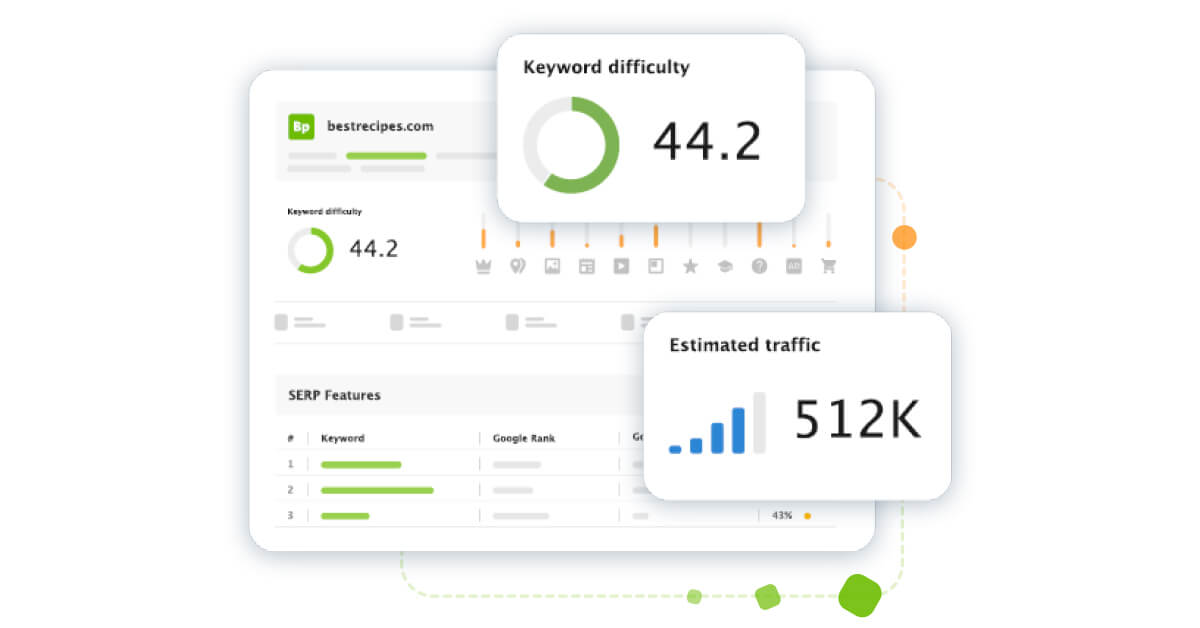
SEO PowerSuite is a comprehensive SEO tool that includes four robust software packages: Rank Tracker, WebSite Auditor, SEO SpyGlass, and LinkAssistant. Each tool specializes in different aspects of SEO, including keyword research, on-page optimization, backlink analysis, and competitor research.
Rank Tracker is the keyword research tool within SEO PowerSuite, providing a detailed analysis of your target keywords. You can find search volume, competition level, and keyword difficulty for each keyword, and track how your rankings evolve over time.
SEO PowerSuite also excels in competitor analysis. You can compare your SEO performance with competitors and see where you’re losing ground.
Key Features of SEO PowerSuite:
- Keyword Research & Rank Tracking
- Competitor Analysis
- Link Building & Backlink Analysis
- Site Audit & Optimization
- Reporting Tools
Pricing: SEO PowerSuite offers a free version, and paid plans start at $299/year for the Professional version.
SE Ranking
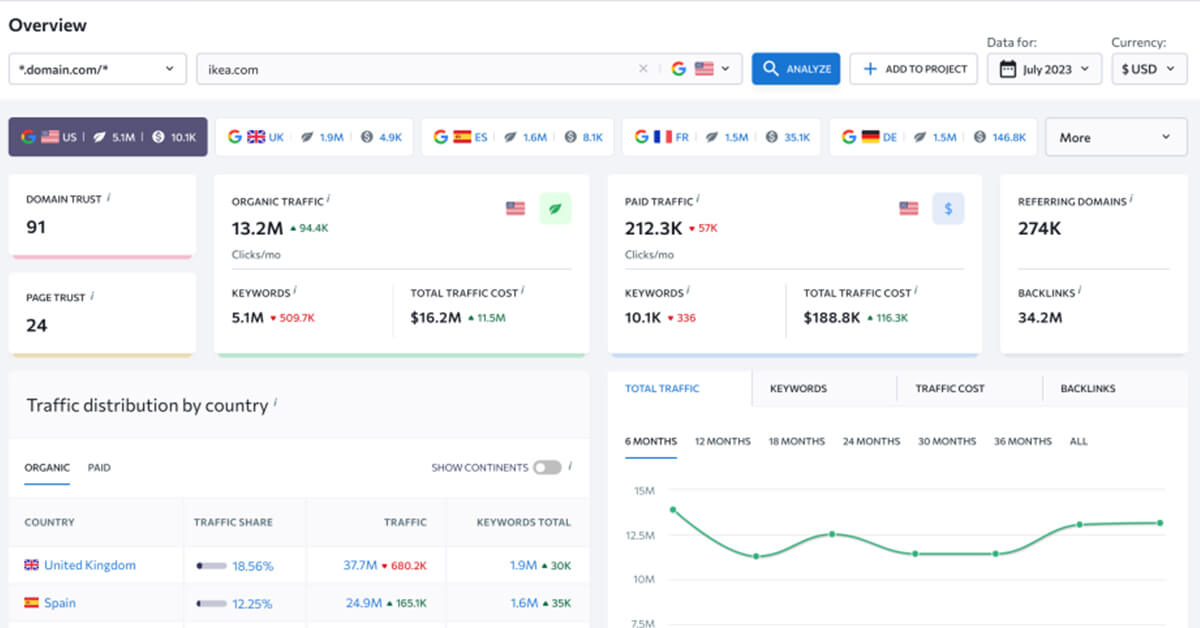
SE Ranking is a highly flexible SEO tool with a strong focus on keyword research and ranking tracking. It’s a great option for users who need accurate and up-to-date keyword data, alongside competitor analysis and on-page SEO tools.
The Keyword Research feature in SE Ranking allows you to find the most relevant keywords based on search volume, competition level, and regional targeting. Additionally, the Competitor Research tool helps you find the keywords your competitors are ranking for and track their SEO strategies.
SE Ranking’s SEO Dashboard offers detailed reports on keyword positions, helping you track your progress over time.
Key Features of SE Ranking:
- Keyword Research & Tracking
- Competitor Analysis
- On-Page SEO Analysis
- Backlink Monitoring
- Reporting & Analytics
Pricing: Plans start at $39/month for the Essential plan, $89/month for the Pro plan, and $189/month for the Business plan.
Long Tail Pro
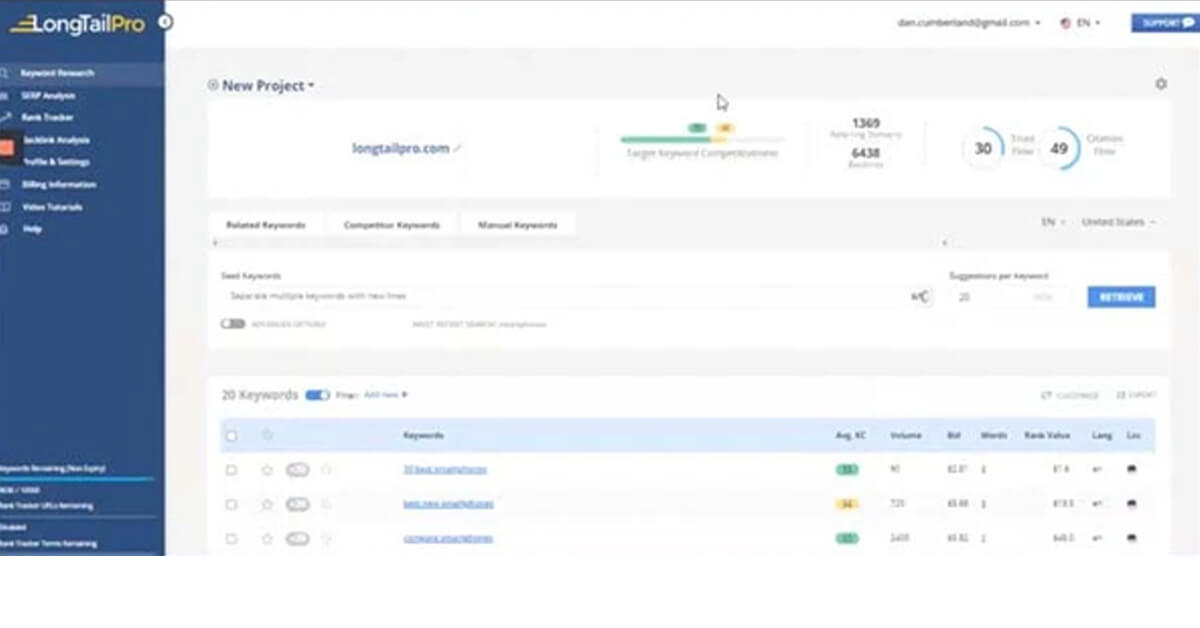
Long Tail Pro is an SEO tool designed specifically for finding profitable long-tail keywords that are easy to rank for. It’s perfect for users looking to tap into low-competition niches.
The Keyword Research tool in Long Tail Pro helps you discover long-tail keywords with low competition and decent search volume. It gives you detailed information on keyword difficulty and also provides competitor analysis so you can see how easy it will be to rank for your target keywords.
What’s particularly valuable in Long Tail Pro is its Keyword Competitiveness Index (KCI), which helps you identify keywords that have high ROI potential.
Key Features of Long Tail Pro:
- Long-Tail Keyword Research
- Keyword Competitiveness Index (KCI)
- Competitor Analysis
- Rank Tracking
- Backlink Checker
Pricing: Plans start at $25/month for the Starter plan, $45/month for the Pro plan, and $75/month for the Agency plan.
KWFinder
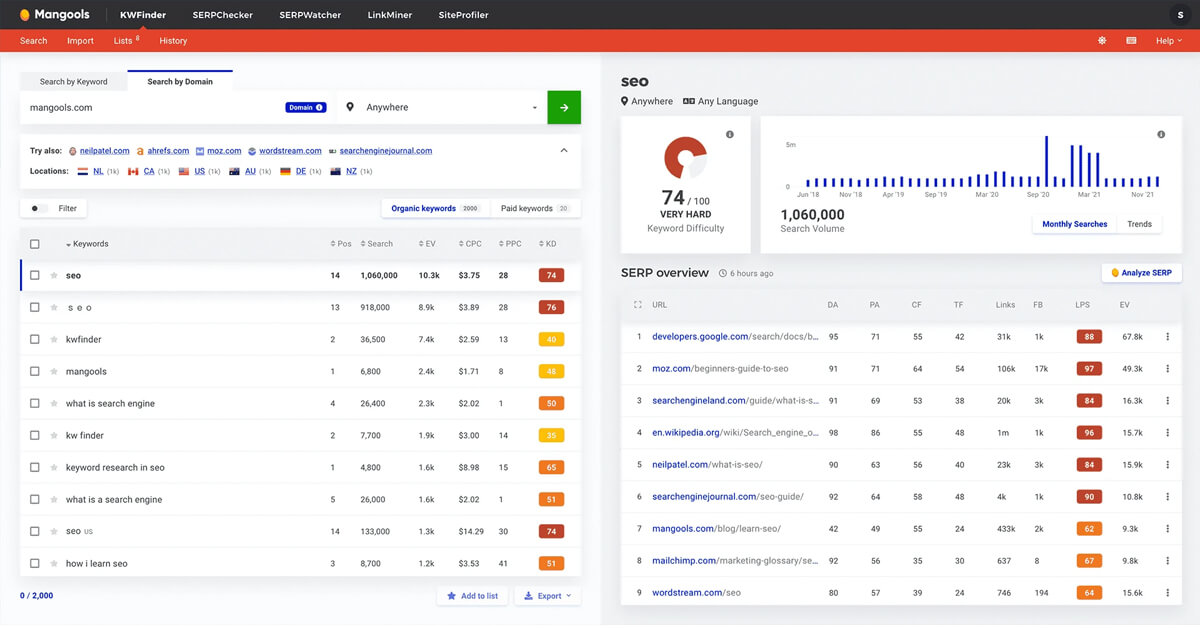
KWFinder is a popular keyword research tool known for its user-friendly interface and robust features. It’s designed to help you find long-tail keywords with low competition and decent search volume. KWFinder provides keyword data such as search volume, CPC, and SEO difficulty, helping you identify keywords that are easy to rank for.
What stands out with KWFinder is its Keyword Difficulty score. This feature helps you assess how hard it will be to rank for a particular keyword based on the strength of its competitors.
Key Features of KWFinder:
- Long-Tail Keyword Research
- Keyword Difficulty Analysis
- Search Volume and CPC data
- SERP analysis
- Multi-language support
Pricing: Plans start at $29.90/month for the Basic plan, $39.90/month for the Premium plan, and $79.90/month for the Agency plan.
SECockpit
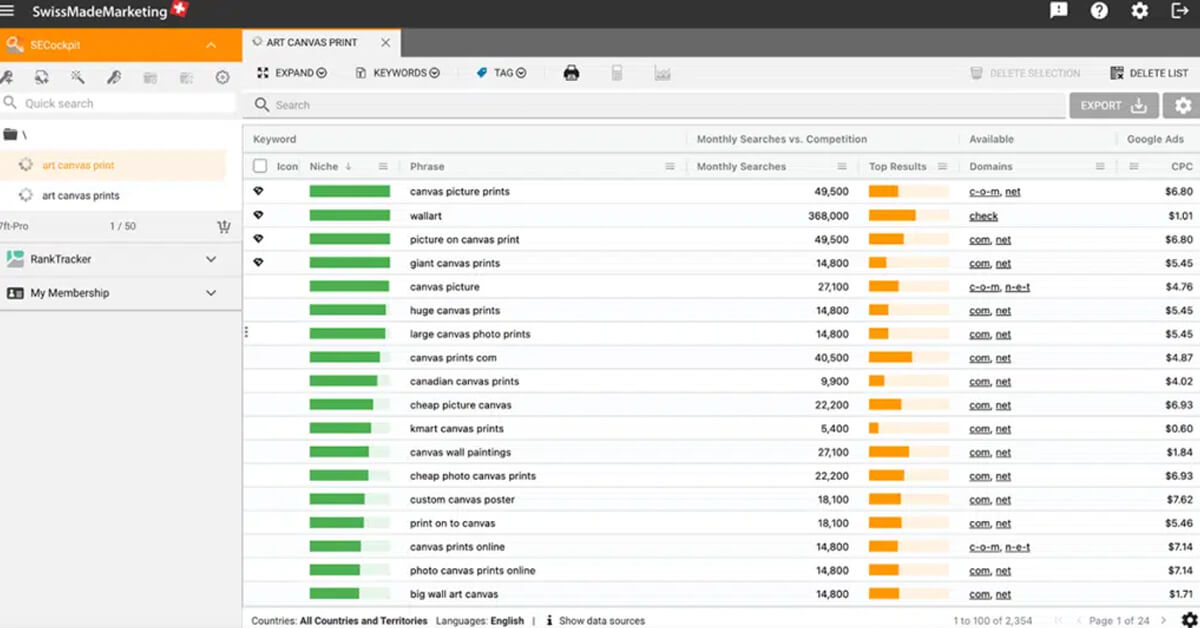
SECockpit is a powerful keyword research tool that focuses on providing in-depth analysis for SEO and PPC. It helps you find profitable keywords by analyzing search volume, competition, and keyword difficulty. SECockpit also offers a unique Keyword Difficulty Score that takes into account factors like backlink strength and content quality.
With SECockpit, you can also track keyword performance over time and get advanced filtering options to narrow down keyword lists based on specific needs, such as low competition or high search volume.
Key Features of SECockpit:
- Keyword Research & Analysis
- Advanced Filtering Options
- Competitor Analysis
- Keyword Difficulty Score
- Rank Tracking
- SEO & PPC Optimization
Pricing: Plans start at $39/month for the Solo plan, $79/month for the Pro plan, and $179/month for the Agency plan.
Keyworddit
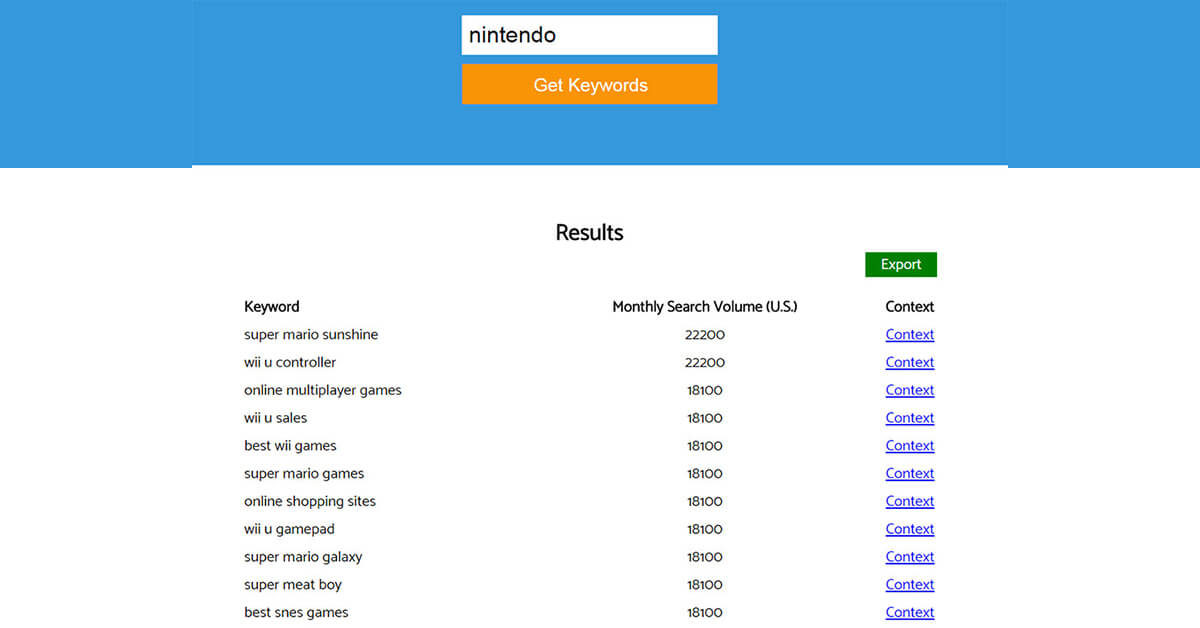
Keyworddit is a simple yet effective tool for discovering keywords from Reddit. It pulls keyword ideas from specific subreddits and provides useful metrics like search volume and competition. Keyworddit is particularly useful for uncovering niche and trending keywords related to specific communities or topics.
What makes Keyworddit unique is its ability to mine Reddit for keyword ideas. Reddit is a goldmine for niche topics, and Keyworddit helps you tap into this vast resource.
Key Features of Keyworddit:
- Reddit Keyword Research
- Search Volume and CPC Data
- Niche-Specific Keywords
- Trend Discovery
- Free to Use
Pricing: Free to use.
Wordtracker

Wordtracker is a keyword research tool that focuses on providing detailed keyword data and competitor analysis. It offers a variety of keyword suggestions along with search volume, competition, and cost-per-click (CPC) information. Wordtracker also allows you to analyze competitor websites to see which keywords they are ranking for.
What sets Wordtracker apart is its Keyword Suggestion Tool, which provides long-tail keyword ideas that might not show up in other tools.
Key Features of Wordtracker:
- Long-Tail Keyword Suggestions
- Competitor Keyword Analysis
- Keyword Search Volume and CPC
- Trend Tracking
- Site Audit
Pricing: Plans start at $27/month for the Basic plan, $49/month for the Plus plan, and $89/month for the Pro plan.
WordStream Keyword Tool
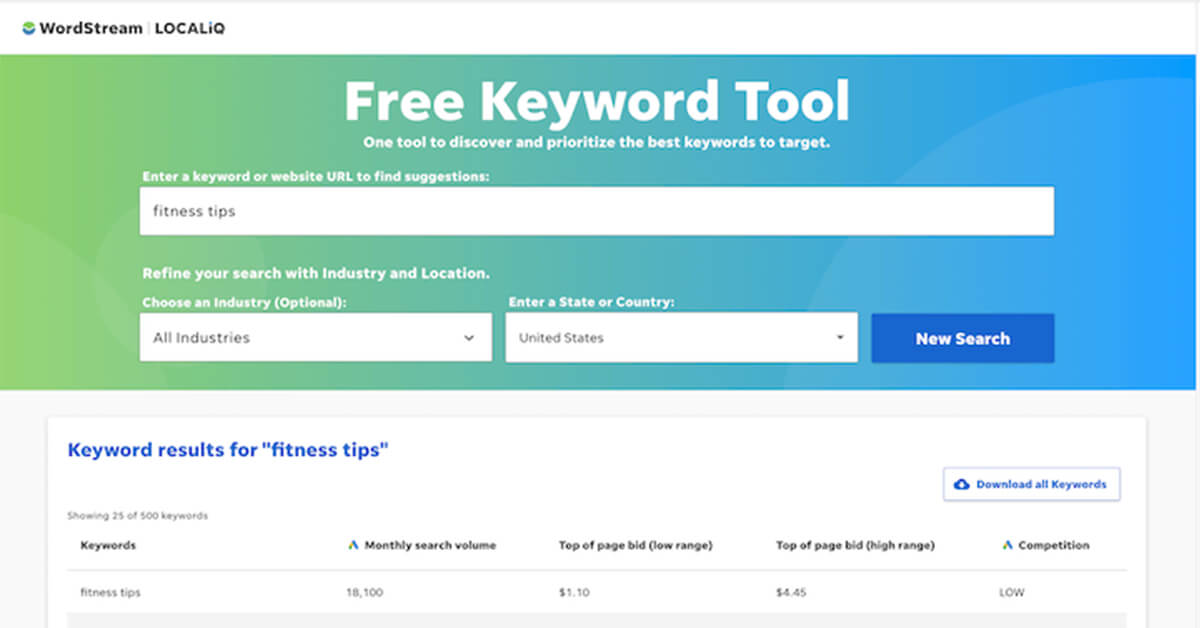
WordStream provides an easy-to-use Keyword Tool that helps you find keywords related to your business or content. It offers keyword suggestions with search volume and competition metrics, and it also provides data for PPC campaigns. WordStream’s platform is designed to simplify keyword research, making it accessible for both beginners and advanced users.
The Keyword Tool also helps you target long-tail keywords and provides a comprehensive list of keyword ideas, based on your core search terms.
Key Features of WordStream:
- Keyword Research & Suggestions
- Search Volume and CPC Data
- PPC Keyword Recommendations
- Long-Tail Keyword Generation
- Competitive Keyword Analysis
Pricing: Free for up to 30 keyword suggestions per month. Paid plans available starting at $49/month.
KeywordTool.io
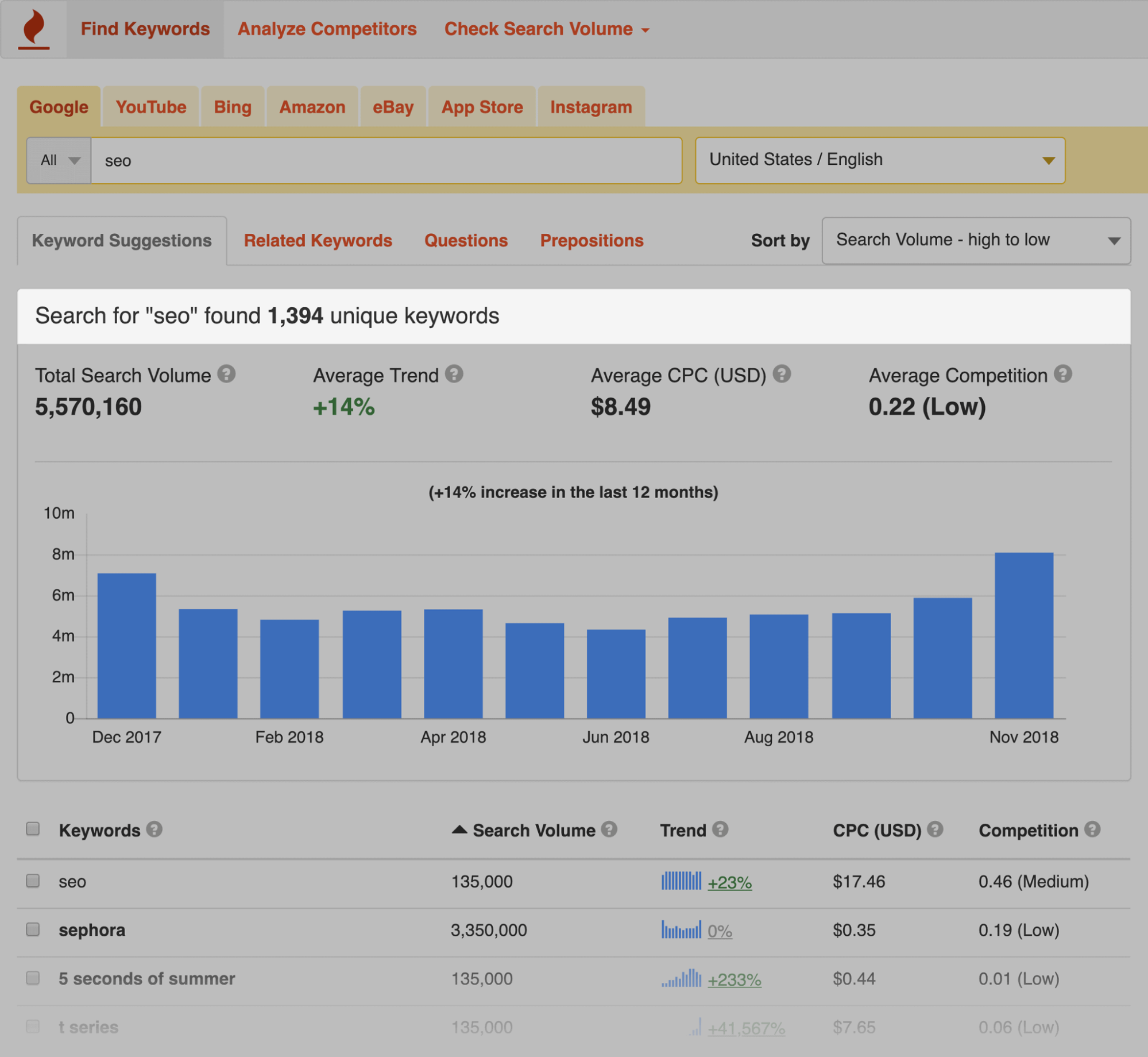
If you want to dive deeper into your keywords, there’s no better tool than KeywordTool.io.
For one keyword search, you will get an average of 1400 unique keyword suggestions. You surely will be able to find out some for your content.
Also, the platform has an easy-to-use filter that lets you narrow down your keywords on the basis of location, language, and network.
If these don’t entice you, you get a top-notch competitor research feature. It’s a very cool feature that gives you all the keywords your competitor is ranking. Plus, you also get keywords related to the niche of your competitor which is something you don’t see in other keyword planner tools.
KeywordToo.io offers both free and paid features. Compared to other keyword planners, the pricing is on the lower side.
Key Features of KeywordTool.io:
- Keyword Suggestions
- Multiple languages
- Advanced filtering
- Keyword basket
- Search volume
- Competition level
- Bulk keyword upload
Pricing: $69/month for Pro Basic; $79 per month for pro plus; and$159/month is for pro business
Moz Keyword Explorer
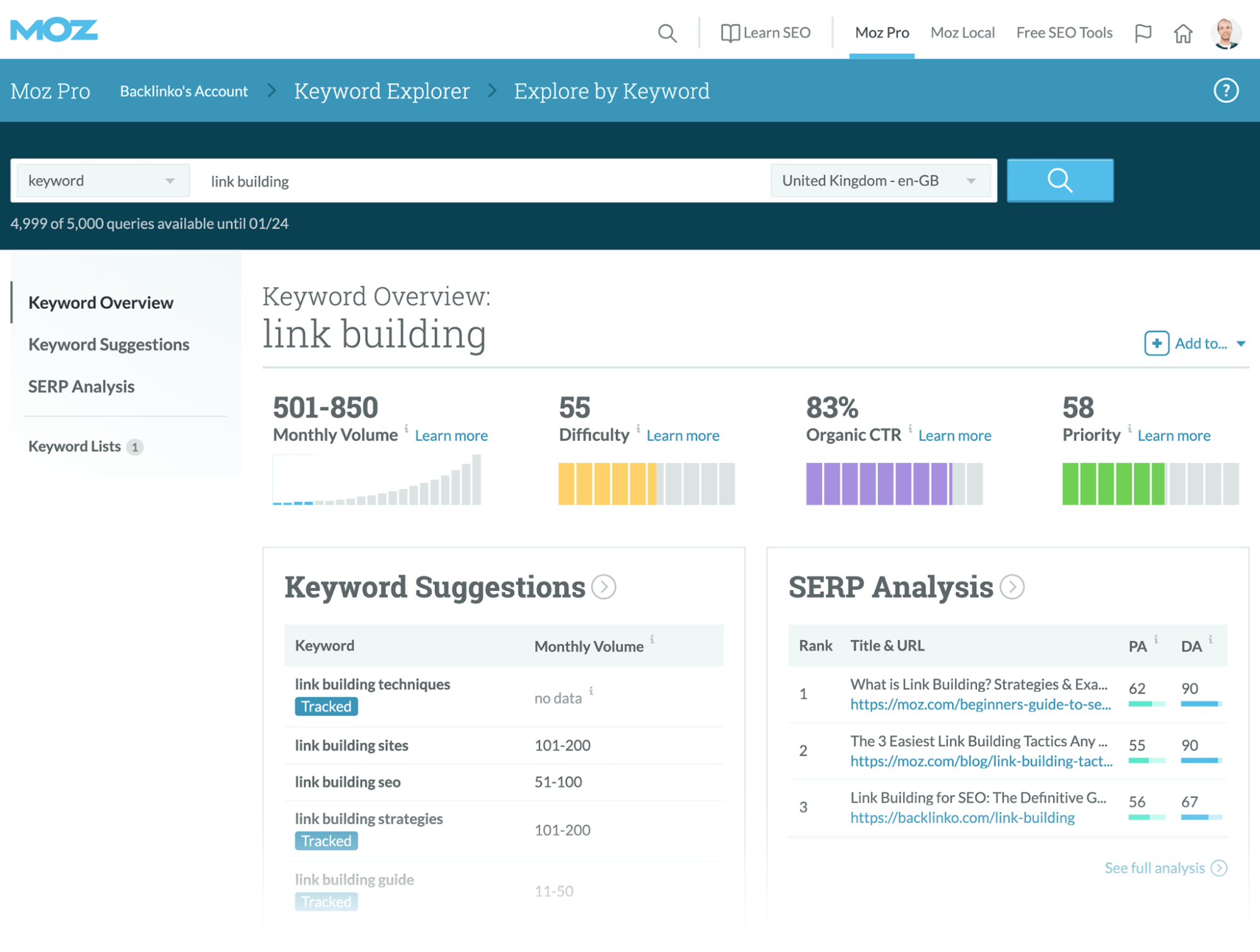
You cannot miss Moz keyword explorer in the list of best keyword research tools. Similar to other keyword research platforms, Moz gives you detailed insight into your seed keywords.
But there is one feature that makes it smarter than other tools. It’s the lateral search feature. When you enter a seed keyword on Moz, you get a lot of keyword suggestions including the metrics and related terms.
But Moz goes one step beyond and gives you unique long-tail keyword suggestions. These help you target new keywords and come up with quality content topics quickly.
Additional features that make Moz perfect for your SEO strategies are Keyword difficulty, organic CTR, priority and competitor research.
Key Features of Moz:
- Keyword research
- Competitor analysis
- Rank tracking
- On-page optimizations
- Link building
Pricing: STANDARD $ 99/mo, MEDIUM $179/mo LARGE $ 299/mo, PREMIUM $599/mo
AnswerThePublic
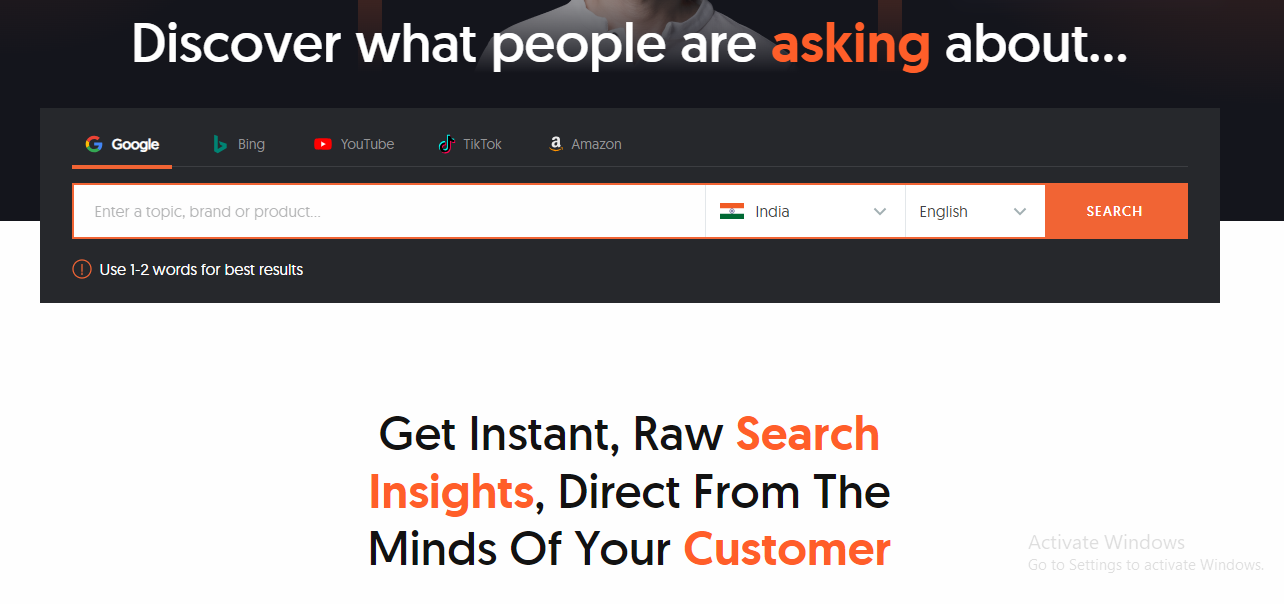
AnswerThePublic is not like your other keyword planner tools. It refers to itself as a “search listening tool”. This is because the platform uses data from autocomplete suggestions of search engines like Google. Then uses the same data to uncover queries that interest people.
This tool is great for content marketing purposes. It helps you easily come up with topics that are relevant to your audience and cater to their pain points.
For example, you enter the seed keyword “AI agents”. The tool will then come up with a visually appealing chart that includes questions, comparisons and related searches to AI agents.
The chart divides the keyword analysis into “what”, “can”, “who”, “why”, “when”, “where” and more such prepositions.
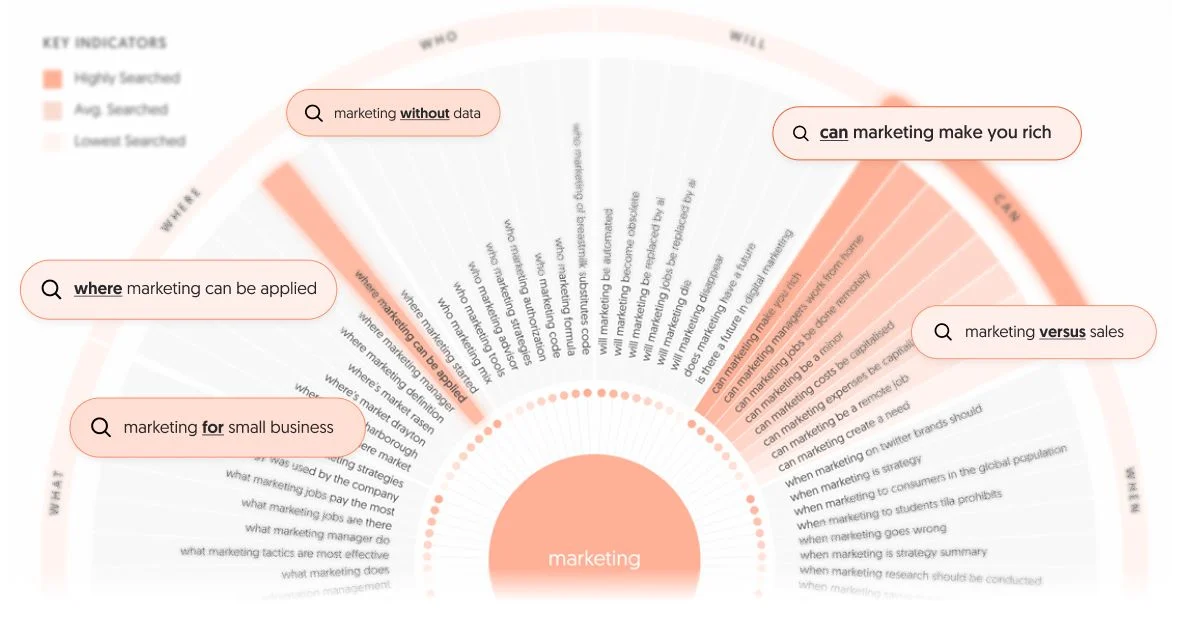
This helps to tap into all the aspects of the keyword. Most importantly the tool assists in understanding what customers are looking for, their pain points, and the type of content they are consuming.
You can use AnswerThePublic for free up to a limited number of searches. The paid plans start at $5 for 100 searches per day.
Key Features of AnswerThePublic:
- Search listening
- Chart based data
- Multiple search queries
- Data comparison
Pricing: $9/month, $99/month, $199/month
Ubersuggest
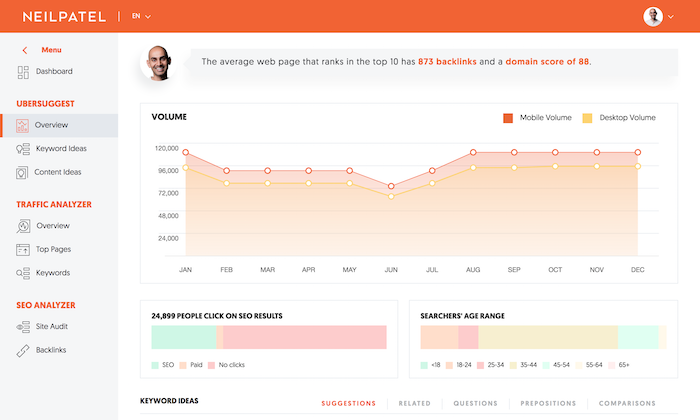
Ubersuggest, an advanced keyword research tool by Neil Patel, is 90% cheaper than Semrush and Ahrefs. Ubersuggest monthly subscription plan starts at $12.
With its keyword suggestions feature, you get hundreds of quality keyword suggestions including head terms and long tail keywords. Plus, you also get key metrics like volume, seasonal trends and competition for each keyword.
The best thing is that it generates a list of keywords based on what’s working for your competitors and what your target customers are looking for on search engines.
From social media marketing to content research and backlinks, Ubersuggest helps you run your digital marketing tasks smoothly.
Key Features of Ubersuggest:
- Keyword Suggestions
- Domain Overview
- Organic keyword research
- Content ideas
- Backlink data
Pricing: Business $20/month, Individual $12/month, Enterprise $40/month
Google Trends
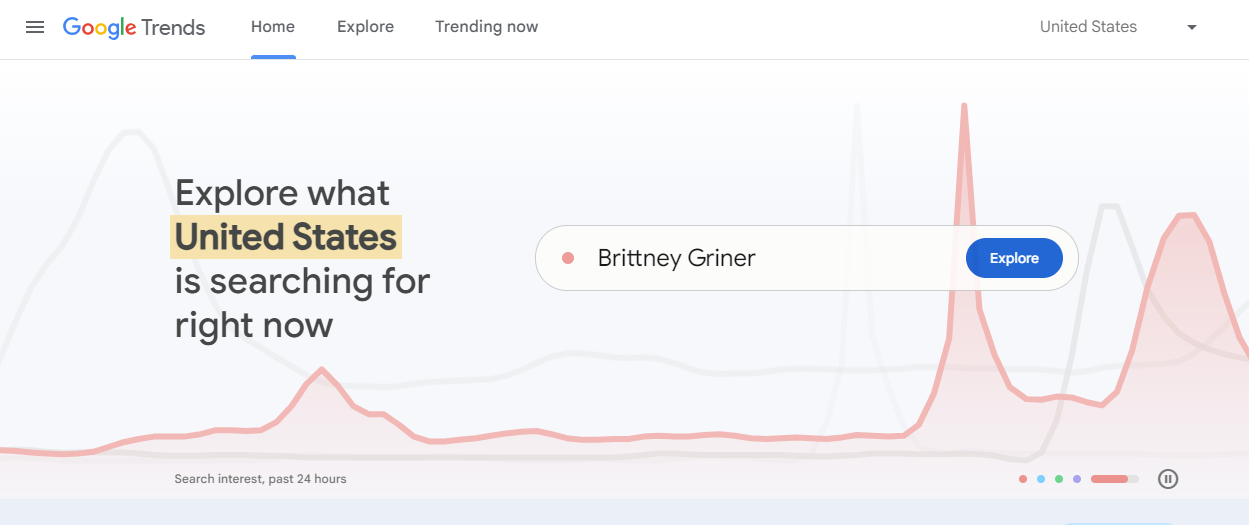
Google Trends is the best free keyword research tool. Coming from Google the tool helps you find what’s trending on the internet at the moment.
You can enter multiple seed keywords and filter the result by location, search history, and category. It will give you results on how much interest is present around your keywords, the reason for interest, and similar keywords.
You can also find what people are searching for that’s related to your keywords. The related queries and topics section is where you will get the real value of Google Trends.
Key Features Google Trends:
- Search term comparison
- Timeframe selection
- Geographic filtering
- Search type filtering
- Related queries
- Related topics
Pricing: Free to use
Jaaxy
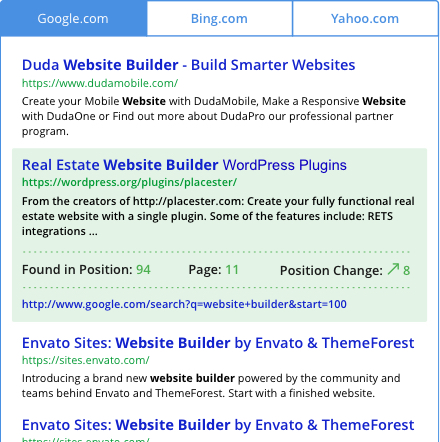
While Jaaxy calls itself the “world’s most advanced keyword tool,” its strength lies in its user-friendliness.
It simplifies keyword research for affiliate marketers by generating a comprehensive list of related keywords and phrases.
Along with these suggestions, Jaaxy provides valuable data on search volume, estimated traffic you can attract, and how your competitors are performing for those keywords.
You can even track your own website’s ranking for keywords you’re targeting.
Key Features of Jaaxy:
- Keyword research
- Search volume
- Traffic estimation
- Competitor analysis
- Rank tracking
- User-friendly interface
Pricing: Pro plan $49/mo and Enterprise plan $99/mo
Soovle
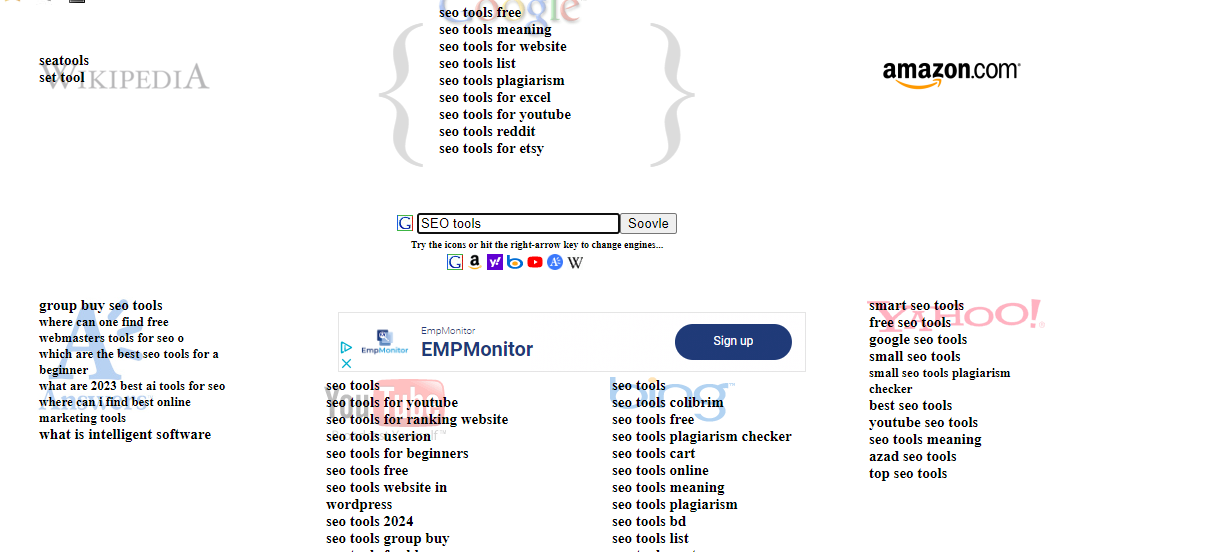
Soovle is one such free keyword research tool that aggregates keyword suggestions for multiple search engines. From Google to Bing, Wikipedia, Amazon, eBay and YouTube, Soovle helps you prepare a 360-degree SEO strategy.
All you need to do is enter your seed keyword and click the search button. The tool will consolidate related keyword suggestions trending across all search engines.
Use the right arrow key to select a keyword from the search suggestions. Clicking the chosen keyword will open its live search results page.
Soovle offers you a smart way to find out keywords that your competition hasn’t tapped into.
Key Features Soovle:
- Multi-search engine suggestions
- Real-time suggestions
- Visual overview
- Simple interface
- Keyword filtering
Pricing: Free
Google Keywords Planner
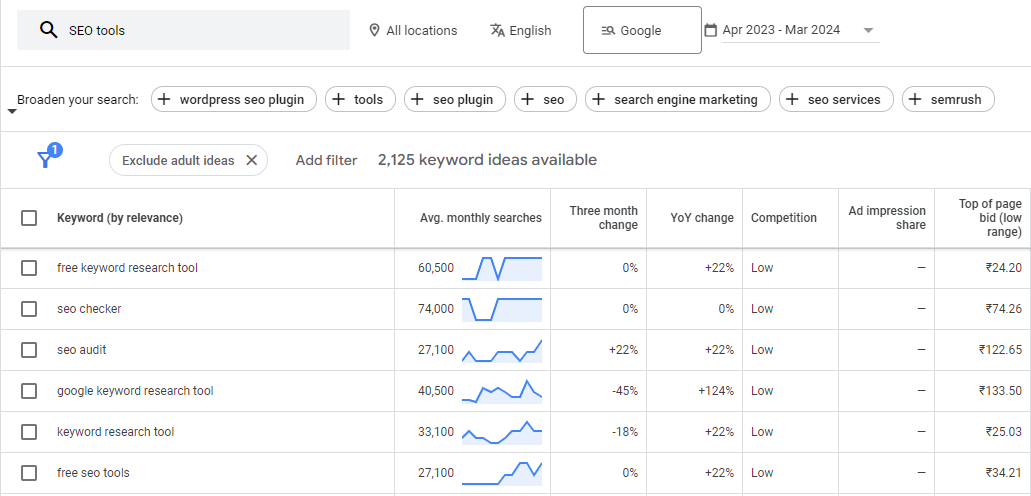
Google Keyword Planner is a free tool that helps you explore keywords. It is particularly useful for planning pay-per-click (PPC) advertising campaigns but also has valuable applications for search engine optimization (SEO).
Key Features Google Keywords Planner:
- Keyword research
- Estimated keyword search volume
- Bid estimates for PPC
Pricing: Free
Your Questions About Keyword Research Tools, Answered
What are keyword research tools?
Keyword research tools are SEO software platforms that help you discover, analyze, and compare the search terms people use on search engines. They provide data such as keyword search volume, keyword difficulty, competition, CPC, search intent, trends, and related keyword suggestions to help you identify terms worth targeting.
Businesses can use these tools to find short-tail and long-tail keywords, understand what their target audience is searching for, and identify gaps in competitors’ content. Many keyword research tools also provide SERP analysis, competitor keyword research, keyword clustering, and content ideas, making them useful for developing and refining an SEO strategy.
What are the best keyword research tools for SEO?
The best keyword research tools for SEO depend on your goals, budget, experience level, and the type of keyword data you need. Popular options include Semrush, Ahrefs, Google Keyword Planner, SISTRIX, Mangools KWFinder, LowFruits, Wordtracker, Keyword Tool, QuestionDB, and Exploding Topics Keyword Tool.
Comprehensive platforms such as Semrush and Ahrefs provide keyword research alongside competitor analysis, SERP analysis, rank tracking, and other SEO features. Tools such as KWFinder and LowFruits can be useful for finding long-tail and lower-competition keywords, while QuestionDB and Keyword Tool are helpful for discovering questions and keyword suggestions. Google Keyword Planner remains useful for search volume and keyword planning, particularly for businesses that also work with Google Ads.
Which is the best keyword research tool for beginners?
For beginners, a good keyword research tool should have a simple interface, clear keyword metrics, useful suggestions, and enough guidance to understand what the numbers mean. Mangools KWFinder is a practical option because it keeps keyword discovery, search volume, keyword difficulty, and SERP analysis relatively easy to understand.
Google Keyword Planner is another useful starting point, particularly for businesses that want to research search demand and advertising-related keyword data. Keyword Tool and QuestionDB can also help beginners generate long-tail and question-based keyword ideas without dealing with a complex SEO dashboard.
What are the best free keyword research tools?
Several free keyword research tools can provide useful data without requiring a full paid SEO subscription. The right choice depends on what you need to research:
- Google Keyword Planner: Useful for keyword ideas, monthly search estimates, and advertising-related data.
- Google Trends: Helpful for comparing keyword popularity and identifying search trends and seasonality.
- Google Search Console: Useful for finding the queries that already generate impressions and clicks for your website.
- Keyword Tool: Good for generating autocomplete-based long-tail keyword suggestions.
- QuestionDB: Useful for discovering question-based content ideas.
Free keyword research tools can be enough for basic keyword discovery, but businesses doing extensive competitor analysis, SERP analysis, or keyword tracking may need paid keyword research software.
Are paid keyword research tools worth it?
Paid keyword research tools can be worthwhile when SEO is an important source of traffic, leads, or sales for a business. They generally provide more extensive keyword databases, competitor analysis, keyword difficulty metrics, SERP data, historical trends, rank tracking, and other features that are limited or unavailable in free tools.
The pricing of keyword research tools depends on how extensively you use the data. A small website publishing a few articles each month may be able to work effectively with free tools, while an enterprise, agency, or growing business managing hundreds of keywords can benefit from the broader research and tracking capabilities of paid platforms.
How do keyword research tools work?
Keyword research tools collect and process search, ranking, advertising, and competitor data to help users understand the potential of different search terms. Depending on the platform, the data can come from search engines, clickstream sources, autocomplete suggestions, advertising databases, and the tool’s own search index.
A typical workflow of keyword research tool looks like this:
- Enter a seed keyword related to your product, service, or topic.
- Generate related keywords, questions, and long-tail variations.
- Review metrics such as search volume, keyword difficulty, CPC, and trends.
- Analyze the current SERP and competing pages.
- Compare search intent and traffic potential.
- Select keywords that fit your audience and SEO strategy.
The exact calculations vary between SEO platforms, so keyword metrics from different tools should be treated as estimates rather than identical measurements.
How do you use keyword research tools for SEO?
Start with a few seed terms that describe your products, services, audience, or core topics. Use a keyword research tool to expand these into related keywords, questions, long-tail phrases, and competitor keywords.
Next, evaluate each opportunity using metrics such as search volume, keyword difficulty, search intent, CPC, trends, and traffic potential. Then check the actual search results to see what type of content Google currently ranks.
Finally, group related terms into topics and assign them to appropriate pages. This helps you build a content plan around search intent instead of creating separate pages for every keyword variation.
Which keyword research tool is best for finding low-competition keywords?
Keyword research tools designed specifically around competitive analysis can be particularly useful for finding lower-competition opportunities. LowFruits focuses on identifying long-tail keywords where weaker websites appear in the search results, making it useful when you want to find keywords that smaller or newer websites can realistically target.
Semrush, Ahrefs, and Mangools KWFinder can also help by allowing you to filter keyword ideas according to keyword difficulty and other metrics. However, a low difficulty score alone does not guarantee an easy ranking. Reviewing the actual SERP, content quality, backlinks, and authority of competing pages provides a more complete assessment.
Which keyword research tools are best for finding long-tail keywords?
Long-tail keyword research is particularly useful when you want to target specific search intent rather than broad, highly competitive terms. Tools such as LowFruits, Mangools KWFinder, Keyword Tool, and QuestionDB can help uncover longer and more specific queries.
For example, instead of targeting a broad term such as “CRM software,” a business could research variations such as “CRM software for small real estate businesses.” The second query has a narrower audience and clearer intent, which can make it more useful for creating highly targeted content.
Which keyword research tools provide accurate search volume data?
No keyword research tool can guarantee an exact count of future searches. Search volume is generally an estimate, and the methodology, database, geographic coverage, and update frequency can differ between platforms.
Google Keyword Planner provides Google’s own estimates for monthly searches and advertising planning, while tools such as Semrush and Ahrefs provide their own search volume estimates.
When comparing tools for keyword research, look beyond the single search volume number. Check the target country, historical trends, seasonality, search intent, and SERP before deciding whether a keyword is worth targeting.
Which keyword research tools are best for competitor analysis?
Semrush and Ahrefs are widely used for competitor keyword analysis because they allow users to investigate the keywords for which competing websites and pages receive organic visibility. These platforms can help identify ranking keywords, competitor traffic opportunities, keyword gaps, and pages worth analyzing.
Other keyword research platforms can be useful for more specific competitor research. SISTRIX provides extensive domain and visibility analysis, while LowFruits can help identify keywords where competitors rank alongside weaker sites.
A useful competitor analysis process is to compare several competitors rather than relying on one website. Look for keywords they rank for that are relevant to your business but are missing from your current content strategy.
Which keyword research tools are best for content ideas?
The best tool depends on the type of content ideas you want to generate. QuestionDB is particularly useful for question-based topics, while Keyword Tool can generate autocomplete suggestions from platforms such as Google, YouTube, Amazon, and other sources.
Exploding Topics Keyword Tool can be useful when you want to identify newer or trending search topics. Semrush, Ahrefs, and other comprehensive SEO platforms are more suitable when you want to combine keyword ideas with search volume, competitor research, SERP analysis, and content planning.
For content marketing, it is useful to combine keyword suggestions with search intent. A keyword with lower volume but a clear problem or buying intent can sometimes be more valuable to a business than a broad keyword with much higher volume.
Which keyword research tools are best for local SEO?
For local SEO, choose a keyword research tool that supports geographic targeting and allows you to examine search demand for specific locations. Google Keyword Planner can help research keywords by location, while comprehensive SEO platforms such as Semrush, Ahrefs, and SISTRIX provide additional keyword and SERP research capabilities.
Local keyword research should also consider variations containing cities, neighborhoods, “near me” searches, and location-specific services. For example, a plumbing company could research “emergency plumber” alongside terms such as “emergency plumber in Austin” or “24 hour plumber near me.”
The tool for keyword research is only one part of local keyword research. Google Business Profile optimization, local landing pages, reviews, local links, and the relevance of the business to the searcher also influence local visibility.
Can keyword research tools help find profitable keywords?
Yes. Keyword research tools can help identify keywords that may have commercial value, but they cannot guarantee that a keyword will generate revenue. Metrics such as CPC, search intent, search volume, and competitor activity can provide clues about the commercial potential of a search term.
For example, a keyword such as “free project management software” may have significant search demand but a different business value from “project management software for construction companies.” The second query may have lower volume but stronger relevance to a specific customer segment.
To find potentially profitable keywords, consider:
- Commercial or transactional search intent
- CPC and advertising competition
- Search volume and traffic potential
- Product or service relevance
- Competition in the SERP
- Potential conversion value
How do keyword research tools measure keyword difficulty?
Keyword difficulty is an SEO metric that estimates how challenging it may be to rank for a particular keyword in organic search. However, there is no universal keyword difficulty formula because each SEO platform calculates the metric differently.
For example, Ahrefs primarily bases its Keyword Difficulty score on the backlink profiles of the top-ranking pages, particularly their referring domains. Semrush considers factors including the authority and backlink profiles of ranking pages, search volume, and SERP characteristics.
This means a keyword difficulty score should be used as a comparison metric rather than an absolute prediction. Reviewing the actual top-ranking pages, their content quality, backlinks, domain strength, and search intent provides additional context.
What is the difference between free and paid keyword research tools?
The main difference is the depth and breadth of data available. Free keyword research tools can provide basic keyword suggestions, search trends, questions, or limited search volume information, making them suitable for simple SEO research.
Paid keyword research software typically provides larger databases and more advanced features such as:
- Extensive keyword suggestions
- Competitor keyword analysis
- Keyword difficulty and SERP analysis
- Historical search data
- Keyword gap analysis
- Rank tracking
- Bulk keyword research
- Advanced filtering and reporting
For a small content project, free tools may be sufficient. Businesses with larger websites, ongoing SEO campaigns, or multiple competitors may benefit from investing in paid tools.
How do you choose a keyword research tool for your business?
Start by identifying what you expect the tool to accomplish. A blogger looking for content ideas does not necessarily need the same keyword research software as an enterprise managing thousands of ranking keywords.
Consider these factors before choosing one:
- Keyword database: Check the breadth of keywords and geographic markets covered.
- Search volume: Make sure the tool provides useful data for your target market.
- Keyword difficulty: Check how the platform measures ranking competition.
- Competitor analysis: Look for competitor keywords and keyword gap features if competitive research is important.
- SERP analysis: Check whether you can examine the pages currently ranking.
- Keyword tracking: Consider this if you need to monitor Google rankings over time.
- Pricing: Compare the features and usage limits against your SEO budget.
It is also worth testing the interface before committing to a long-term subscription. A keyword research tool with extensive data is less useful if your team finds it difficult to use or interpret.
Can keyword research tools help improve Google rankings?
Keyword research tools can support SEO work, but using one does not directly improve rankings. Their primary role is to help you understand what people search for, how competitive those searches are, and what content opportunities may exist.
You can use the resulting data to choose relevant topics, match content with search intent, build topic clusters, identify keyword gaps, and optimize existing pages. However, rankings also depend on factors such as content quality, relevance, website architecture, backlinks, technical SEO, competition, and the overall search experience.
The most effective approach is to treat keyword research as the starting point for content optimization rather than as a guarantee of rankings.
What features should you look for in keyword research software?
The right features depend on your SEO goals, but a good keyword research platform should provide enough data to evaluate both search demand and ranking opportunities.
Look for features such as:
- Keyword suggestions and related keywords
- Search volume and search volume trends
- Keyword difficulty
- Search intent
- Long-tail keyword discovery
- SERP analysis
- Competitor keyword research
- Keyword gap analysis
- Keyword clustering
- Geographic and local SEO data
- Keyword rank tracking
- Bulk research and export options
For businesses, pricing and usability should also be part of the evaluation. The most advanced keyword research software is not necessarily the most suitable if your team only needs basic keyword discovery and content planning.
Are keyword research tools useful for small businesses and startups?
Yes. Best keyword research tools can be particularly useful for small businesses and startups because they help identify search opportunities without relying entirely on high-volume keywords dominated by established competitors.
A new website, for example, may find it difficult to compete immediately for a broad keyword with strong established domains. Researching long-tail keywords, local searches, question-based queries, and lower-competition terms can help the business build relevant content around more specific customer needs.
Small businesses can start with free keyword research tools such as Google Keyword Planner, Google Trends, and Google Search Console, then move to paid keyword research software when they need deeper competitor analysis, SERP research, keyword tracking, or larger-scale content planning.
Avantika Shergil
| Sep 28, 2026


Avantika Shergil is a technology enthusiast and thought leader with deep expertise in software development and web technologies. With over 8 years of experience analyzing and evaluating cutting-edge digital solutions, Avantika has a knack for demystifying complex tech trends. Her insights into modern programming frameworks, system architecture, and web innovation have empowered businesses to make informed decisions in the ever-evolving tech landscape. Avantika is passionate about bridging the gap between technology and business strategy, helping businesses build customized software and website, and understand about different tools to leverage effectively for their ventures. Explore her work for a unique perspective on the future of digital innovation.