Mobile App Updates: A Practical Guide for Business Success
 By
Avantika Shergil
|
Dec 29, 2025 |
App Development Mobile Apps
By
Avantika Shergil
|
Dec 29, 2025 |
App Development Mobile Apps

Seeing a great response to your app right after launch is exciting. But that excitement often fades. Many apps quickly lose their ability to engage users the way they did at first. When this happens, users stop returning to the app. This is a real concern for businesses, because apps can lose most of their users soon after installation.
On average, mobile apps lose about 77% of daily active users within just three days of install and around 90% of users by 30 days if they don’t stay engaging.
Losing users like this shows how important regular app updates are. Updates help keep your app fresh, relevant, and valuable to your users over time.
Table of Contents
What is Mobile App Update?
A mobile app update means making changes to an existing app to keep it current and useful for users. These updates respond to user expectations for better performance, new features, and a refreshed experience. An update can include fixing issues, improving existing features, adding new functionality, or adjusting the layout so the app feels easier and more modern to use. These changes help the app stay relevant and prevent users from losing interest over time.
In most cases, a mobile app development company handles these updates. Business owners often rely on experts because app updates require technical skills, testing, and platform specific knowledge to ensure everything works smoothly.
Top Reasons to Update a Mobile App
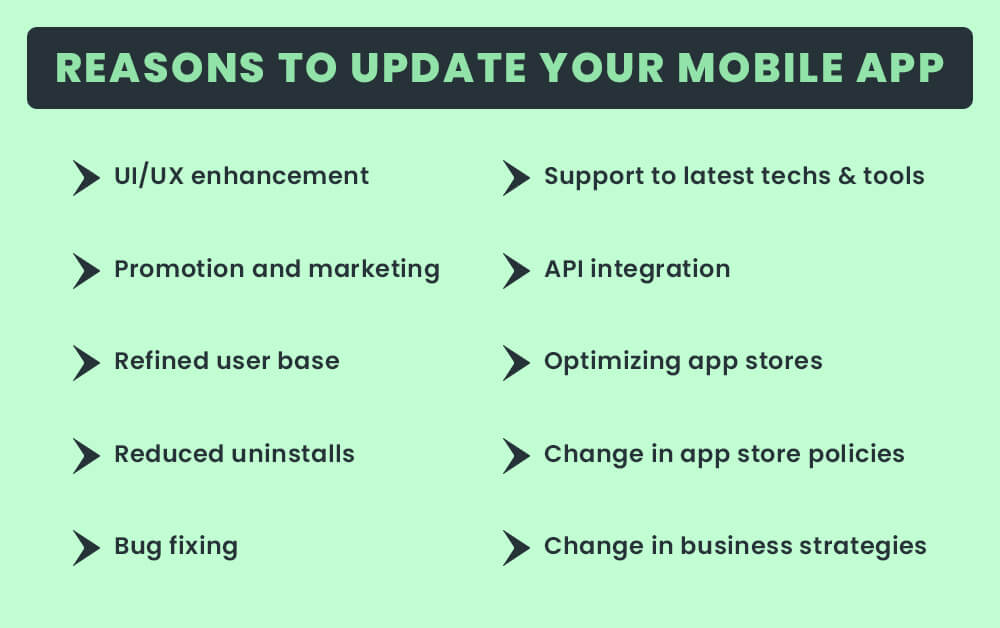
Customer satisfaction and retention are key reasons to update a mobile app, but they are not the only ones. As user needs, technology, and market expectations change, apps must evolve to stay effective. Regular updates help your app stay competitive, improve performance, and support long term business goals. They also ensure your app continues to meet user expectations while adapting to new platforms and industry standards.
Security and Data Protection
User trust depends heavily on how safely an app handles data. As security threats continue to grow, outdated apps become easier targets for vulnerabilities and breaches. Regular mobile app updates help patch security gaps, improve data protection, and meet privacy requirements. These updates protect sensitive user information and reduce the risk of legal or reputational damage.
By prioritizing security updates, businesses show responsibility and build long term trust with their users.
Performance and Speed Optimization
App performance directly affects user satisfaction. Slow load times, lagging screens, or crashes can frustrate users and push them to uninstall the app. Mobile app updates help improve speed, stability, and responsiveness. They remove unnecessary processes, optimize code, and improve overall efficiency.
Better performance leads to longer sessions, higher engagement, and improved user retention.
User Feedback Implementation
User feedback provides valuable insight into what works and what needs improvement. Reviews, ratings, and support requests highlight real user expectations. Mobile app updates allow businesses to act on this feedback by fixing issues, refining features, and introducing requested improvements. This shows users that their opinions matter.
When app users see their feedback reflected in updates, they are more likely to stay loyal and engaged.
Competitive Advantage
The app market is highly competitive, and user expectations change quickly. Apps that remain unchanged risk falling behind competitors that innovate regularly. Frequent app updates help businesses match industry trends, introduce better features, and improve usability faster than competitors. This keeps the app relevant and appealing.
Staying proactive with updates helps businesses stand out and maintain a strong market position.
Data Driven Improvements
App analytics reveal how users interact with different features and where they face challenges. This data helps businesses make informed decisions. Mobile app updates guided by usage data allow businesses to improve features that matter most and remove elements that slow users down.
Data driven updates lead to smarter improvements, better performance, and stronger user engagement.
Support for New Devices and Screen Sizes
New devices enter the market regularly, including larger screens, tablets, and foldable phones. Apps that do not adapt may deliver a poor experience on these devices. Mobile app updates ensure compatibility with new screen sizes, resolutions, and hardware capabilities. This helps maintain a consistent experience across all devices.
Supporting new devices through updates allows businesses to reach a wider audience and avoid usability issues.
UI/UX Enhancement
Users enjoy seeing occasional visual changes in an app, as long as the app continues to work smoothly. A refreshed design can make the app feel modern and more enjoyable to use without affecting performance. Updating the user interface and user experience also helps businesses reconnect with their audience. Small design improvements can change how users interact with the app and encourage them to explore features in new ways.
While some users may need time to adjust to layout changes, most understand the reason behind updates. Over time, these improvements lead to better usability, stronger engagement, and a more positive overall experience.
Promotion and Marketing
Users often forget about apps they do not use regularly. When this happens, an update notification can serve as a reminder and bring users back to your app.
Frequent updates help keep your app visible on users’ devices. Each mobile app update creates a touchpoint that increases awareness and encourages repeat usage. Over time, this becomes an effective and organic way to promote your mobile app without relying only on paid marketing efforts.
Refined User Base
Meeting user needs is one of the most effective ways to build stronger connections and improve retention. When you listen to user feedback, you gain valuable insight into what people expect from your app. Pay close attention to common requests, feature suggestions, and reported issues. These signals show how users want the app to evolve and where improvements matter most.
By acting on this feedback, businesses can refine their user base and deliver a better experience. When mobile app users feel heard and see their input reflected in updates, they are more likely to stay engaged and satisfied over time.
Reduced Uninstalls
User retention is critical for long term app success. When users stop seeing value in an app, they are more likely to uninstall it. Regular mobile app updates show users that your business is actively improving the app and cares about their experience. These updates signal that the app is not abandoned and continues to evolve based on user needs.
When users feel valued and notice consistent improvements, they are more likely to stay, engage more often, and remain loyal to your app.
Bug Fixing
Launching a mobile app is only the beginning. After release, you must continuously monitor how the app performs and how users experience it. Over time, apps can develop bugs that affect functionality, speed, or stability. These issues can frustrate users and reduce trust in your product.
Regular app updates allow you to identify problems early, fix bugs, and improve performance. By addressing issues quickly and making ongoing improvements, you can deliver a smoother experience and maintain user confidence.
Support for the Latest Technologies and Tools
Technology evolves constantly. Mobile operating systems release frequent updates, and user devices continue to change. If your app does not keep up, it risks performance issues and poor user experiences.
Regular mobile app updates ensure your app works smoothly with the latest operating systems, devices, and security standards. This helps prevent crashes, compatibility problems, and unexpected errors that frustrate users.
By staying aligned with new technologies and tools, businesses protect their app’s performance, reduce technical risks, and maintain user trust. Keeping your app updated is not just a technical task. It is a necessary step to stay relevant and competitive in a fast changing digital market.
API Integration
After launching an app, businesses often discover new ways to improve functionality and user convenience. This may include connecting the app with third-party services that users already rely on.
API integration allows your mobile app to work with other platforms such as payment systems, analytics tools, customer support software, or marketing platforms. These integrations help automate processes, reduce manual work, and deliver a more seamless experience to users.
Mobile app updates make these integrations possible. By adding or improving APIs through regular updates, businesses can expand app capabilities, improve efficiency, and offer more value without rebuilding the entire app.
Optimizing App Stores
Regular mobile app updates help improve your app’s visibility on the Google Play Store and Apple App Store. App stores prefer apps that stay current, perform well, and respond to user needs. When your app updates consistently, it signals quality and reliability to both users and app store algorithms.
App Store Optimization works in a similar way to search engine optimization for websites. It helps your app appear higher in search results when users look for related services or solutions.
By updating your app with performance improvements, new features, and clear release notes, businesses can improve rankings, increase downloads, and reach a wider audience. App updates are not just about functionality. They are a key part of making your app easier to find and trust.
Change in App Store Policies
The Google Play Store and Apple App Store regularly update their policies to improve user safety, data protection, and app quality. Businesses must ensure their mobile apps remain compliant with these guidelines at all times.
Apps that fail to meet store requirements may face reduced visibility, warnings, or removal from the app store altogether. This can disrupt user access, affect revenue, and harm brand credibility.
Frequent mobile app updates help businesses stay aligned with changing policies and platform standards. By updating your app proactively, you protect its presence in the app store and ensure it remains available, compliant, and trusted by users.
Change in Business Strategies
As your business evolves, your mobile app must evolve with it. Changes in pricing models, service offerings, target markets, or branding should be reflected in the app experience. Mobile app updates allow businesses to align the app with new strategies and goals. These updates ensure that users receive accurate information and a consistent experience that matches the direction of the business.
By updating your app alongside strategic changes, you maintain clarity, avoid user confusion, and support long term growth.
How Often Should You Update Your Mobile App?
Once you understand the importance of mobile app updates for both users and businesses, the next question is how often these updates should happen. There is no single schedule that works for every app. The right update frequency depends on your app’s goals, user expectations, and market conditions.
Mobile app updates are usually driven by factors such as user feedback, performance data, app store requirements, and changes in the competitive landscape. Monitoring these signals helps businesses decide when updates are necessary and what improvements matter most.
If you work with a professional mobile app development company, update planning and execution are often handled for you. However, understanding common update schedules can help you make informed decisions and stay involved in your app’s growth strategy.
Security and Compliance Driven Updates
Security risks and privacy requirements can change without warning. When vulnerabilities are discovered or regulations are updated, mobile apps must be updated immediately. Security driven updates help protect user data, prevent misuse, and maintain compliance with privacy standards. These updates are not optional and should be prioritized regardless of regular update schedules.
By responding quickly to security and compliance needs, businesses protect their users, brand reputation, and app store presence.
Performance and Stability Based Updates
Over time, apps may slow down or become less stable due to increased usage, device changes, or system updates. These issues often appear through crash reports, performance metrics, or user complaints. Performance based updates focus on improving speed, stability, and responsiveness. Addressing these issues promptly helps prevent negative reviews and user frustration.
Regular performance improvements ensure a smoother experience and support long term user retention.
App Store Requirement Based Updates
App stores frequently introduce new technical or policy requirements that developers must follow. These updates often come with deadlines. Updates driven by app store requirements ensure your app remains compliant and visible on platforms like Google Play and the Apple App Store. Missing these updates can lead to reduced reach or removal.
Staying ahead of store requirements helps businesses avoid disruptions and maintain consistent access for users.
Emergency or Hotfix Updates
Some issues cannot wait for scheduled updates. Critical bugs, crashes, or security flaws may require immediate action. Emergency or hotfix updates allow businesses to resolve serious problems quickly. These updates help minimize downtime, protect user experience, and reduce negative feedback.
Having a plan for emergency updates shows preparedness and professionalism.
Seasonal or Campaign Based Updates
Certain updates align best with marketing campaigns, product launches, or seasonal events. These updates support promotions, special offers, or limited time features. Seasonal updates help businesses stay relevant and timely while giving users a reason to return to the app. They also create opportunities for engagement during peak activity periods.
Aligning updates with campaigns helps maximize visibility and user interest.
Data and Analytics Driven Updates
App analytics reveal how users interact with features, where they drop off, and what drives engagement. This data helps guide smarter update decisions. Data driven updates focus on improving areas that directly impact user behavior and business goals. They reduce guesswork and prioritize changes with measurable results.
Using analytics to guide update frequency ensures continuous improvement and stronger app performance over time.
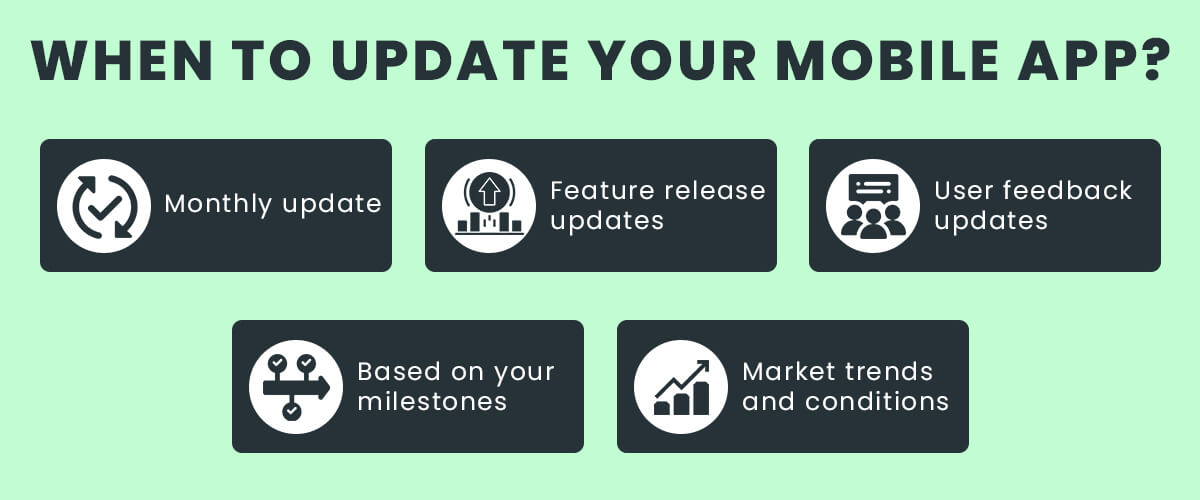
Monthly Update
Many users expect apps to improve regularly after installation. When an app stays unchanged for long periods, users may assume it is no longer actively maintained.
Monthly updates help businesses deliver small improvements such as performance enhancements, minor design refinements, bug fixes, or stability upgrades. These updates reassure users that the app is active and continuously improving.
Maintaining a consistent update cycle also helps businesses stay competitive and meet evolving user expectations without overwhelming users with major changes.
Feature Release Updates
Some app updates are driven by specific user needs rather than a fixed schedule. Feature release updates focus on adding new functionality or improving existing features based on user feedback and usage patterns.
When mobile app users repeatedly request a feature or improvement, responding through an app update shows that the business values their input. This builds trust and encourages long term engagement.
While major app features may take time to develop, smaller improvements can be released between larger updates. This approach keeps the app fresh, maintains user interest, and supports steady growth without long gaps between releases.
User Feedback Updates
Tracking how your app performs in the market is essential for long term success. User reviews, ratings, surveys, and in app feedback provide valuable insights into what users like and where they face challenges.
App updates based on user feedback help address real issues, improve usability, and refine features that matter most to users. This approach ensures that improvements are practical and aligned with user expectations.
When users see their feedback reflected in app updates, they feel heard and valued. This builds trust, increases satisfaction, and encourages users to stay engaged with your app over time.
Based on your Milestones
Key business milestones such as anniversaries, growth targets, or major achievements offer a strategic opportunity to release meaningful app updates. These moments allow businesses to introduce improvements, new features, or limited enhancements that re engage users.
Aligning app updates with milestones helps maintain momentum and reinforces the message that the app is actively evolving. It also gives businesses a natural reason to communicate updates and encourage renewed user interest.
Market Trends and Conditions
Market trends and user expectations change rapidly. New technologies, design patterns, and user behaviors continue to reshape how apps are built and used.
Regularly monitoring market trends allows businesses to adjust their app features, design, and functionality through timely updates. Staying aligned with current mobile app development trends helps apps remain relevant, competitive, and appealing in a constantly changing digital landscape.
Types of Maintenance Update for Your Mobile App
Mobile app maintenance updates are required at different stages of an app’s lifecycle, depending on performance issues, security risks, or changes in the digital environment. Each type of maintenance update serves a specific purpose and helps ensure the app remains stable, secure, and reliable.
Emergency Maintenance Updates for Your Mobile App
Emergency updates are released when unexpected issues occur, such as sudden app crashes, system failures, or security breaches. These updates focus on fixing critical problems that can disrupt user experience or compromise data. Emergency maintenance is time sensitive and helps minimize damage and downtime.
Preventive Maintenance Updates for Your Mobile App
Preventive updates are planned in advance to reduce the risk of future issues. These updates focus on strengthening security, improving system stability, and protecting the app from potential malware or vulnerabilities. Preventive maintenance helps businesses avoid major disruptions before they happen.
Corrective Maintenance Updates for Your Mobile App
Corrective updates address problems that were missed during testing or reported by users after launch. These issues may include bugs, functional errors, or usability concerns. Fixing these problems quickly helps improve user satisfaction and prevents negative reviews.
Adaptive Maintenance Updates for Your Mobile App
Adaptive updates are released to keep the app compatible with new operating system versions, devices, or technology changes. These updates help the app adapt to evolving platforms and user expectations while maintaining a smooth experience.
Performance Maintenance Updates for Your Mobile App
Over time, apps may slow down due to increased data, new features, or platform changes. Performance maintenance updates focus on improving speed, reducing load times, and increasing stability.
These updates help prevent user frustration, improve engagement, and reduce the risk of uninstalls caused by poor performance.
Security Maintenance Updates for Your Mobile App
Security threats evolve constantly, and apps must stay protected against new vulnerabilities. Security maintenance updates focus on patching risks, strengthening data protection, and meeting privacy requirements.
Regular security updates help protect user information, maintain trust, and ensure compliance with industry and platform standards.
User Experience Maintenance Updates for Your Mobile App
As users interact with an app, usability issues often surface over time. User experience maintenance updates focus on improving navigation, refining layouts, and removing friction points.
These type of mobile app updates help make the app easier to use and ensure it continues to meet user expectations.
Monitoring and Analytics Based Maintenance Updates for Your App
App monitoring tools and analytics reveal issues such as crashes, drop off points, and underperforming features. Maintenance updates based on this data help address problems early.
Using analytics to guide maintenance decisions leads to more effective updates and better long term performance.
Best Practices for Mobile App Updates
Updating a mobile app is not just about releasing changes. The way updates are planned, tested, and communicated plays a major role in user satisfaction and long term success. Following best practices helps businesses reduce risk and maximize the impact of every update.
Plan Your App Updates with Clear Goals
Each update of your mobile app should have a clear purpose. Whether the goal is to fix issues, improve performance, add features, or support business changes, having a defined objective helps keep updates focused and effective.
Clear goals also help teams prioritize tasks and avoid unnecessary changes that may confuse users.
Test Updates Before Release
Testing is essential before pushing any update to users. Proper testing helps identify bugs, performance issues, and compatibility problems across different devices and operating systems.
Well tested updates reduce the risk of crashes, negative reviews, and emergency fixes after release.
Use Clear and Simple Release Notes
Release notes explain what has changed and why it matters. Simple and transparent release notes help users understand the value of an update and set the right expectations.
Clear communication builds trust and encourages users to install updates instead of ignoring them.
Roll Out Updates Gradually
Releasing updates in phases allows businesses to monitor performance and identify issues early. Gradual rollouts help reduce the impact of unexpected problems and make it easier to apply quick fixes if needed.
This approach lowers risk and improves overall stability.
Monitor Performance After Updates
The work does not end after an app update is released. Businesses should track app performance, crash reports, and user feedback to understand how the update performs in real conditions.
Monitoring helps teams act quickly if issues arise and measure whether the mobile app update meets its goals.
Listen to User Feedback
User feedback after an update provides valuable insight into what works and what needs improvement. Reviews and support requests often highlight issues that testing may miss.
Using this feedback helps improve future updates and shows users that their experience matters.
Maintain a Consistent Update Schedule
Consistency builds confidence. When users see regular updates, they trust that the app is actively maintained and supported.
A predictable update cycle also helps businesses plan resources, reduce emergency fixes, and manage long term app growth.
Cost and Planning of Mobile App Updates
The cost of mobile app updates depends largely on how well they are planned. Updates can range from small fixes to major improvements, and each type requires a different level of time, effort, and budget.
Planned updates are generally more cost effective. When businesses schedule updates in advance, they can control development timelines, testing efforts, and resource allocation. This reduces last minute changes and helps avoid unnecessary expenses.
Unplanned or emergency updates usually cost more. These updates are triggered by critical bugs, crashes, or security issues and often require immediate action. The urgency increases development and testing effort, which directly impacts cost.
The scope of an update also affects cost. Minor updates such as bug fixes or performance improvements require less investment, while feature additions, security upgrades, or compatibility updates for new operating systems involve higher costs.
By planning app updates regularly and allocating a dedicated budget for maintenance, businesses can spread costs over time, reduce financial risk, and avoid expensive emergency fixes. A structured update plan helps maintain app quality while keeping expenses predictable and manageable.
Role of a Mobile App Development Partner
A mobile app development partner supports the ongoing success of an app beyond its initial launch. Their role focuses on planning, executing, and maintaining updates that keep the app stable, secure, and aligned with business goals.
Strategic Update Planning
A development partner helps businesses define update schedules based on user needs, app performance, and market conditions. This planning ensures updates are released at the right time and serve a clear purpose.
Technical Maintenance and Support
Development partners handle technical tasks such as bug fixing, performance optimization, and compatibility with new operating systems and devices. This ensures the app continues to function smoothly as technology evolves.
Security and Compliance Management
An experienced partner monitors security risks and platform policy changes. They implement necessary updates to protect user data and keep the app compliant with app store and privacy requirements.
Feature Enhancement and Scalability
Development partners assist in improving existing features and adding new ones based on business growth and user feedback. They ensure the app can scale without performance or stability issues.
Testing and Quality Assurance
Before any update is released, the development partner conducts thorough testing to reduce bugs and performance issues. This helps prevent negative user experiences after updates go live.
Ongoing Monitoring and Improvement
After updates are released, development partners track performance, user feedback, and analytics. This ongoing monitoring helps identify areas for improvement and guides future updates.
Conclusion: Making Mobile App Updates a Long Term Strategy
Mobile app updates are not optional in today’s competitive digital environment. They play a critical role in keeping users engaged, maintaining performance, and protecting the app from technical and security risks.
Regular updates help businesses adapt to changing user expectations, market trends, and platform requirements. They also support better visibility in app stores, reduce uninstalls, and build long term user trust.
By planning updates strategically, managing costs effectively, and working with the right development partner, businesses can ensure their mobile apps continue to deliver value well beyond launch.
Treating mobile app updates as an ongoing strategy rather than a one time task helps businesses stay competitive, scalable, and prepared for future growth.
Avantika Shergil
| Dec 29, 2025


Avantika Shergil is a technology enthusiast and thought leader with deep expertise in software development and web technologies. With over 8 years of experience analyzing and evaluating cutting-edge digital solutions, Avantika has a knack for demystifying complex tech trends. Her insights into modern programming frameworks, system architecture, and web innovation have empowered businesses to make informed decisions in the ever-evolving tech landscape. Avantika is passionate about bridging the gap between technology and business strategy, helping businesses build customized software and website, and understand about different tools to leverage effectively for their ventures. Explore her work for a unique perspective on the future of digital innovation.