Everything You Need to Know About Mobile Gaming Business
 By
Derek Cohen
|
Dec 3, 2025 |
Mobile Game Development
By
Derek Cohen
|
Dec 3, 2025 |
Mobile Game Development
As of 2025, mobile gaming is no longer just a fast-growing niche; it’s the engine driving the global games industry. There are about 3.32 billion active gamers worldwide, and roughly 2.85 billion of them play on mobile, making smartphones the most common way people experience games.
The global gaming market is estimated at around USD 298 billion in 2024, with mobile games alone contributing approximately USD 139 billion and projected to reach USD 256 billion by 2030. In other words, mobile gaming is not a side business anymore—it’s the core of the industry.
Emerging markets are pushing this growth even further. India, for instance, is now the world’s largest mobile gaming market by downloads, clocking 8.45 billion mobile game installs in FY 2024–25, while its overall gaming market is expected to reach USD 9.1 billion by 2029. At the same time, the market is maturing. After pandemic-era spikes, global mobile game spending has stabilized and then rebounded, with in-app purchase (IAP) revenues growing again in 2024, even as user acquisition costs and competition increase.
Mobile gaming’s projected expansion through 2027, valued at $267.46 billion, highlights its remarkable growth capacity. The rise in smartphone popularity is responsible for this. Evidence supporting the area’s expansion comes from projections that mobile games will represent a significant share of the gaming industry. Mobile gaming’s industry-wide influence is a vital aspect of entertainment.
Table of Contents
Why Are Mobile Games the Best Business?
The rapidly transforming landscape of contemporary entertainment has given rise to few phenomena as influential as mobile games. Today, mobile titles compete with streaming platforms, social networks, and even traditional sports for user attention.
The combination of massive reach, relatively low entry barriers, diversified monetization, and always-connected devices has turned mobile gaming into a business playground for startups, publishers, brands, and investors alike.
Top mobile game development companies are no longer just “coders for hire.” They combine analytics, monetization design, user experience, and live-ops expertise to craft data-driven, long-running products that behave more like scalable digital services than one-off launches.
Tapping into groundbreaking genre categories, the ubiquity of smartphones, the impact of social connections, and the immersive capabilities of technologies like AR, VR, and AI, mobile gaming has cemented its position as a dominant force in the entertainment economy.
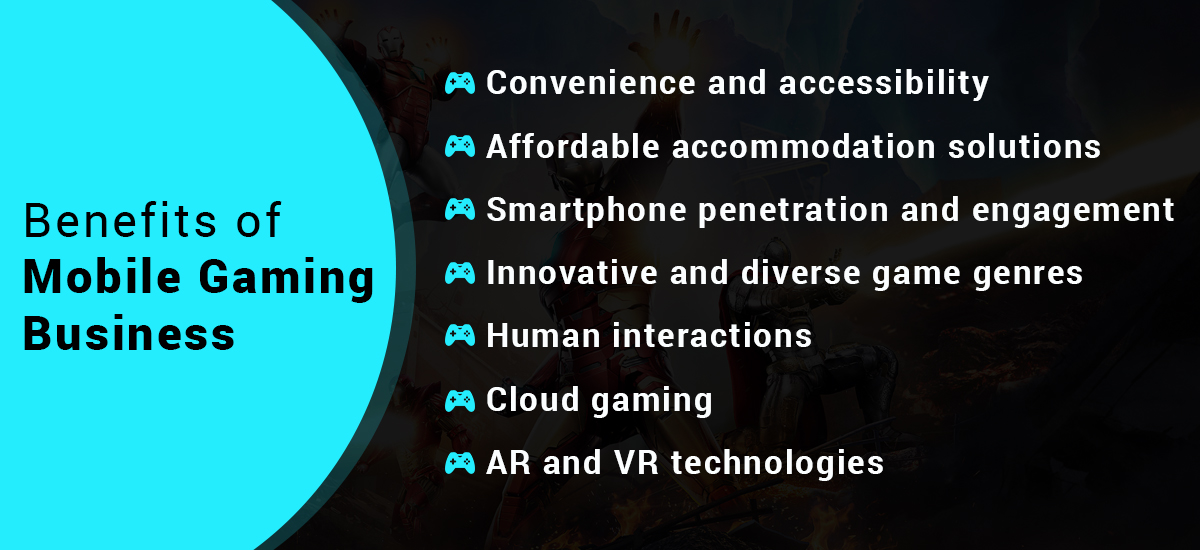
Convenience and accessibility are essential components of success
Mobile games represent the seamless intersection of entertainment and convenience. With a smartphone in hand, players can:
- Dive into a quick puzzle during a commute
- Join a battle-royale match with friends late at night
- Manage a strategy game’s economy during a lunch break
There is no need for specialized hardware or complex setup. The app stores are always open, and onboarding into most games is as simple as tapping “Install” and signing in with a social or platform account.
This convenience is especially powerful in emerging markets, where mobile is often the first and only gaming device. Instead of competing with consoles or gaming PCs, mobile games compete with idle time and they are winning.
Affordable accommodation solutions to level the playing field
Traditional gaming demanded upfront investment, consoles, PCs, and full-priced games. Mobile gaming flipped that model.
Most popular mobile games use free-to-play (F2P) distribution. Players can try the game instantly with no upfront cost, and only later decide whether to spend on:
- Cosmetic upgrades
- Battle passes
- Power-ups and boosters
- Expansion content or new characters
This “try before you pay” structure dramatically lowers the barrier to entry and allows players from diverse economic backgrounds to participate. In markets like India, where price sensitivity is high, F2P games combined with low-cost mobile data have brought hundreds of millions of people into gaming for the first time.
For businesses, this model offers something equally attractive: a large funnel of potential customers, where a minority of paying users (and advertisers) can sustain a very large audience.
Smartphone penetration and engagement redefining the horizon
Smartphones have evolved far beyond basic communication tools—they are always-on entertainment hubs. As of 2024, mobile gaming has become the most common way people play, with billions of mobile gamers worldwide.
Key factors behind this dominance include:
- Affordable Android devices that can run high-quality games even at lower price points
- Improved mobile networks (4G/5G) making real-time multiplayer and cloud streaming viable
- App store ecosystems that make distribution and updates seamless
For game businesses, this means:
- You can reach audiences in regions that were previously unreachable due to hardware cost
- You can iterate and update frequently, using analytics to refine gameplay and monetization
- You can localize content and events to match regional preferences without changing your entire product
Innovative and diverse game genres: A woven fabric of experiences
- Mobile gaming has matured far beyond early casual titles. Today’s ecosystems support:
- Hyper-casual & casual games for quick, snackable sessions
- Mid-core and hardcore genres like shooters, MOBAs, and strategy games
- Social casino, idle, and simulation titles with deep progression systems
- Educational and serious games, fitness and wellness experiences, and branded mini-games
Analysts note that while casual and hyper-casual games lead by downloads, more complex genres like RPGs, strategy, and mid-core titles often dominate in revenue per user, thanks to deeper engagement and heavier spending.
This breadth of genres means there is room for:
- Niche experiences targeting specific communities
- Mass-market hits targeting broad demographics
- Brand collaborations and IP-driven games that leverage existing fanbases
Human interactions have the ultimate effect
Mobile games today are not just digital playgrounds; they are social platforms in disguise.
Features like:
- Real-time PvP battles
- Co-op modes and guilds/clans
- Chat, emojis, and voice
- Social feeds, friend lists, and squad invites
transform games into virtual hangout spaces.
In markets like India and Southeast Asia, many players see mobile games as an extension of their social circle—meeting friends, joining tournaments, and participating in community events or esports.
For businesses, this social layer is powerful because:
- Social connections drive retention (players return to stay in sync with friends)
- Communities amplify organic growth through referrals and word of mouth
- Live events and co-op modes open up new monetization opportunities (special skins, passes, and event-limited content)
Cloud gaming: Where boundaries dissolve
Cloud gaming has added a new dimension to the mobile game experience. Instead of relying purely on local device performance, players can:
- Stream high-fidelity games from powerful servers
- Access console- or PC-level graphics and complex simulations on mid-range phones
- Continue gameplay across platforms using a single account
For business owners and publishers, cloud gaming offers:
- A way to extend existing PC/console franchises to mobile with minimal compromises
- The ability to reduce device fragmentation, as performance depends more on the cloud infrastructure
- Opportunities for subscription models and cross-platform bundles
While cloud gaming is still maturing in many regions, the combination of cheaper data, 5G, and widespread smartphones makes it an exciting frontier for the next wave of mobile experiences.
Beginning an explorative technological adventure: AR and VR
There is no question that mobile game development trends continuously evolve with new opportunities in Augmented Reality (AR) and Virtual Reality (VR). Augmented Reality (AR) and Virtual Reality (VR) act as gateways into another realm – from fighting virtual creatures in your neighborhood to traversing virtual realms.
Augmented Reality (AR) and Virtual Reality (VR) continue to open new doors in mobile gaming.
- AR overlays digital content onto the real world, enabling experiences like location-based games, AR puzzles, and interactive learning titles.
- VR, combined with mobile or standalone headsets, can deliver immersive entertainment, training simulations, and social experiences.
Recent trends show developers experimenting with:
- AR mini-games tied to brands, retail locations, or events
- Mixed-reality features inside otherwise traditional games (e.g., AR filters, camera-based features)
- AI-driven NPCs and personalization, tailoring content to individual player behavior
Mobile game development companies are leveraging these technologies to create differentiated experiences that stand out in crowded app stores. When thoughtfully integrated, AR/VR and AI features can boost engagement, session length, and retention, all critical metrics for long-term business success.
How to Monetize Your Mobile Game?
With so many free games in the app stores, it’s natural to wonder: where does the money actually come from?
The answer lies in diverse monetization models that balance player experience, business sustainability, and long-term trust. The industry has moved beyond simple banner ads or one-time purchases to hybrid monetization, mixing several methods within the same game.
Here are some proven methods for generating revenue from your mobile games:
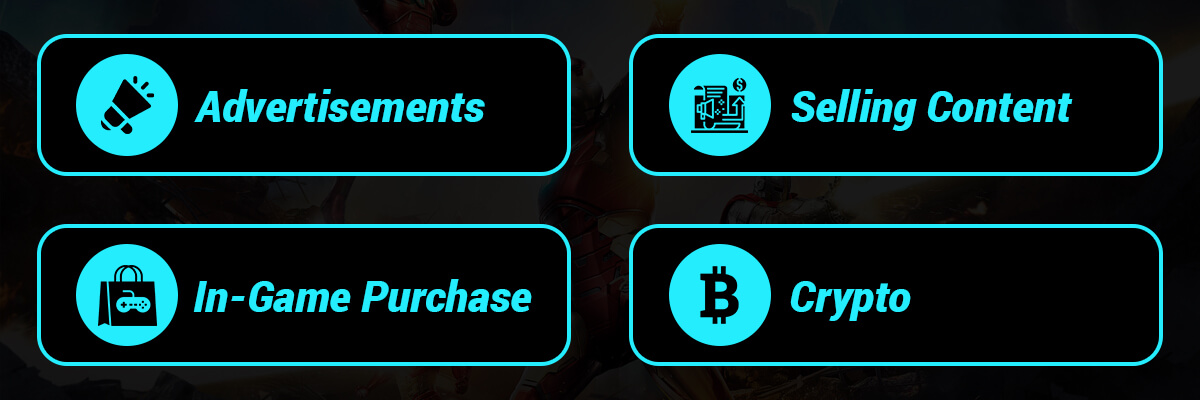
Advertisements in mobile gaming
Ads remain a cornerstone of mobile game monetization, especially for casual and hyper-casual titles. But 2025’s ad landscape is more sophisticated than ever:
- Rewarded videos let players watch short ads in exchange for in-game currency, extra lives, or boosts—creating a value exchange that players accept and even seek out.
- Interstitial and playable ads can be effective when timed carefully (e.g., between levels) and not overused.
- Native in-game placements (like billboards, stadium branding, or subtle product placement) offer less intrusive monetization, especially in sports, racing, and simulation titles.
The key is balance:
- Use analytics to track ad frequency, retention, and churn
- Segment your audience so high-value payers see fewer ads, while non-spenders see more ad-supported content
- Test formats and placements constantly to maintain engagement without overwhelming players
Selling Content: Unlocking Value
Direct content sales, often called downloadable content (DLC) or premium add-ons, extend the life and revenue of a game.
Examples include:
- Expansion packs or additional story chapters
- New level packs, puzzles, or campaigns
- Cosmetic items, skins, and customization bundles
This model works particularly well when:
- Your core game offers generous free content that builds trust and loyalty
- Paid content adds meaningful variety or depth, rather than gating basic functionality
- Pricing is tuned to the purchasing power of your target regions (e.g., different price tiers for the US vs India)
In-Game Purchases: The Power of Choice
In-app purchases (IAPs) are still the backbone of mobile game revenue. After a period of volatility, 2024 saw IAP revenues rise again, highlighting the resilience of this model when combined with strong live-ops and engaging design.
Effective IAP strategies focus on player empowerment, not pay-to-win frustration. Successful games typically:
- Offer multiple price points, from micro-transactions to premium bundles
- Use time-limited offers and events to create urgency without pressure
- Bundle purchases with progression (e.g., season/battle passes that reward consistent play)
- Provide cosmetics and personalization, so paying feels like self-expression, not just power scaling
In high-download but low-ARPU markets like India, fine-tuning the pricing ladder and offering localized bundles can significantly improve conversion without alienating free players.
Cryptocurrency Integration: The Future Beckons
Web3, blockchain, and cryptocurrency integration remain experimental—but they continue to influence how some studios think about digital ownership.
Potential applications include:
- Tokenized in-game assets that players can trade or sell
- Interoperable cosmetics that move between games within the same ecosystem
- On-chain economies that align long-term player and developer incentives
However, regulatory scrutiny and volatile markets mean mobile game businesses should:
- Prioritize compliance and player protection
- Be transparent about risks and terms
- Ensure the core game is fun and sustainable even without crypto features
Used thoughtfully, blockchain can add a new monetization and engagement layer, but it should complement, not replace, proven models like IAP, ads, and subscriptions.
Commencing your mobile game journey
Building a successful mobile game is not only about a creative idea—it is about process, iteration, and long-term operations. The modern mobile game behaves like a service: constantly updated, improved, and extended.
Here’s how to structure your journey.
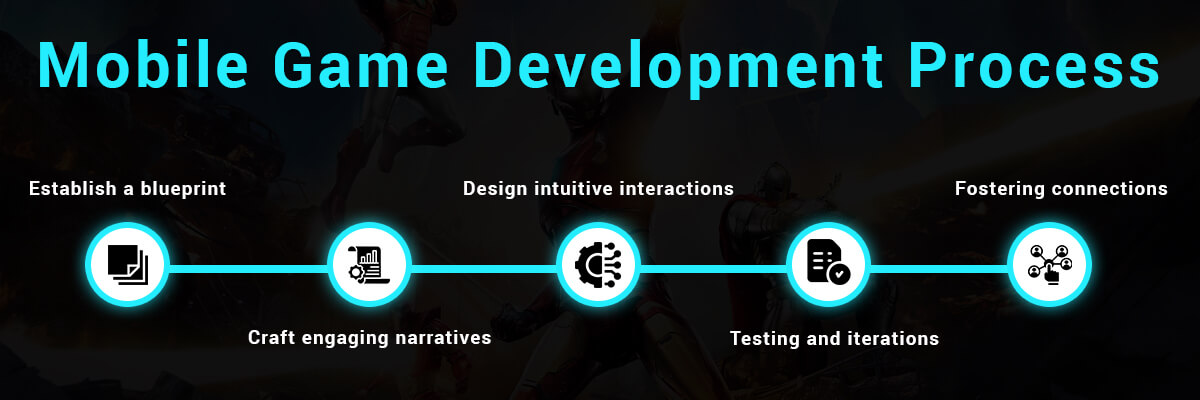
Establish a blueprint for the creation of a Successful Mobile Game
Before diving into mobile game development, invest serious time in strategy and planning:
- Define your audience: region, age group, preferred genres, device range, and spending capacity.
- Analyze competitors: what are top-grossing and top-downloaded titles in your chosen niche doing right or wrong?
- Clarify your business model: ads-first, IAP-heavy, hybrid, subscription, or IP-driven?
- Plan your tech stack for mobile game development: game engine, backend services, analytics, A/B testing tools, and marketing attribution platforms.
A well-structured blueprint—often created with an experienced mobile game development partner—saves months of rework and ensures your product vision aligns with your commercial goals.
Crafting engaging narratives in Mobile Game
Even in casual and hyper-casual games, narrative and theme matter. They give context to actions and make sessions more memorable.
To craft engaging narratives:
- Build recognizable characters and a coherent world, even if the story is lightweight.
- Tie progression (levels, seasons, events) to evolving story beats.
- Use narrative to justify events and monetization (special festivals, boss raids, limited-time content).
Storytelling is not limited to RPGs or adventure games; it enhances retention and emotional connection across genres.
Mobile Game Design for intuitive interactions
The mobile gaming business has rapidly grown in popularity over the past decade, with an increasing number of people turning to mobile phones for entertainment. User experience in mobile game development is paramount, creating user/game interfaces that look stunning and intuitive for navigation. Smooth interactions will immerse players in your game without reaching the frustration threshold.
User experience (UX) is the silent hero of mobile gaming. As more people turn to their phones as their primary gaming device, intuitive controls and clean interfaces are non-negotiable.
Focus on:
- Simple, responsive controls optimized for touch, with optional support for controllers where relevant
- Gradual onboarding, teaching players with actions instead of long tutorials
- Readable UI that works well on a variety of screen sizes and aspect ratios
- Accessibility options (color-blind modes, text size, vibration toggles, etc.) to widen your audience
Smooth, frustration-free UX directly influences player ratings, retention, and long-term monetization—major drivers of business success.
Mobile Game Testing and iterating in an ongoing cycle
An exceptional mobile game requires continual update. Mobile game testing and player feedback play an invaluable role in this process. Use insights gained during these efforts to refine and improve your mobile game until it reaches perfection incrementally.
In a mature market, launch is not the finish line, it’s the starting point. Successful mobile games are obsessed with data and iteration.
Your testing and optimization loop should include:
- Closed testing and soft launches in selected regions to validate core mechanics and monetization
- A/B tests on onboarding flows, level difficulty, IAP pricing, and ad placement
- Cohort analysis to understand retention (D1, D7, D30), session length, and LTV by region and device
- Regular content updates—levels, challenges, events—based on live data, not just intuition
Top-tier mobile game development companies manage this continuous process end-to-end, from analytics setup to feature rollout, ensuring that each update moves metrics in the right direction.
Fostering connections in community building for your Mobile Game
Building a community around your mobile game goes well beyond anything. Use social media, forums, and in-game interactions to cultivate an atmosphere where mobile game players feel included. Engage your mobile game player base through interactions such as listening to feedback sessions and listening carefully for their opinions – create an experience where all feel valued!
The mobile game development process comprises several complex phases, from concept design to publishing. Top-notch companies providing mobile game development services will handle every step, ensuring the timely delivery of premium mobile games. As technology advances, mobile gaming is expected to transform and excite. Mobile game developers can craft engaging experiences for your mobile game that anyone with an internet connection and a smartphone can enjoy.
A thriving community is one of the strongest moats your game can have.
To foster community:
- Create in-game social structures like guilds, clans, or clubs
- Maintain active channels on platforms like Discord, Reddit, or regional social networks
- Run live events, tournaments, and challenges to keep the community engaged
- Listen to feedback and communicate transparently about updates, balance changes, and roadmaps
Communities don’t just improve retention; they also provide free user acquisition as enthusiastic players bring in friends, family, and followers.
Build a Mobile Game Now
The recent surge and continued resilience of mobile gaming underscore a highly attractive business opportunity, but one that now demands strategy, quality, and operational excellence.
Key takeaways for businesses and founders:
- The market is huge and still growing—with global mobile game revenues expected to exceed USD 250 billion by 2030, and emerging markets like India adding hundreds of millions of new players.
- Competition is intense, so success increasingly depends on data-driven design, strong UX, and smart hybrid monetization.
- Live-ops, community building, and continuous updates are now essential parts of the mobile gaming business model, not optional extras.
If you are considering entering the mobile gaming space, whether as a startup founder, an established brand, or a non-gaming business exploring gamification, this is a pivotal moment. Partnering with experienced mobile game development companies can help you:
- Validate your concept and choose the right genre and monetization strategy
- Design and develop high-quality cross-platform experiences
- Launch, analyze, and scale your game globally with the right technology stack and processes
Mobile gaming has evolved from a promising experiment into a core pillar of the digital economy. With the right strategy and partners, your next project can be more than just a game, it can be a scalable, data-driven business that grows with the billions of gamers who now live on mobile.
Mobile Gaming Business: What You Should Know?
Is mobile gaming the most profitable gaming segment?
Yes, mobile gaming is currently the most profitable segment of the global gaming industry. It consistently generates more revenue than console and PC gaming combined due to its massive user base, free-to-play distribution model, and advanced monetization strategies such as in-app purchases, advertisements, subscriptions, and live in-game events. The accessibility of smartphones, especially in emerging markets, has allowed mobile games to reach billions of users worldwide. High user engagement, scalable distribution through app stores, and continuous content updates make mobile gaming the most commercially powerful segment in the gaming ecosystem today.
How big is the mobile gaming industry?
The mobile gaming industry is enormous — and continues to dominate the global games market. According to recent reports, the total global games market is projected to generate around USD 188.8 billion in 2025. Within that, mobile gaming remains the largest segment. Estimates vary depending on report and methodology, but as of 2024–2025, mobile games generate roughly USD 103 billion to USD 139 billion annually, amounting to approximately 55% to 60% of total gaming revenue worldwide.
Projections for the coming years remain very strong. Some market forecasts expect the global mobile gaming market to reach USD 256 billion by 2030, with a compound annual growth rate (CAGR) around 10% during the 2025–2030 period.
Beyond revenue, mobile gaming’s user reach is staggering. The global user base already counts billions of active players, making mobile games the most accessible and widespread form of gaming.
In short, mobile gaming today is not just “a segment” — it is the backbone of the global video-games ecosystem. Its size, scale, and growth potential make it one of the biggest and most lucrative digital entertainment industries on the planet.
How to start a mobile game company?
Starting a mobile game company requires a combination of creative vision, technical expertise, and strong business planning. The process begins with identifying a niche, defining the core game concept, and building a skilled team of developers, designers, and marketers. Entrepreneurs must choose a sustainable revenue model such as in-app purchases, ads, subscriptions, or a hybrid approach. Registering the business, setting up financial and legal frameworks, and establishing partnerships with technology providers are essential early steps. After launch, continuous optimization through analytics, user feedback, live-ops, and community engagement plays a critical role in scaling the company and building long-term profitability.
What are the main revenue sources in mobile gaming?
The primary revenue sources in mobile gaming come from in-app purchases, in-game advertising, and subscriptions. In-app purchases generate the largest share of revenue through the sale of virtual goods, premium content, battle passes, and upgrades. Advertising revenue comes from rewarded videos, interstitial ads, and native in-game placements, especially in free-to-play titles. Subscriptions are gaining popularity by offering exclusive content, bonuses, and ad-free experiences. Many successful mobile games now use a hybrid monetization strategy that combines all three models to maximize lifetime user value while maintaining a positive player experience.
How long does it take to build a mobile game?
The time required to build a mobile game depends on the size, complexity, and feature set of the project. A simple hyper-casual game can be developed in two to four months, while a mid-core or casual multiplayer game usually takes six to twelve months. Large-scale games with complex mechanics, multiplayer functionality, live-ops systems, and advanced graphics may take twelve to twenty-four months or longer. The total timeline also includes planning, testing, soft launch, post-launch updates, and ongoing optimization, making mobile game development a continuous process rather than a one-time effort.
Derek Cohen
| Dec 3, 2025
Analyzing business activities and data to formulate the best business development ideas is where I earn appreciations and remunerations. I’m an ardent reader, business adviser, gadget aficionado and an amateur yet an avid writer. My urge for innovative writing evokes every time I come across new gadgets, neo technology and novel technical events.