Healthcare App Development: Cost, Types, Benefits, & More
 By
Avantika Shergil
|
Jan 30, 2026 |
App Development Healthcare
By
Avantika Shergil
|
Jan 30, 2026 |
App Development Healthcare
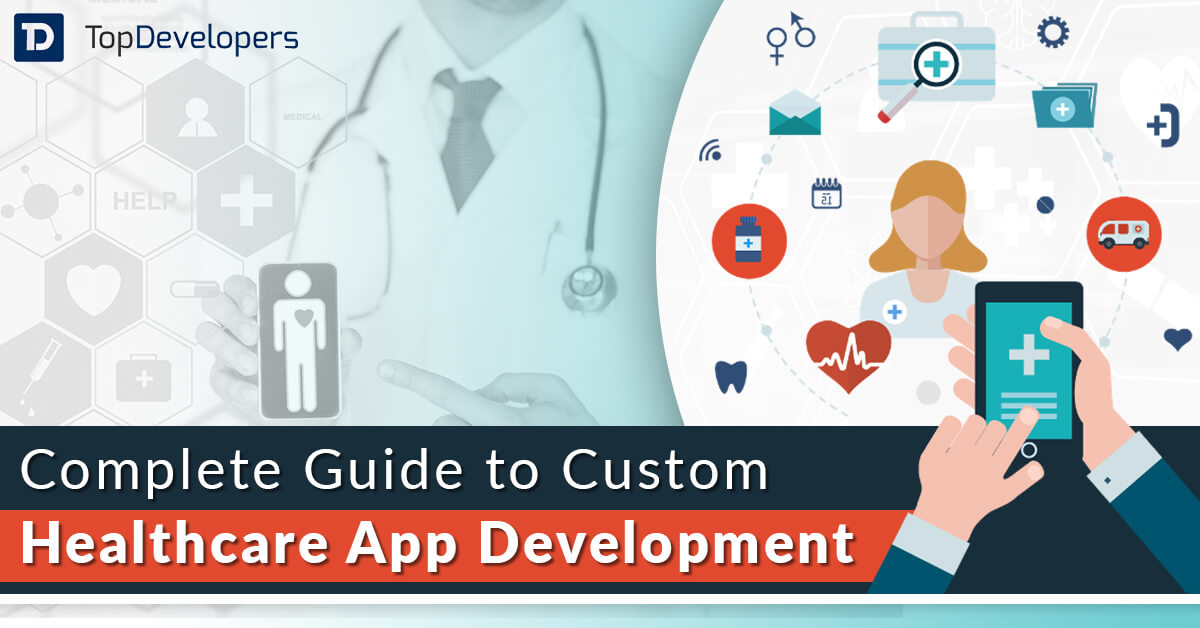
Healthcare app development has become a critical focus for healthcare providers, startups, and digital health businesses as care delivery increasingly shifts toward mobile and software driven solutions. From virtual consultations and patient engagement platforms to clinical support tools, healthcare apps now play a direct role in improving access to care, operational efficiency, and patient experience. In 2026, building a healthcare app is not just a technical project but a strategic initiative that must align with regulatory requirements, user expectations, and business goals.
As the demand for digital health solutions grows, so do the challenges associated with developing healthcare applications. Organizations must address sensitive health data handling, privacy protection, usability for diverse user groups, and strict healthcare regulations while ensuring the app delivers real value. A successful healthcare app today must be secure, compliant, easy to use, and designed around real world healthcare workflows rather than generic app patterns.
According to Statista, the global digital health market is projected to reach over 650 billion dollars by 2030, highlighting the rapid expansion of healthcare technology adoption across the world.
This guide is created to help decision makers understand what it takes to build a reliable and effective healthcare app in this evolving landscape. It provides practical insights into regulations, features, costs, monetization strategies, and common mistakes so you can approach healthcare app development with clarity, confidence, and a focus on sustainable success.
Table of Contents
What Is a Healthcare App?
A healthcare app is a software application designed to support healthcare related activities for patients, healthcare providers, or healthcare organizations through mobile devices or web platforms. These applications are used to manage health information, deliver care services, support clinical workflows, and improve communication between patients and medical professionals. Unlike general wellness apps, healthcare apps often handle sensitive health data and are closely connected to healthcare delivery processes.
Healthcare apps can serve a wide range of purposes, including virtual consultations, appointment scheduling, remote patient monitoring, medication management, patient education, clinical decision support, and administrative operations. Depending on their functionality, healthcare apps may be used directly by patients, clinicians, hospitals, clinics, or healthcare administrators. Their role is to make healthcare services more accessible, efficient, and data driven while maintaining accuracy and reliability.
What differentiates a healthcare app from other mobile applications is its responsibility toward data privacy, security, and regulatory compliance. Many healthcare apps process personal health information, which requires adherence to healthcare regulations and data protection standards. As a result, healthcare app development demands a higher level of technical expertise, domain knowledge, and ongoing maintenance to ensure the application remains secure, compliant, and trustworthy throughout its lifecycle.
What qualifies as the best healthcare app in 2026?
In 2026, the best healthcare apps are defined less by innovation buzzwords and more by real-world performance, trust, and regulatory readiness. As healthcare app development continues to mature, users, providers, and investors expect applications that are not only functional but also secure, compliant, scalable, and outcome-driven.
A high-quality healthcare app in 2026 demonstrates the following characteristics:
Clear problem–solution alignment
The best healthcare apps are built to solve a specific healthcare challenge—such as improving patient access to care, enabling remote patient monitoring, reducing clinical workload, or streamlining administrative processes. Apps with a clearly defined purpose tend to deliver stronger user adoption and long-term value.
Compliance-first development approach
Modern healthcare applications are designed with compliance at their core. Whether it involves handling protected health information (PHI) or operating across regions, top healthcare apps follow relevant healthcare regulations and data protection standards from the initial development stage. This compliance-first mindset reduces legal risk and increases credibility with healthcare stakeholders.
Strong focus on data security and patient privacy
In 2026, trust is one of the most critical success factors for healthcare apps. Leading applications use secure architectures, transparent data practices, and robust consent mechanisms to protect sensitive health data. Users expect full clarity on how their data is collected, stored, and shared—and the best apps deliver that transparency.
User-centered design for patients and providers
Successful healthcare apps prioritize usability across diverse user groups, including patients, clinicians, and healthcare administrators. The best apps are intuitive, accessible, and designed for real clinical and patient workflows, ensuring ease of use even in high-pressure healthcare environments.
Built for scalability and long-term growth
Top healthcare apps are developed with scalability in mind. This includes the ability to support growing user bases, integrate with external healthcare systems, and adapt to evolving technologies and regulations. A scalable healthcare app minimizes future redevelopment costs and supports sustainable growth.
Measurable outcomes and performance metrics
In 2026, healthcare organizations increasingly expect proof of impact. The best healthcare apps track meaningful metrics such as patient engagement, operational efficiency, care delivery improvements, or cost reductions. Demonstrating measurable outcomes strengthens trust and supports wider adoption.
Continuous improvement and maintenance
Healthcare is a constantly evolving industry. High-performing healthcare apps are regularly updated to address security risks, regulatory changes, and user feedback. Ongoing maintenance and optimization are essential to maintaining compliance, performance, and user confidence.
In summary, the best healthcare apps in 2026 combine purpose-driven design, secure healthcare app development practices, regulatory awareness, and measurable results. They are built not just to launch successfully, but to remain reliable, compliant, and valuable throughout their lifecycle.
Healthcare regulations and standards to follow while developing an app
Healthcare app development is heavily influenced by regulations and data protection standards because these applications often handle sensitive health information. Understanding which regulations apply to your app is essential to avoid legal risks, protect user data, and build trust with patients, providers, and healthcare organizations. The regulatory requirements vary based on geography, app functionality, and the type of health data being processed.
HIPAA compliance essentials US
In the United States, healthcare apps that handle protected health information must comply with the Health Insurance Portability and Accountability Act. HIPAA applies when an app works with healthcare providers, insurers, or their service partners and processes identifiable patient health data. Compliance focuses on safeguarding data confidentiality, integrity, and availability through secure access controls, encryption, audit logs, and clear data handling policies. Healthcare app developers must also ensure proper agreements are in place when working with covered entities and healthcare organizations.
GDPR compliance essentials EU
For healthcare apps serving users in the European Union, the General Data Protection Regulation governs how personal and health data is collected, stored, and processed. Health data is classified as sensitive personal data, which requires explicit user consent and strict data protection measures. GDPR compliance involves transparent data practices, user rights management, secure data storage, and clear mechanisms for data access and deletion. Healthcare apps must be designed with privacy by design principles to meet these requirements from the start.
FDA and SaMD overview high level
Some healthcare apps in the United States may fall under the category of Software as a Medical Device depending on their intended use. Apps that provide diagnostic support, treatment recommendations, or clinical decision assistance may be subject to oversight by the Food and Drug Administration. While not all healthcare apps require FDA review, developers must clearly define the app purpose and understand whether regulatory clearance or validation is necessary before market release.
Global considerations UK, Canada, Australia
Healthcare apps operating outside the US and EU must also consider local regulations and healthcare standards. In the United Kingdom, healthcare apps may need to align with data protection laws and guidelines set by national health authorities. Canada enforces strict health data privacy rules under federal and provincial regulations, while Australia requires compliance with health records and privacy laws. For apps targeting multiple regions, it is critical to evaluate country specific requirements and design the application to support regional compliance without compromising performance or usability.
Following the appropriate healthcare regulations and standards is a foundational step in building a reliable and trusted healthcare app. Early planning and regulatory awareness help reduce risks, speed up approvals, and ensure long term success in the healthcare market.
Benefits of healthcare medical app for patients and healthcare providers
Reports state that most doctors use healthcare apps during their medical treatments for infallible results. There are innumerable benefits of healthcare apps not only for doctors and other healthcare professionals but also for patients such as:
Lowers medical expenses
We all are aware of the fact that medical consultations are expensive and some hospitals charge patients as desired. This is one of the major factors that stop the patients from getting the right care. But with many additional options like online consultation through a healthcare app available for many ailments, several expenses such as travel fare and appointment-related costs are cut down. Patients also get the choice to choose the healthcare provider that’s most affordable to them.
Remote area accessibility
People from remote areas usually have to travel to mega cities to receive necessary healthcare services. With a mobile healthcare app, they need only two things, an internet connection, and a smartphone. Healthcare apps help them get medical services without having to travel and waiting in long queues.
Diagnostic errors
Even the smallest of errors can cost patients their limbs or life and land doctors in legal trouble. We hear horrifying news about diagnostics mistakes every now and then. Healthcare applications reduce these errors in different ways by providing solutions that are accurate and have very low error rates. There are also various technologies that are proven to deliver precise results such as data analysis and artificial intelligence.
Management ease
It is very important for hospitals and medical laboratories to keep track of the everyday records of their patients. Healthcare apps such as medical databases, electronic health records (EHR), hospital management, and inventory management apps are substantial tools for better management in healthcare institutions.
Customization service
When it comes to health and wellness, each patient is different with their own medical condition and each patient requires individual attention. Due to a large number of patients sometimes it becomes difficult to store and provide specified and personalized care for all patients. Here is where healthcare apps come into use by debugging this complicated process by delivering customized support and care to each patient that uses the app.
Personal healthcare
As they say, an ounce of prevention is worth a pound of cure, taking good care and maintaining oneself reduces the chances of getting sick in the first place. People are now becoming more conscious of this fact and are serious about their personal health by monitoring their health on daily basis. Fitness apps and technologies such as fitness trackers, fitness devices, smartwatches, and wearable devices are setting trends by promoting to stay fit and healthy. With the correct healthcare app in hand, it becomes easy to achieve desired fitness goals.
Most popular types of healthcare apps
Healthcare apps enhance the healthcare journey of any user. If you are looking to create a mobile healthcare app and invest in it’s development, here are the most common types of healthcare applications divided into two categories:
For patients:
- Fitness applications
- Self medical diagnosis apps
- Diet tracking apps
- Reminder assistance apps
- Healthcare wellness solutions
- Appointment scheduling apps
- Women’s app
- Disease management apps
For healthcare professionals:
- Medical database apps
- Telemedicine apps
- Online medicine app
- Medical prescription apps
- Inventory management
- Electronic health record apps
- Hospital management apps
Monetization Models for Healthcare Apps
Selecting the right monetization model is a critical decision in healthcare app development because it directly affects revenue sustainability, user adoption, and regulatory alignment. Healthcare apps often serve multiple stakeholders, which means monetization must be carefully designed to match who receives value and who is willing or required to pay. A well planned revenue strategy supports growth without compromising trust or care quality.
Who pays for healthcare apps
Healthcare apps are monetized differently depending on their purpose and target audience. In some cases, patients pay directly for access to services or premium features. In others, healthcare providers, hospitals, employers, or insurers cover the cost as part of care delivery or employee health programs. Identifying the primary payer early helps shape pricing, feature prioritization, and go to market strategy.
Subscription based monetization models
Subscription based models allow users or organizations to pay a recurring fee for continued access to the healthcare app. This approach is commonly used for patient engagement platforms, telemedicine apps, and provider tools that deliver ongoing value. Subscriptions support predictable revenue and work best when the app offers continuous support, monitoring, or access to services.
Enterprise and licensing based monetization
Enterprise and licensing models are widely used in B2B healthcare app development. Hospitals, clinics, and healthcare organizations pay a licensing fee to deploy the app across their teams or patient base. This model aligns well with enterprise procurement processes and supports large scale adoption, especially for provider focused and operational healthcare apps.
Reimbursement driven revenue models
Reimbursement driven monetization applies to healthcare apps that support billable medical services. These apps enable providers to deliver care that qualifies for reimbursement through healthcare payment systems. Revenue is generated based on documented usage and service delivery rather than direct user payments, making this model suitable for clinically oriented healthcare applications.
Usage based and value based pricing models
Usage based and value based models tie revenue to how much the app is used or the outcomes it helps achieve. Pricing may be based on active users, data volume, or measurable improvements in care delivery or efficiency. These models are gaining traction as healthcare organizations look for solutions that demonstrate tangible value.
Hybrid monetization approaches
Hybrid monetization combines multiple revenue models to reduce dependency on a single income source. A healthcare app may use enterprise licensing for organizations while offering subscription based premium features or reimbursable services. This approach provides flexibility and allows businesses to adapt to different markets and user needs.
What is the Process of Healthcare Mobile App Development?

Having a dedicated software development team at your disposal is a key to business app success. However, for a seamless healthcare app development experience and journey, you need to consider planning out certain important points which we have listed below
App Idea
Knowing and understanding the purpose of developing a healthcare app is the first step towards meeting your business goals. Analyzing the current trending app ideas in the market and researching the healthcare market is essential to build an application that is unique and serves your purpose.
Target audience
Choosing the right platform for your app to flourish is the second step in the app development process. Focusing on your business resources and requirements you can choose whether you want a medical app developed for an android platform or an iOS platform to launch your app on the Google’s Play Store or Apple’s App Store respectively. You can also choose an omnichannel app that works on all devices reaching multiple audiences.
Usually, large enterprises and the health sector prefer cross platform mobile app development frameworks as it stimulates the process by extending a single codebase in multiple platforms.
Competitive analysis
Competitive marketing analysis is a vital step in the process of healthcare application development. It helps you determine the existing solutions and gives you insights into targeted market needs.
While laying down the strengths of the competitor’s app as the minimum benchmark levels that you need to succeed, the weakness of their apps can be converted into your getaway of opportunities.
Conducting competitive analysis allows you to shortlist the features and functionalities your app needs to be competitive in the market.
Revenue models
Generally, healthcare apps and apps for medical institutions usually serve as an additional service for themselves and not as a revenue model. You will need to think about how to monetize the app if you see it as a product.
Before designing and developing the app, you will have to consider the monetization model and develop it accordingly. Healthcare applications that are paid are converted into monetization models by subscriptions. By providing paid access to premium services and advertising, you can get profits even on free apps.
Design and develop
A healthcare app that has a creative design and an excellent user experience makes a huge impact on the overall app’s success. Designing an attractive UI/UX not only requires reliable functionality but also an awesome visual that aims in attracting more users to a healthcare app. Developing a healthcare app in different modules and adopting an iterative path also allows developers to perform modifications without affecting the core functionalities of the app.
To drive healthcare app interoperability, app integration such as EMRs and EHRs is of huge help. Innovative trends such as the Internet of Medical Things – IoMT and AI algorithms help in storing and managing data while delivering insightful results.
Build an MVP (Minimum Viable Product)
A Minimum Viable Product is an initial version of the app with just enough features and functionalities that allow customers to give their feedback and help the app development process.
Building an MVP first doesn’t need to have all functionalities and features at first; it just needs to be launched on time and active. It takes years to create a perfect app for healthcare but the sooner you launch the app and interact with the customers, the faster you will accomplish your desired results.
Testing
When it comes to the quality, accuracy, and security of a healthcare mobile app the bars are quite high. So, after your app is prepared the next phase it has to go through is the app testing that helps in ensuring that the app is bug-free and errorless. Some factors to consider while testing the app are:
- Data Privacy
- Data Confidentiality
- Usability
- Data Security
Security and privacy standards
Health data and medical reports have a tendency to be misused in many ways, so it is crucial to develop a healthcare app that reaches safe security and privacy standards. Recognizing and reducing all possible areas of errors and vulnerability by encrypting a transport layer security is important. Setting up standard data security such as firm authorization process and controlled measures ensure that the private information of the patients is safe and secure.
Maintenance and support
The healthcare app development process might end here but the launch of the application is something that prolongs beyond that. While planning on a successful application, it is vital to draw focus on support, scalability, and maintenance of the application. Constantly enhancing the appearance of the app and keeping up with the trends in the market is what drives users to your app.
When you outsource the app development services project, make sure if the company provides maintenance and support services to ensure app remains up-to-date forever.
First, when you are ready to start you ought to know about how to outsource app development project and take care of the related aspects.
MVP features by healthcare app type
Choosing the right MVP features is critical in healthcare app development because it directly impacts usability, compliance readiness, and early adoption. Each healthcare app type requires a focused feature set that delivers core value without adding unnecessary complexity.
Core features for telemedicine apps
Telemedicine apps are built to enable remote consultations between patients and healthcare providers. The MVP should focus on secure communication, appointment management, and continuity of care. Features must support reliable virtual interactions while protecting patient data.
Key features for telemedicine apps include:
- Secure user registration and login
- Patient and provider profile management
- Appointment scheduling and calendar management
- Video and audio consultation functionality
- Secure in app messaging
- Consultation history access
- Document and prescription sharing
Core features for RPM apps
Remote patient monitoring apps are designed to collect and track patient health data over time. An MVP should prioritize accurate data capture, visibility, and timely alerts for healthcare teams. The focus is on enabling ongoing monitoring without overwhelming users.
Key features for RPM apps include:
- Patient onboarding and profile setup
- Manual or device based health data entry
- Real time health data tracking
- Patient health dashboards
- Threshold based alerts and notifications
- Historical data visualization
- Secure data storage
Core features for patient portals
Patient portals provide individuals with centralized access to their healthcare information. The MVP should focus on visibility, communication, and self service capabilities. Simplicity and clarity are essential to ensure patient adoption.
Key features for Patient portals include:
- Secure authentication
- Access to medical records
- Appointment scheduling and reminders
- Test result viewing
- Secure communication with providers
- Profile and health information updates
- Notification management
Core features for provider tools
Provider focused healthcare apps support clinicians and staff in managing patient care and workflows. The MVP should enhance efficiency without disrupting existing processes. Features must support quick access to information and secure collaboration.
Key features for provider tools include:
- Secure role based login
- Patient list and record access
- Task and case management
- Internal communication tools
- Basic reporting views
- Activity and audit tracking
What to defer until post launch
Not all features are required in the initial MVP. Advanced functionality can be introduced after validating the core product and gathering user feedback. Deferring non essential features helps control development cost and complexity.
Features to defer include:
- Advanced analytics and custom dashboards
- Complex third party system integrations
- Artificial Intelligence (AI) driven insights
- Extensive personalization options
- Non critical automation features
What are the advanced technologies for next-gen healthcare applications?
What are the healthcare application technologies that will be used for the advancement of health and medical application? This questions comes to the mind of many. One should know that technology innovations that are modernizing healthcare equipment are taking healthcare services to the next level when they are integrated with healthcare applications. Healthcare organizations and patients are warmly embracing them to upgrade experience and services. The technologies that are used at scale-
Artificial intelligence
AI and ML technologies are leveraged in healthcare apps for preventive medicine development, real-time posture detection, patient flow optimization, symptom tracking and analysis, health diagnosis, identifying health trends, and analyzing petabytes of health data at a flick of the switch. Additionally, AI-powered chatbots are excelling at learning patients’ conditions from 360-degree by connecting the dots of conversation. Medical imagery analysis and pattern identification make remote treatment feasible.
Blockchain
The novel technology resolves the interoperability issue with multiple HER systems integration, secure data sharing on a permissioned ledger, and patient portal decentralization that enable patients to access data individually.
Blockchain technology reinventing various industry verticals
Big data
The data generated is of no use unless it’s organized, processed, and handled fairly. Advanced technologies increasing healthcare data at an astronomical rate, where big data technology help in organizing data in a few seconds.
Industry-specific big data applications and business intelligence
Augmented reality and virtual reality
The simulation feature in immersive technologies benefits healthcare organizations during a therapy session that helps in training surgeons, performing surgeries safely, and upskilling the students. AR technology is now used for in-door navigation in hospitals. VR technology has become a powerful tool to treat pain from anxiety and strokes.
IoMT
The cutting-edge technology gains an edge with its amazing use cases that includes- remote patient monitoring, assistance during surgery, medical inventory management, pharmacy management, smart medical appliance development, traceable medicine, and wearables.
Best Technology Stack for Healthcare App Development
The technology stack used in healthcare app development plays a vital role in determining application performance, security, scalability, and long term success. Choosing the right technologies is especially important in healthcare because applications often manage sensitive patient data and support complex workflows. The selected tech stack should be reliable, easy to maintain, cost effective, and aligned with the specific goals and requirements of the healthcare application.
Programming languages
Healthcare applications use a combination of backend and frontend programming languages depending on platform and functionality. Backend development commonly relies on languages such as Python, Java, C#, and PHP because they support scalability and secure system design. For mobile app development, Kotlin is widely used for Android and Swift is preferred for iOS. JavaScript is commonly used for web based healthcare applications and frontend interfaces. These languages are selected for their stability, performance, and long term support.
Databases
Databases are a critical component of healthcare app development because they store and manage sensitive medical data. Relational databases such as MySQL, PostgreSQL, and Oracle are commonly used for structured healthcare data. NoSQL databases like MongoDB are often used for flexible data storage, while caching solutions such as Memcached help improve performance. Database selection depends on data volume, structure, and security requirements.
Operating systems and platforms
Healthcare mobile applications are primarily developed for iOS and Android platforms to ensure broad user accessibility. The choice of operating system depends on target users, device preferences, and market reach. Many healthcare apps support both platforms to provide consistent access for patients and healthcare providers.
Business and collaboration tools
Business tools support internal communication, productivity, and operational management during healthcare app development and maintenance. Collaboration platforms such as Google Workspace are commonly used for documentation and team communication. Customer support and service tools are also used to manage user interactions and operational workflows once the app is live.
Cloud storage and hosting
Cloud infrastructure is widely used in healthcare app development to support scalability, availability, and secure data storage. Cloud providers such as AWS offer services for application hosting, data storage, and computing resources. Cloud solutions help healthcare apps handle large volumes of data while maintaining performance and meeting security expectations.
Frameworks and development tools
Development frameworks and tools help streamline coding, testing, and deployment processes. Backend frameworks such as Node.js and Laravel are commonly used to build scalable healthcare systems. Version control tools like GitHub and Bitbucket support collaborative development, while automation and deployment tools such as Jenkins and DevOps pipelines improve release reliability.
Servers
Healthcare apps often need to process a large number of concurrent requests and data transactions. Web servers such as Apache and NGINX are commonly used to manage traffic efficiently and ensure stable application performance under high load conditions.
Cross platform development frameworks
Cross platform frameworks such as Flutter and React Native are frequently used in healthcare app development to build applications for both Android and iOS using a shared codebase. These frameworks help reduce development time and cost while maintaining consistent functionality and user experience across platforms.
Selecting the right tech stack for healthcare app development requires careful evaluation of security needs, scalability goals, and maintenance requirements. A strong and well planned technology foundation ensures that a healthcare app remains secure, compliant, and adaptable as user demands and healthcare standards continue to evolve.
Clinical considerations and common challenges for healthcare app
To leverage a successful healthcare mobile application, there are a few factors to consider such as:
Compliance rules
Ensuring that you are following legal compliances while developing a healthcare app is critical as it will store and exchange protected health information. The basic factors to consider are protecting information, safeguarding data, and ensuring push notifications are not sharing patient’s private information. App Development companies consciously look after compliances such as FDA, HIMSS, and HIPAA to ensure the app for healthcare services remains compliant.
Interoperability
Interoperability simply means passing information from one device to another through a mobile healthcare software. It’s very important to develop a transaction that is completely secure and safe. The best example of interoperability is passing user’s information from a wearable device to a mobile app.
Feature set selection
Selecting a feature for your healthcare mobile app can be a complicated task as the success of the app depends on a health solution. Nowadays, the common elements present in mobile healthcare apps are health monitoring, in-app payments, reporting functionality, appointment scheduling, social integration via fitness app, and wearable integration.
Hack-proof security
The top priority in developing a healthcare app is keeping it absolutely safe from data thefts and breaches. Even a single blank left to be filled or a small security loophole can get hackers in compromising the data in the medical apps. To avoid this, you can make it mandatory for your users to put in a screen lock every time they access the app by giving them a lock within the application. Also, develop application by following standard data security measures.
API’s and integrations
A functionality that sees the usage of an app across the whole development process, from social media login to giving developers a possibility to connect the app with some database or server is known as an application program interface. It is a difficult choice to shortlist the real-time and hack-proof API, with so many APIs functioning in the market. The integration should work natively on different devices and should be made completely secure. A design supporting mobile integrated therapies in a single EHR and scalability integration should be kept in mind.
Last but not the least, presence of a medical practitioner in the core development team might just step your game up.
What are the examples of best healthcare applications?
Among the wholesome lot of healthcare apps shoring on the digital surface, here is the list of some of the top healthcare apps for both patients and medical practitioners:
- Generis
- Teladoc
- Practo
- Book My Doc
- Dynamed plus
- Med&beyond Telehealth
- Epocrates
- Medscape
- MDCalc
- Pepid
- Uptodate
- Medic
To build a futuristic custom healthcare app and create a unique presence on the virtual platform, hiring app developers from a top-notch healthcare development company can be considered a wise decision.
Healthcare App Development Cost Breakdown
Understanding the cost of healthcare app development requires more than a single estimate. The total budget depends on app complexity, regulatory requirements, feature scope, development approach, and long term operational needs. The following breakdown provides realistic numbers to help businesses plan investment accurately.
Healthcare app development cost by complexity
Healthcare app costs vary significantly based on functionality and technical depth.
Basic healthcare app MVP
A basic MVP typically costs between $40,000 USD and $80,000 USD. This includes a simple user interface, patient and doctor profiles, appointment booking, and limited core functionality designed for early validation.
Medium complexity healthcare app
Medium complexity apps usually cost between $50,000 USD and $200,000 USD. These apps often include telemedicine features, secure chat, role based access, and integration with electronic health or medical record systems.
Advanced or enterprise healthcare app
Advanced healthcare apps generally start at $300,000 USD and can exceed $500,000 USD. These solutions include artificial intelligence driven features, real time tracking, wearable or IoT integration, advanced analytics, and enterprise grade security.
Conclusion
Healthcare app development is a complex but rewarding process that requires careful planning, domain knowledge, and a strong focus on trust, security, and usability. In 2026, successful healthcare apps are built not only to meet functional requirements but also to comply with regulations, protect sensitive data, and deliver real value to patients, providers, and healthcare organizations. Understanding what defines a high quality healthcare app helps businesses make informed decisions from the earliest stages of development.
Throughout this guide, we explored the essential aspects of healthcare app development, including regulations and standards, MVP features, monetization models, development costs, and common mistakes to avoid. Each of these elements plays a critical role in shaping the success of a healthcare application. When approached strategically, they help reduce risk, control costs, and ensure that the app aligns with both user expectations and industry requirements.
Whether you are a startup, healthcare provider, or enterprise organization, investing time in proper planning and execution is key to long term success. A well built healthcare app should be secure, compliant, scalable, and designed around real world healthcare needs. By following best practices and focusing on quality at every stage, businesses can create healthcare applications that earn user trust, support better care delivery, and remain sustainable in an evolving digital health landscape.
Frequently Asked Questions about Healthcare App Development
How long does it take to build a healthcare app?
The time required to build a healthcare app depends on the app’s purpose, feature set, and regulatory requirements. A basic healthcare app MVP with limited functionality usually takes around three to four months to complete, including planning, design, development, and testing. A healthcare app with moderate complexity, such as telemedicine features or secure messaging, typically requires five to seven months. More advanced healthcare apps that involve integrations, higher security standards, and compliance readiness can take nine to twelve months or longer due to extended testing and validation processes.
How much does a HIPAA compliant healthcare app cost?
The cost of developing a HIPAA compliant healthcare app varies depending on complexity, security requirements, and development approach. A basic HIPAA compliant healthcare app MVP generally costs between forty thousand and eighty thousand dollars. Healthcare apps with features such as telemedicine, secure communication, and record integrations often range from fifty thousand to two hundred thousand dollars. Enterprise grade healthcare apps with advanced security, scalability, and integrations can exceed three hundred thousand dollars, especially when long term compliance and maintenance are included.
Do all healthcare apps need FDA approval?
Not all healthcare apps require approval from the Food and Drug Administration. FDA approval is necessary only for healthcare apps that are intended to diagnose conditions, recommend treatments, or support clinical decision making. Apps that focus on appointment scheduling, patient communication, wellness tracking, or administrative tasks typically do not require FDA approval. Whether approval is needed depends on the intended medical use of the app rather than the technology used to build it.
Can startups develop healthcare apps without in house clinicians?
Startups can develop healthcare apps without employing in house clinicians, but access to clinical expertise remains important. Many startups work with external clinicians, medical advisors, or healthcare consultants during product design and development. This approach helps ensure medical accuracy, patient safety, and regulatory alignment, particularly for apps that interact directly with patients or healthcare providers.
What type of healthcare apps require regulatory compliance?
Healthcare apps require regulatory compliance when they collect, store, or process personal health information. This includes telemedicine apps, remote patient monitoring solutions, patient portals, and provider facing clinical tools. Any app that handles sensitive health data must follow applicable healthcare and data protection regulations. Apps that do not process identifiable health information usually face fewer compliance requirements.
What are the biggest security risks in healthcare app development?
Healthcare app development involves significant security risks because health data is highly sensitive and valuable. Common risks include unauthorized access to patient data, data breaches caused by weak security practices, insecure third party services, and insufficient access controls. These risks can be reduced by implementing strong encryption, secure authentication, role based access controls, and regular security testing throughout the app lifecycle.
Can healthcare apps integrate with existing hospital systems?
Healthcare apps can integrate with existing hospital systems such as electronic health records, scheduling systems, and billing platforms. Integration allows healthcare organizations to share data securely, reduce manual data entry, and improve care coordination. The complexity of integration depends on system compatibility, data standards, and security requirements, which should be assessed early in the development process.
How do healthcare apps ensure patient data privacy?
Healthcare apps ensure patient data privacy by combining technical safeguards with clear data governance practices. Sensitive data is protected through encryption, secure authentication, and controlled access based on user roles. Healthcare apps also implement transparent consent management to inform users how their data is collected and used. Ongoing audits and compliance reviews help maintain privacy standards over time.
What features are essential for a healthcare app MVP?
A healthcare app MVP should include only the features necessary to deliver core value safely and reliably. Essential features typically include secure user authentication, user profile management, the primary healthcare functionality based on the app type, basic communication capabilities, and secure data storage. The MVP stage focuses on validation and usability while meeting security and compliance expectations.
How do healthcare apps make money?
Healthcare apps generate revenue through several monetization models depending on their target users and business goals. Common approaches include subscription based access for patients or providers, licensing agreements with healthcare organizations, and revenue generated through reimbursable healthcare services. Some healthcare apps combine multiple monetization models to support long term growth and financial stability.
What ongoing costs should be expected after launching a healthcare app?
After launch, healthcare apps require ongoing investment to remain secure, compliant, and reliable. Typical ongoing costs include application maintenance, security updates, compliance management, cloud hosting, and performance optimization. In many cases, annual ongoing expenses range from fifteen percent to twenty five percent of the initial development cost, depending on the app’s complexity and scale.
Avantika Shergil
| Jan 30, 2026


Avantika Shergil is a technology enthusiast and thought leader with deep expertise in software development and web technologies. With over 8 years of experience analyzing and evaluating cutting-edge digital solutions, Avantika has a knack for demystifying complex tech trends. Her insights into modern programming frameworks, system architecture, and web innovation have empowered businesses to make informed decisions in the ever-evolving tech landscape. Avantika is passionate about bridging the gap between technology and business strategy, helping businesses build customized software and website, and understand about different tools to leverage effectively for their ventures. Explore her work for a unique perspective on the future of digital innovation.