How to Start On-Demand Home Services Business and Develop an App?
 By
Avantika Shergil
|
Feb 11, 2026 |
App Development Startups
By
Avantika Shergil
|
Feb 11, 2026 |
App Development Startups

Home appliances, bathroom accessories, and other household works can betray you anytime and they have no mercy. Even more frightening is your air conditioner stopping working on a scorching sunny day or your house heating system going silent on a freezing winter night.
Home service business apps do a marvelous job of helping service seekers in the earliest possible way. Hence, if you are an entrepreneur, this is the time to seal the deal with a mobile app development company and build a customized tool that will rock the market.
Table of Contents
What Is an On-Demand Home Services App?
An on-demand home services app is a digital platform that connects customers with verified local service professionals through a mobile or web-based interface. These platforms allow users to book essential household services such as cleaning, plumbing, electrical repairs, appliance servicing, pest control, and beauty services directly from their smartphones. Instead of calling multiple service providers or relying on offline referrals, users can schedule a service, track the technician, make secure payments, and rate the experience through a single application.
At its core, this type of app functions as a real-time service marketplace. Customers submit a service request by selecting the category, location, preferred time, and budget. The platform then matches the request with nearby service professionals who meet the skill and availability criteria. Once a technician accepts the request, the system manages the entire workflow, including notifications, job tracking, service completion, and payment processing. This automation eliminates manual coordination and significantly reduces service turnaround time.
From a business perspective, an on-demand home services app acts as a centralized operations hub. It enables service providers to manage job schedules, customer communication, and earnings, while giving administrators complete control over pricing rules, quality standards, and platform performance. For consumers, the app delivers convenience, transparency, and reliability. For businesses, it creates a scalable model that can support multiple service categories, locations, and user groups through a single digital infrastructure.
How On-Demand Home Service Works?
An on-demand home services platform operates through a structured digital workflow that connects customers, service providers, and administrators in real time. The entire process is designed to remove manual coordination, reduce response delays, and ensure service transparency at every stage. Each action is automated through the system, which allows the platform to manage thousands of service requests across different locations without operational friction. The working model is built around three core stages that ensure a smooth and reliable service experience for both customers and professionals.
User Requests Service
The service process begins when a customer opens the app and selects the type of home service they require. The user enters essential details such as service category, location, preferred date and time, and any specific instructions related to the task. The app displays estimated pricing, available time slots, and service provider ratings to help the customer make an informed decision. Once the request is submitted, it is instantly processed by the system and shared with relevant service providers based on proximity, skills, and availability. This step eliminates the need for phone calls or manual follow-ups and ensures faster service booking.
Service Provider Accepts
After the request is broadcast to nearby professionals, eligible service providers receive a real-time notification through their app. They can review the job details, expected earnings, service location, and timing before deciding whether to accept the task. When a provider confirms the request, the system automatically locks the job and updates the customer with the provider’s profile and estimated arrival time. This real-time confirmation creates transparency and builds trust between both parties while reducing service delays and last-minute cancellations.
Platform Manages Scheduling, Payments, and Tracking
Once the job is confirmed, the platform takes full control of the service lifecycle. It manages scheduling updates, sends automated reminders, enables live location tracking, and facilitates secure digital payments. After the service is completed, the system generates an invoice and allows the customer to rate and review the provider. At the same time, administrators can monitor service performance, handle disputes, and analyze data to improve platform efficiency. This centralized management structure ensures a seamless experience while maintaining operational control and service quality.
What are the Different Types of On-Demand Home Service Business?
Home service business ideas for 2026 can come with learning the categories or types of home service businesses. On the market are many such applications and, therefore, it depends on your uniqueness and design of your application to penetrate the market and lead the industry. Here are some of the commonest home service types to build an app on –
Home Cleaning and Repair
Home cleaning and repair is the most common type of business wherein all general services are included. Such services can be further divided into urgent services and timed ones. Depending on the distance, type of service, and urgency, the home services business model can be set. Here are a few repairs and cleaning services found commonly –
- Home cleaning along with the backyard and front yard
- Geyser repair
- Electric issues (fuse, wire, short circuit problems)
- Electric appliances fixing (fan, air conditioning, geyser, heaters, and so on)
- Plumbing services (pipe leakage, tap leakage, flush, faucet, etc.,)
- Laundry services (washing, ironing, dry cleaning)
- Carpenter services (fixing up pieces of furniture or making them from scratch)
- TV and home theater installation or reinstallation
- Washroom and kitchen deep cleaning
- Furniture (such as a sofa) deep cleaning
- Janitor services (floor, carpet, ceiling, or entire building washing)
- Gardening and landscaping (planting or removing trees, lawns, and so on)
- Solar panel installation and cleaning
- Movers and packers (shifting homes and offices)
Home Tutor and Education Services
Many parents and adults prefer calling professors, tutors, and teachers at their homes for several reasons. Hence, you can start a service business through an app that could have the feature to book such professional educationists and teachers to provide their services at customers’ doorsteps. Here are a few such services to include in the app –
- Tutor for general subjects such as chemistry, math, science, and humanities
- Professors for specialized subjects such as engineering and medical
- English and other language tutors (Spanish, French, Arabic, and so on)
- Music teacher (personal coaching for guitar lessons, piano, drums, keyboards, etc.,)
- Personal, professional, and corporate grooming
Home Design and Construction
A specialized home service business can include services for home designing and construction wherein customers can call specialized experts in making homes attractive and beautiful. Such specialists do include some constructions if needed.
- Exterior and interior designers
- Modular kitchen experts
- CCTV camera installation
- Painters
- Space specialists (experts who can makethe best use of every inch in the house)
- Architects
- Home renovation specialists
- Glass and mirror experts
- Swimming pool architects
- Horticulture specialists
Party and Event Specialists
These days event management companies and individuals are in quite demand. Such party and event experts can handle small to medium-sized to large events for individuals and/or corporate houses. You can include the following home services in your app –
- Birthday parties
- Baby shower parties
- Farewell or get-togethers
- Engagement and marriage anniversaries
- Weddings
- Retirement parties
- Event photography and videography
- Party makeup artists
- Special festival parties – Halloween, New Year, Easter, and so on
Health and wellness
Post-covid health consciousness has been observed throughout communities and therefore home service business apps can include jobs and tasks related to physical and mental well-being. Along with that specialists in providing healthcare for general well-being and syndromes or diseases are also in demand. Here are a few to list –
- Physiotherapists
- Speech therapists
- Yoga teacher
- Pet trainer and pet keeper
- Fitness trainer
- Massage therapists
- General or specialized nurses
- Baby and toddler caretakers (nannies)
- Elderly caretakers
- Regular checkup physicians
- Ayurveda or alternative medicine therapists
- Mental counselors
- Specialists in major medical problems such as cardiac, diabetes, neurological disorders (Parkinson’s), paralysis, and the like.
The Business Model of On-demand Home Service
Three major on-demand home service business models have been observed in the market. Depending on the research you had for your region, you can apply one or more than one such business model to earn revenues from home service apps.
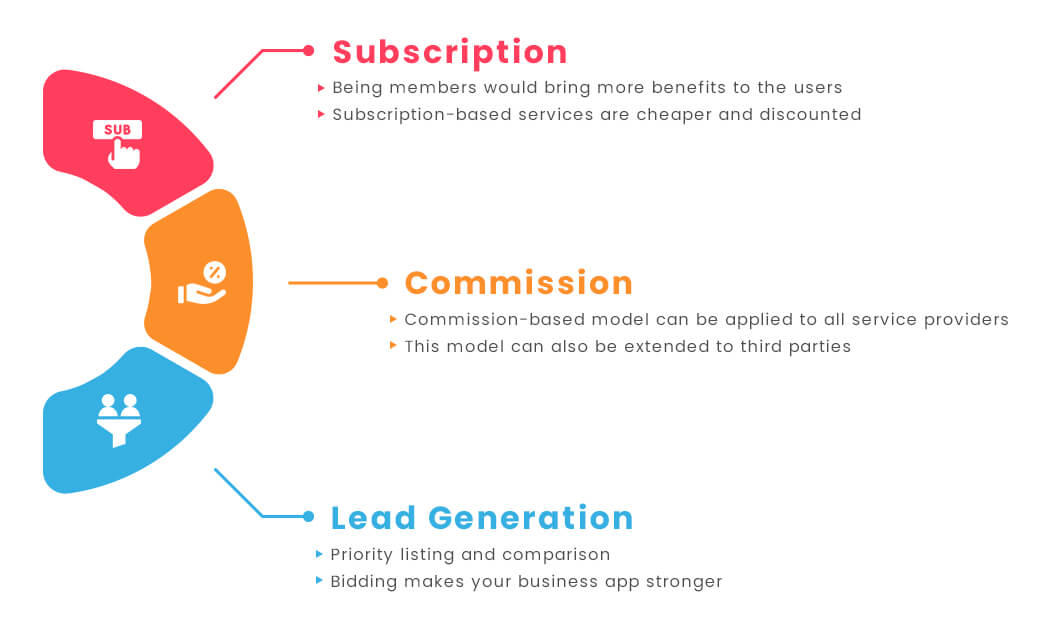
Subscription-based model: in this model, customers can become members and get more benefits. The subscription-based services are more affordable and customers can order more frequently. For instance, a subscription to regular home cleaning services would help house owners to clean their rental apartments regularly and it would cost them much less.
Commission-based home service revenue model: in such a model, the commission is charged to service providers and at times even customers for the jobs provided on home service business apps. In another model, the charges are also applicable to each transaction done on the home service app platform. This is one of the safest and steady-income models for such apps.
Lead-generation business model for home services: in the lead-generation type revenue model, the customers are presented with several bids for the job as service providers could see consumers’ demands on the app. For instance, if a client is looking for a painting job, individuals and painting companies can see the job and bid their prices. The customers can choose the one that they think is worth.
Aggregator and Workforce Hybrid Model: The aggregator and workforce hybrid business model combines marketplace technology with an in-house team of trained professionals. The platform controls service pricing, quality standards, and service delivery by employing or contracting technicians directly. This model allows greater consistency and brand control but requires higher operational investment. It is commonly used by large platforms that aim to deliver standardized service experiences across cities and regions while maintaining full control over customer satisfaction.
White Label SaaS for Service Companies: In the white-label SaaS model, the platform is sold or licensed to home service businesses as a ready-to-use digital solution. Instead of running a consumer marketplace, the company provides branded apps and dashboards that service providers can use to manage bookings, payments, and customers. Revenue is generated through licensing fees, setup charges, and ongoing support contracts. This model is ideal for companies that want to serve multiple businesses without managing individual service operations.
How do Renowned Home Service Business earn?
The ultimate aim of most businesses through mobile applications is to reach the fastest breakeven point and then onward, earn profits in competitive markets. There is a gamut of app monetization methods to assure a steady stream of income; nevertheless, the revenue models may differ from app to app and industry to industry. Here, we shall discuss the ones apt for home service business apps.
There are several famous on demand home service apps on the market. Here is the list of a few and their business strategies –
TaskRabbit
Started in 2008 in Boston, TaskRabbit brought a powerful platform where task seekers met with service providers. Today, the home service business app is much more than just that. With 2 million active users, the app is spread across forty locations across the United States. In 2017, IKEA took over this, and now it has simplified its revenue model wherein task poster posts a job and taskers put their hourly rates. The posted tasks then get selected within a few minutes, and finally, the tasks are completed within 90 minutes of posting.
Thumbtack
Based on a simple lead-based model, the Thumbtack app simply charge the service providers a fee to quote their fees. The house service business app Thumbtack has been quite a popular application that most users have on their smartphones. It includes several home services listed earlier in this guide.
Alfred
Hello Alfred, a New York-based home service business app, that offers the best services for home maintenance. In 2014, the business fetched USD 60 million from Marcela Sapone and Jess Beck for their astounding business idea and promising revenue model through providing a powerful platform for home services. Majorly based on a subscription model, Alfred’s home service business app typically identifies the pain area of users and provides quick and efficient services to those tasks for which users don’t have time.
Home Service Business App Features
Customers’ engagement and visitors’ retention essentially depend several factors, mainly the user experience a product offers. While a thorough market research shall help you achieve this, there are general guidelines you can read on having the best features in mobile app to make sure that your software tool also houses them.
The features of home service business app depend on the users and the panels of those users would typically include tasks related and useful to them.
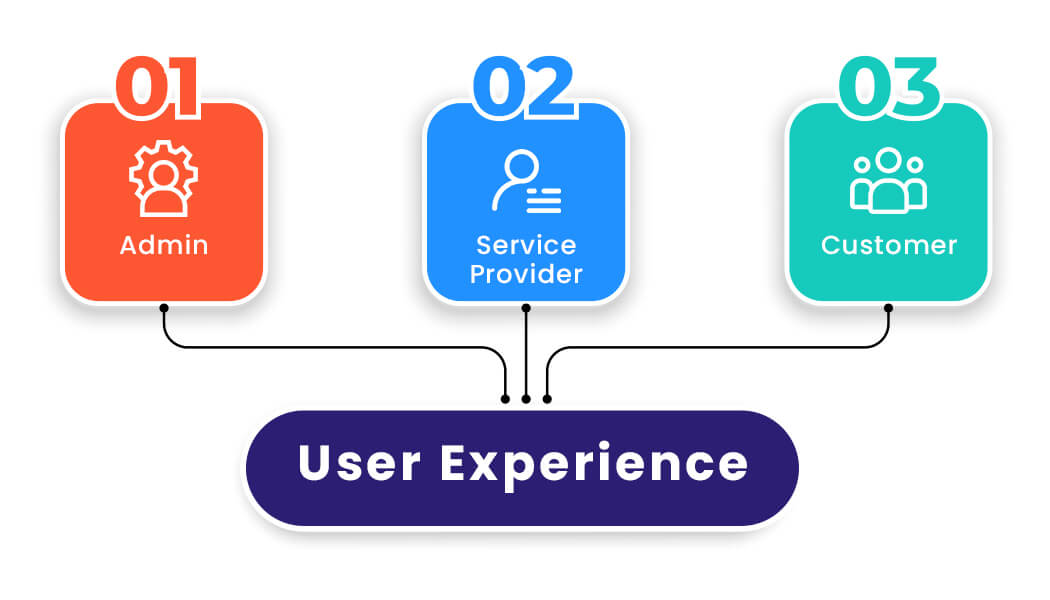
Admin panel
The admin panel could have total control over all the entities and registrations. Moreover, the admin panel would also have the privilege to add, remove, or edit any profile. Here are a few features of the admin panel –
- Interactive dashboard
- Manage/verify profiles of all kinds
- Loyalty management
- Manage ratings and reviews
- Analytics
- Accept and reject requests
- Promotions and marketing
- Push notification and design change
Customer panel
The customer panel would be the focus area because the customer is the key element in any home service business app. The customer panel user interface is designed with utmost care to provide the best possible user experience. Here are a few features you would have in your app –
- Register and login through multiple ways
- Quick search and filter
- Real-time approval notification
- Book services and get an estimated time to finish the tasks
- Rating and reviews
- Secure payment gateways
- Mark favorite vendor or service provider
- Help and customer support
- Raise complaints and track it
- Comparison of prices, fees, or charges
- Track service providers’ whereabouts
- Spread a word – social media sharing and recommendation
Service provider
Another important entity in the home service business app is the service provider. Here are a few features to name –
- Registration
- Accept/reject orders
- GPS-enabled location of service seeker
- Feedback
- Listing of services
- Offers and discounts
How Much Does it Cost to Develop on demand Home Service App?
The total cost of building an on-demand home service app depends on multiple technical and operational factors. Each development phase requires a different level of expertise, time, and infrastructure. Businesses often underestimate the true cost by focusing only on app screens, while ignoring backend systems, security layers, testing cycles, and long-term maintenance. A clear breakdown of each component helps founders, startups, and service companies plan realistic budgets and avoid unexpected expenses during and after development.
Understanding these cost segments also allows decision-makers to prioritize features, choose the right development approach, and scale the platform in phases. A simple MVP may cost significantly less than a full-featured platform, but long-term growth usually requires investment in performance, automation, and security.
On-Demand Home Service App Design Cost
Design costs include user interface and user experience planning for customer apps, service provider apps, and the admin dashboard. This phase covers wireframes, interactive prototypes, visual layouts, and usability testing. A well-designed interface improves user engagement, reduces drop-offs, and simplifies service booking. The cost increases when custom branding, animations, accessibility standards, and multi-language support are included. Businesses that invest in professional design often reduce future development changes and improve customer retention.
On-Demand Home Service App Development Cost
This cost includes building the mobile applications for customers and service providers. It covers front-end development, API integrations, real-time features, notifications, and booking workflows. The final cost depends on the number of platforms such as Android, iOS, and web, as well as the complexity of features like live tracking, in-app chat, and digital payments. Cross-platform frameworks may reduce initial costs, while native apps increase performance and scalability but require higher investment.
On-Demand Home Service App Backend Cost
Backend development supports all core platform operations. This includes database management, user authentication, service matching logic, order processing, payment handling, and analytics. A secure and scalable backend is essential for handling high user traffic and real-time service requests. Costs increase when the platform requires cloud infrastructure, data encryption, third-party integrations, and advanced reporting systems.
On-Demand Home Service App Admin Panel Cost
The admin panel allows platform owners to manage users, service providers, pricing rules, commissions, disputes, and performance metrics. This dashboard also supports content management, service approvals, and revenue tracking. Development costs vary based on the level of control, automation, and reporting features required. Advanced admin panels with real-time analytics and role-based access require higher investment.
On-Demand Home Service App Testing Cost
Testing ensures that the platform performs reliably across devices, operating systems, and network conditions. This phase includes functional testing, security testing, performance testing, and user acceptance testing. The cost depends on the number of test scenarios, supported devices, and regulatory requirements. Thorough testing reduces post-launch issues and protects the brand from service failures.
On-Demand Home Service App Maintenance Cost
Maintenance covers bug fixes, security updates, server monitoring, feature enhancements, and compatibility updates. As user demand grows, infrastructure costs and optimization efforts also increase. Ongoing maintenance is essential for long-term stability and customer trust. Businesses should allocate a recurring annual budget to ensure continuous platform performance.
Explanation of Cost Drivers
Several factors directly influence the total On-Demand home service app development cost. These include the number of service categories, geographic coverage, real-time features, security requirements, third-party integrations, and scalability needs. Custom workflows, multilingual support, compliance requirements, and AI-based automation also increase development complexity. Choosing an experienced app development company and a flexible architecture helps control costs while supporting future growth.
How to build a Home Service Business App?
You may have various ideas on how to start a home service business, but developing a handyman’s app is a daunting task. Following a standard app development guide can help you sail through the journey easily, you can have a brief idea about it here.
From choosing the right service at the right place (region) and offering them through a fully-developed customized app for home services requires intense research and carefully taken steps. Here is a guide on how to build a foolproof strategy and follow the steps for the same –
Identify the gray area
Before you start on-demand app development, it is crucial to identify the gray area of the target users or customers. Their needs should be matched with your app’s features and facilities, and therefore, ultimately your budget. You cannot have a small budget to develop the best home service business app that contains dozens of features and hundreds of listings. Hence, the on-demand industry needs to be identified before going for mobile app development.
Study peers and competitors
After identifying the pain area of customers, it is time to study peers and competitors. You may start up a home business for various services in your region by studying common functionalities and features. Keeping an eye on major players in the market would help you develop a competitive app for the home service business. The latest market trends and consumer demands are quite crucial to understand and analyze before you list down the features you want in your on demand home service app development.
Special care for punctuality
On-demand home service businesses completely depend on punctuality because the customers are bound with time. For instance, if there is an order to seek plumbing services, it could be an urgent call because of leakage from a pipe. Procrastinating services by allotting a plumber late would make it disastrous for the customers and, therefore, they would simply give up on your app services. Hence, it is important that your app should provide quick home services in time. In fact, there are renowned home services businesses in the market that are in the race to have a 10-minute delivery app for almost everything.
Utmost care for UI/UX
Home service business applications for Android and iOS heavily rely on their user interface to provide the best user experience. Special attention is required to assure that the handyman’s app is attractive yet simple enough to navigate through. Used by a professional person to a housewife and people from all age groups, home service mobile apps for household chores and domestic help must have an intuitive UI so that it is easy for users to find the services they want. Simple components with icons and labels would make UI/UX fair enough to stay on users’ mobile and not get uninstalled.
How to Choose the Right On-Demand Home Service App Development Company?
Selecting the right on-demand home service app development partner is one of the most critical decisions when building an on-demand home service app. The success of the platform depends not only on the technology but also on the development company’s ability to understand business workflows, user expectations, and long-term scalability requirements. A reliable On-demand home service app development partner helps transform your business idea into a secure, high-performing, and market-ready solution. Evaluating the On-demand home service app development company across multiple criteria ensures that you choose a team capable of delivering both technical excellence and ongoing operational support.
Industry Experience
Industry experience reflects how well a development company understands the unique challenges of on-demand service platforms. On-demand home service app development companies that have previously built similar apps are familiar with service matching systems, real-time tracking, payment flows, and provider management features. This experience reduces development risks, shortens project timelines, and ensures that the platform aligns with real market expectations. On-demand home service app development companies with relevant case studies can also provide valuable insights into common pitfalls and growth strategies.
Security Practices
Security is essential when handling user data, payment information, and service provider credentials. A best On-demand home service app development company follows secure coding standards, implements data encryption, and ensures compliance with data protection regulations. Strong security practices protect the platform from data breaches, unauthorized access, and financial fraud. This builds user confidence and protects the business from legal and reputational risks.
Tech Stack Expertise
A skilled On-demand home service app development company must have expertise in modern programming frameworks, cloud platforms, and scalable architectures. The right tech stack ensures fast performance, seamless integrations, and future scalability. On-demand home service app development companies with strong technical knowledge can recommend the most suitable technologies based on your business goals, budget, and growth plans.
Maintenance Support
Post-launch maintenance is as important as development. The On-demand home service app development company should offer continuous support for bug fixes, performance optimization, and feature updates. Ongoing maintenance ensures the app remains compatible with new operating systems, security standards, and user expectations. Reliable support helps maintain service quality and platform stability over time.
Portfolio and Client Reviews
A strong portfolio demonstrates the On-demand home service app development company’s technical capabilities and industry exposure. Client reviews and testimonials provide insight into project delivery quality, communication standards, and long-term support. Evaluating past work helps you understand whether the company can meet your expectations and deliver a successful on-demand home services platform.
Let’s Develop a Home Service Business App now
This is the time! Hit the market with the best home service app as you hire a dedicated team of app developers from a renowned mobile app development company to outsource your project. You can take the best benefit of their experience and consult their technology experts to make your dream come true.
Frequently Asked Questions About On-Demand Home Service Business
What is a home service business app?
The application that helps home service seekers find and avail the service providers such as handymen on a platform is called the home service business app. This is the place where you can find several home services such as plumbing, carpenter, painters, electrician, gardeners, and the like in the quickest way.
How long does it take to build an on-demand home service app?
The development timeline for an on-demand home service app depends on the platform’s complexity, feature scope, and technology approach. A basic version with core booking, payment, and provider management features can typically be developed within four to six months. This includes planning, design, development, testing, and initial deployment. A more advanced platform with real-time tracking, multi-service categories, AI-based matching, and detailed analytics can take eight to twelve months or longer. The timeline also varies based on the number of platforms required, such as Android, iOS, and web dashboards. Custom workflows, third-party integrations, and security compliance checks further influence the delivery schedule. Businesses that follow a phased development approach can launch a minimum viable product quickly and add advanced features later. This reduces initial risk while allowing early market validation.
How do on-demand home service apps ensure service quality?
On-demand home service apps ensure service quality through structured verification, monitoring, and feedback systems. Service providers are typically required to complete identity verification, skill validation, and background checks before joining the platform. Once onboarded, their performance is continuously evaluated using customer ratings, reviews, job completion rates, and response times. Platforms also implement service guidelines and automated alerts for quality issues. Dispute management tools and customer support channels help resolve problems quickly. Over time, poor-performing providers are either retrained or removed from the platform. This structured quality control process helps maintain consistent service standards and builds long-term customer trust.
Is on-demand home services model profitable for small businesses?
Yes, the on-demand home services model can be highly profitable for small businesses when implemented strategically. The platform reduces marketing costs by bringing customers directly to the service provider. It also improves operational efficiency through automated scheduling, payments, and communication. Small businesses benefit from increased visibility, better customer retention, and access to digital tools that were previously limited to larger enterprises. By adopting a commission-based or subscription model, businesses can generate recurring revenue while expanding service offerings. With proper pricing, service quality, and user engagement strategies, small businesses can achieve sustainable growth and competitive advantage.
Avantika Shergil
| Feb 11, 2026


Avantika Shergil is a technology enthusiast and thought leader with deep expertise in software development and web technologies. With over 8 years of experience analyzing and evaluating cutting-edge digital solutions, Avantika has a knack for demystifying complex tech trends. Her insights into modern programming frameworks, system architecture, and web innovation have empowered businesses to make informed decisions in the ever-evolving tech landscape. Avantika is passionate about bridging the gap between technology and business strategy, helping businesses build customized software and website, and understand about different tools to leverage effectively for their ventures. Explore her work for a unique perspective on the future of digital innovation.