A Complete Guide to On-Demand App Development
 By
Avantika Shergil
|
May 1, 2026 |
App Development Mobile Apps
By
Avantika Shergil
|
May 1, 2026 |
App Development Mobile Apps
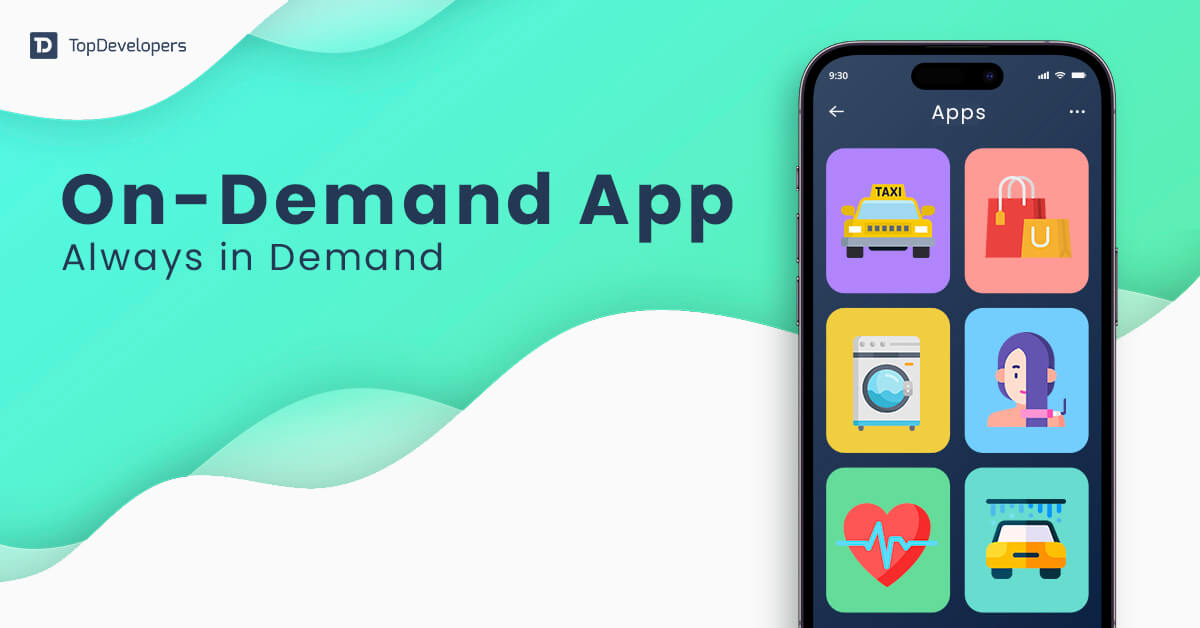
According to GlobalNewsWire, the on-demand food delivery market is likely to touch USD 160 billion by 2023. Furthermore, the on-demand labor market is supposed to grow nearly 20% annually in the coming years.
While these are a few validatory stats, there are many astonishing figures that prove how on-demand mobile app development for startups and established businesses are setting milestones in the international digital market. Netflix and Uber have shown a way for angel investors and young entrepreneurs to think out of the box. Such thought process makes it a necessity for the business to find the best mobile app development company based on your business needs.
Once just intended as ride-sharing on-demand mobile apps today have grown into multipurpose 360-degree applications that cater to almost all market segments ranging from grocery delivery, food delivery, cosmetics, medicines, laundry, and even instant home services.
Today, the online market is largely driven by mobile app development companies specializing in on-demand app-making.
Table of Contents
How ‘On-Demand Economy’ is impacting Business World?
The market of on-demand service app development is at its peak due to enormous demand in all industry verticals and all across the world. Investors have been putting zillions of dollars into this industry as in most cases, success is guaranteed. A report quotes that on-demand users spend an average of USD 57.6 billion annually wherein the online marketplace contributes the major factor.
Adding icing on the cake, the supply chain and communication technologies have boosted the on-demand industry economy manifold. Consumer demand and market actions ask for industries and services on a standby mode to serve them instantly whenever they want any products or services. According to one of the PwC reports, the market of on-demand mobile apps and portals would witness a significant worth of over USD 300 billion by the end of 2025.
Since most markets, today, are driven by on-demand services and deliveries, many entrepreneurs intend to build an app that focuses on providing users with an all-in-all solution so that they can use a single mobile application to order most products and services to get delivered to their doorsteps.
Types of on-demand service mobile apps
There are many different types of on-demand mobile apps depending on which the on demand app development company includes design features and business flow.
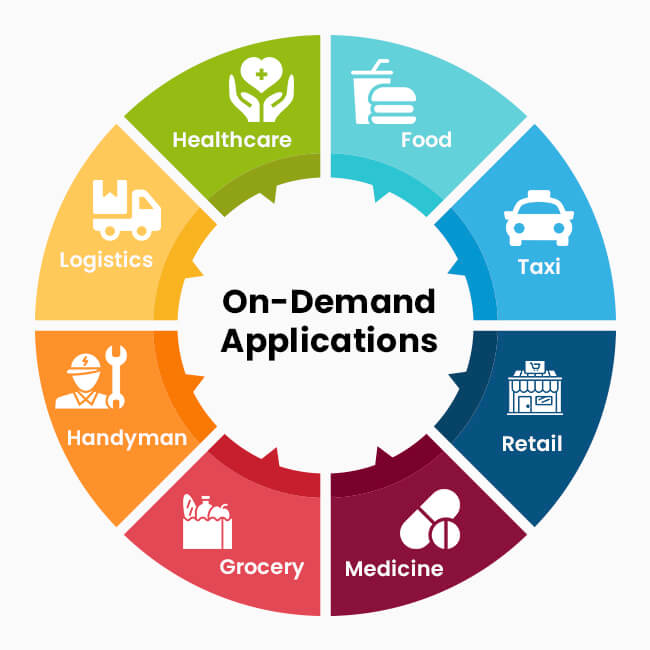
On-demand food delivery applications
This is one of the fastest-growing on-demand services in developing and developed countries. Over the past few years, especially pandemic where restaurants were not allowed to offer dine-in option, online food delivery applications grew like mushrooms in the rains. The trend continued as a part of people’s habit to order food with minimal human touch. Multiple business options are available for on-demand food delivery mobile apps.
In another aspect, market experts opine that most app development outsourcing for on-demand delivery service apps is the project for the food delivery business. Some of the best on-demand food delivery apps include Seamless, Grubhub, Foodpanda, UberEats, Postmates, EAT 24, DoorDash, Swiggy, and so on. Several app development methodologies have been used to make these applications an omnipotent place where users can order anything. The use of contemporary technologies allows users to view the dishes, rate the café, eateries or restaurants, and even perform various other activities on the apps.
On-demand grocery delivery
This is another already popular on-demand service popular on Google play store and Apple’s app stores. On demand grocery delivery apps for instant delivery at buyers’ doorsteps have been in immense demand since the world was hit by the unprecedented pandemic. If you’re looking to take advantage of this growing trend and bring your own grocery delivery app to life, exploring the business models, revenue models and features of grocery delivery app development could be a game-changer for your business. While the same-day delivery option is getting old, people are quite curious to adopt the 10-minute delivery application that wonderfully delivers all sorts of goods and materials within the said time. Zepto and Blinkit are a couple of examples that have found places on people’s mobile phones for quick delivery of the goods.
Handyman as on-demand app services
The demand for having a handyman on a standby mode has been increasing like never before. From a simple plumbing job to fixing a wooden door to landscaping the backyard or coloring the fence, all trivial jobs have been quite a headache, especially for those who work in the daytime. An all-rounder on-demand home service application that offers all such services by experts from the nearby vicinity has been in great demand, especially in the western world countries.
On-demand cab or taxi services
Instant taxi or cab services such as Uber and Ola have set an example for the best app monetization due to which global entrepreneurs have started to hire remote developers for on-demand mobile software.
The revenue model for such applications is so alluring that even multi-national companies are aiming to invest heavily in on-demand taxi booking app development to expand their businesses.
Like other applications, on-demand booking service for cab and taxi has also evolved from its basic features and today it includes carpooling, car rental, and even goods delivery applications within the app.
On-demand delivery of medicines
Post-pandemic, the demand for visiting pharmacies to buy medicines has markedly plummeted. Instead, on-demand medicine delivery services have skyrocketed due to their myriad benefits – contactless (so fewer chances of infection), instant deliveries (so that the medicines can be used urgently), digital payment (again no contact plus no need to pay in cash), and many more.
According to Statista, the revenue of the online pharmacy market is likely to reach a CAGR of more than 11% and touch a whopping USD 35 billion by 2026. It is on-demand medicine delivery app development. As with other on-demand apps are evolving and updating with new features and functionalities, online drug delivery system has also extended their services and features as the business model.
Now, not only do they offer delivery of medicine at your doorstep but also include online healthcare professionals’ consultations, health tips, and paid dietary regimens with many other health and fitness-related services.
On demand Logistics services
Due to significant demand in online shopping and world trade, the need of logistics has increased manifold. Hence, on-demand logistics apps could be one of the lucrative businesses for entrepreneurs.
The app may contain the following services –
- Transportation and logistics search
- Comparison of freight prices
- Availability of drivers, pilots, and captains
- Cargo consignment locations
- Live location and tracking of shipment
On demand Healthcare business
Post-pandemic, the health consciousness among people has awakened. Today, 6 out of 10 urban dwellers are likely to take healthcare services in one or the other ways. On-demand healthcare services can be thought to include in-app services. And there are many healthcare app ideas that startups can follow. Such services may include following features –
- Search and filter healthcare providers (physiotherapists, physicians, alternative medicine experts, and so on)
- Health counselor on demand
- Yoga and massage instructor and performer
- Medicine delivery
- Fitness personal trainers on demand
- Nurse and caretaker search and availability
- Emergency services (such as calling an ambulance)
- Diet and Nutrition Tracking
- Doctor Appointment Booking System
- On-Demand Medical App For Real-Time Diagnosis
On-demand retail apps
Retail on-demand mobile app services include several items chiefly merchandise and clothing. A few entrepreneurs also include their superstores to offer a gamut of goods and materials to purchase from their online retail business.
Extending its features further, some platforms offer contactless deliveries and instant services as a part of the retail delivery business. However, if one is not confident about what to include, they can take the help of a top mobile app development service provider and work on MVP development and then take their projects further as per the needs of the final users or buyers.
According to Walker Sands, 54% of US citizens (under 25) opt for same-day delivery applications for online purchases. The short-time delivery option increases the user base that are in hurry to get their products.
With improved logistics and the technologies such as Artificial Intelligence (AI), Augmented Reality (AR), Virtual reality (VR), and the Internet of Things (IoT), this sector is likely to get another boom in near future.
What are the Two main on-demand business models to consider?
Chiefly, there are two types of on-demand business models where one focuses on providing a particular service from a particular vendor or business owner, and the other type includes providing a larger platform where several other vendors and business owners are allowed to register and portray their services and products.
On-demand app
In an on-demand app business model, the services are provided by one vendor (or a business owner) where they offer several types of products or services to customers or users as and when they want. For instance, an on-demand grocery app would provide hundreds of products to consumers; the users can order any grocery item (say, cookies or bread) on the app and the vendors shall deliver it at users’ doorsteps.
On-demand marketplace app
This type of business is a broader category of the previous model. Here, a larger platform is created where vendors are invited to list their products and provide services. Not restricted to one business or business owner, such a marketplace app serves as a super app where users can find almost everything they want. The app owners are not necessarily business owners or vendors themselves.
What are the top two factors to focus on for my on-demand app development?
As a business person, you might have studied similar on-demand service apps to have the best app features in your product; nevertheless, if you miss the two most important factors before you contact IT service provider to build your mobile app, you are likely to face many challenges post-launch. Here are those two crucial factors to mind –
Picking the target audience or end users
While creating a Business plan for your mobile app idea you should do a thorough market analysis that segregates target audiences or end users because it will make a big difference in building features of your on-demand mobile app. Picking up the wrong choice would end up in a failure as the apps would not prove themselves in user experience due to misunderstood user demands and the latest trends in mobile app development.
The target audience could be anyone -from office goers to homemakers, and businesspersons to night owls. It could be specified by gender, age, and even ethnicity.
Identifying the gray area that is common yet unexplored
After the segmentation of end users, the next step is to identify the common issue, or problem, concerning them. Grabbing an opportunity depends on the market trend or societal situation -for instance, the pandemic brought enormous opportunities to on-demand medicine and food delivery businesses.
In metro cities, mobile apps for cab or taxi services are in the rage, especially where public transport is weaker. Night owls who burn midnight oils almost every day would be allured to night-delivery food applications. Entrepreneurs who invest in on-demand delivery apps after such research and studies are likely to reach their break-even point faster.
On-demand service app features
The features of on-demand service applications depend on the types of their users. The feature of each mobile software or web app would cater to the needs of the users. Through customized app development methodologies, the features are tailored to the users’ needs and so the privileges are also granted accordingly. Here are the different user panels and their features for on-demand service apps –

App features to have in Customer panel
The customers or end users (target audiences) would be at the core of on-demand mobile app features. It is because they are the ones who would make the app either hit or flop!
Here are some of the common features you can include during on-demand app development.
- Push notification
- Tracking ordered items real-time
- Payment gateway
- Reviews and ratings
- Favorites
- Help and support
App features to include in Service provider panel
After users, the features of the service provider panel are determined to provide enough power and privilege to maintain the products and services on the on demand application.
The on-demand service provider panel would have following general features to start with –
- Push notification
- Managing requests
- Start, end, or edit services and/or products
- Track business
- Analytics
App features to have in Admin panel
Administrator or admin is the main user who would have all privileges and power to edit, add, delete, or remove any user or stakeholder. The admin’s panel on the on-demand app shall have everything that can help anyone control the entire software through a few clicks.
- All-in-one dashboard
- All user profile management
- Master analytics and reports
The features can also be divided from the perspective of their general functionalities as found on any common mobile application.
Here are they –
- Register or sign in (through various methods including social media, email, and phone number)
- Manage profile (add, edit, remove content)
- Search and filter (according to your preference – for example – fastest grocery delivery in my area)
- Order history and favorite vendors (for quick ordering)
- Online tracking (real-time)
- Help and support (call and texts)
- Rating and reviews (to make others aware of credibility of service providers)
- Rewards, offers, and discounts (as offered by vendors)
- Secure payment gateways (multiple options such as credit card, eWallet, and so on)
What is the process of developing on demand apps?
You need to follow a certain standard process to build an on-demand app customized to your business objectives. It starts with market research and peers’ study, then finding the best app development company, and finally deploying your product on a particular platform. The app development steps remain almost the same in most of the products built offshore.
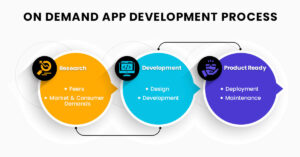
Research
The first step to develop any software product is to understand the niche and competitiveness. The market trends and consumer demands play an essential role in developing a software product. You should study your peers and the best on-demand apps market that represent your thoughts and business objectives. Depending on the latest trend, you need to pen down what you want in your product. Alternatively, you can take the help of professional market researchers for the same.
Development
Once the market research, consumer trends, and latest product demand is analyzed, this is the time to look for the top app development company. You can discuss the budget and depending on hiring models choose the best that offers the best return on every penny you spend. The UI/UX design wireframes and prototypes are developed before the product undergoes a full-fledged on-demand service app development.
Product ready
Once the designing and development phases are over, it is the time to deploy your on-demand service app on a particular platform for consumers, customers, or users. For any product to function flawlessly, right deployment on the right platform at the right time is essential. Then onwards, it is important that the product is maintained by professionals. Mobile app development companies can help you get a maintenance contract through which they assist you in upgrading and updating your product plus solving any bugs that come as the product is used and receives feedback.
How much does it cost to develop an on-demand app?
The app development cost for on-demand service app largely varies because of its types, size, and features to be included.
Primarily, the cost of an app depends on these factors –
- Project complexity (The number of features you want). You can save significant amount by having an approach of MVP (minimal viable product)
- Project size (Small project with less time to develop costs you less; larger products take time and cost you more)
- Development place (On-demand App development from India, for example, may cost you much lesser as compared to the US)
- Prizing models (Hiring models may vary in project costs; better ask your consultant to find the best model for you)
As mentioned earlier in this blog, this mobile application ranges from merely one product or service to multiple items and services. Nevertheless, an estimated budget starting at around USD 50000 could be set for developing an on-demand mobile application. Ultimately, mobile app development companies with experience and expertise would help you figure out the final cost of on demand app development.
The demand for On-Demand App!
The on-demand app for various products and services today, and for that sake even in the future, is a promising business that every smart entrepreneur would like to invest in. The demand for such an application is only to increase in the coming years.
On-demand app FAQs
What is on-demand app?
An on-demand app is a digital platform, usually a mobile or web application, that connects users with services or products instantly based on their immediate needs. It acts as a bridge between customers and service providers, allowing quick booking, payment, and service delivery within a single interface.
Unlike traditional service models, on-demand apps focus on speed, convenience, and accessibility. Users can request services in just a few taps, and providers can respond and deliver services almost immediately.
Key Characteristics of On-Demand Apps:
- Real-time service delivery where requests are fulfilled quickly.
- Connection between users and nearby or relevant service providers.
- Built-in payment systems for smooth and secure transactions.
- Tracking and notifications to monitor service progress.
- Ability to scale and handle a large number of users at once.
Examples of On-Demand Apps:
- Ride-hailing apps such as Uber.
- Food delivery apps such as Zomato.
- Grocery delivery apps such as Instacart.
- Home services apps such as Urban Company.
Overall, on-demand apps are an important part of the modern digital economy, helping users access services quickly while enabling businesses to operate more efficiently.
How do you make a successful on demand delivery app?
Building a successful on-demand delivery app requires a clear strategy, strong technical foundation, and a deep understanding of user expectations. It is not just about developing an app, but creating a seamless ecosystem that connects customers, delivery partners, and businesses efficiently.
To ensure long-term success, businesses must focus on usability, scalability, and operational efficiency while continuously improving the user experience based on feedback and data insights.
Key steps to build a successful on-demand delivery app:
- Define your niche and target audience: Identify the specific market you want to serve, such as food delivery, grocery delivery, or parcel services, and understand user needs.
- Choose the right business model: Decide whether your app will follow an aggregator, marketplace, or inventory-based model.
- Focus on user-friendly design: Ensure the app has a simple interface, easy navigation, and a smooth checkout process.
- Integrate essential features: Include real-time tracking, multiple payment options, push notifications, and order management systems.
- Build a strong backend system: Develop a scalable architecture that can handle high traffic, manage data, and ensure fast performance.
- Enable efficient delivery management: Optimize route planning, assign orders intelligently, and provide tools for delivery partners.
- Ensure security and compliance: Protect user data and implement secure payment gateways.
- Test thoroughly before launch: Conduct rigorous testing to identify and fix bugs, performance issues, and usability problems.
- Launch with a marketing strategy: Use digital marketing, promotions, and partnerships to attract users and build brand awareness.
- Continuously improve the app: Monitor performance, gather user feedback, and roll out updates to enhance features and fix issues.
By combining strong technology, efficient logistics, and a customer-centric approach, businesses can create an on-demand delivery app that is reliable, scalable, and competitive in the market.
How much does it cost me to build an on-demand application?
How much does it cost to build an on-demand application?
The cost of building an on-demand application depends on several factors such as app complexity, features, platform selection, and development location. There is no fixed price, but most applications fall within a general cost range based on their scope and requirements.
Here is a general cost breakdown:
- Basic MVP (Minimum Viable Product): $25,000 – $50,000
- Mid-level application: $50,000 – $120,000
- Advanced application: $120,000 – $250,000+
- Enterprise-grade solution: $250,000 – $300,000+
Before finalizing the budget, it is important to understand the key factors that influence the overall cost of development.
Key factors that influence the cost include:
- Feature set such as real-time tracking, chat, and payment integration.
- Platform selection including Android, iOS, or both.
- User interface and user experience design complexity.
- Backend infrastructure and scalability requirements.
- Third-party API integrations.
- Development team location and level of expertise.
In addition to development costs, businesses should also consider ongoing expenses such as maintenance, updates, hosting, and marketing efforts.
Typically, annual maintenance costs range from 15% to 20% of the initial development cost. Many startups begin with a minimum viable product to validate their idea and then scale the application with additional features over time.
Why should you invest in on-demand app?
Why should I invest in an on-demand app?
Investing in an on-demand app can provide significant business advantages in today’s fast-paced digital economy. Consumers increasingly prefer instant access to services and products, which makes on-demand solutions highly relevant and scalable across multiple industries.
On-demand apps not only improve customer convenience but also create new revenue streams and operational efficiencies for businesses. With the right strategy, they can offer long-term growth and a strong competitive edge.
Key reasons to invest in an on-demand app include:
- Growing market demand: Users prefer quick and hassle-free services that can be accessed anytime and anywhere.
- Higher revenue potential: Businesses can generate income through commissions, subscriptions, delivery fees, or service charges.
- Improved customer experience: Features like real-time tracking, easy payments, and fast service enhance user satisfaction.
- Business scalability: On-demand platforms can easily expand to new locations and services with the right infrastructure.
- Operational efficiency: Automation and digital workflows reduce manual effort and improve service management.
- Data-driven insights: Apps collect valuable user data that helps businesses make informed decisions and personalize services.
- Competitive advantage: Offering on-demand services helps businesses stay relevant and ahead in the market.
Overall, investing in an on-demand app enables businesses to align with modern consumer behavior while building a flexible, scalable, and future-ready digital presence.
What is an optimal team structure for making best on-demand application?
What is an optimal team structure for building the best on-demand application?
Creating a high-performing on-demand application requires a well-structured, cross-functional team that can handle design, development, testing, and deployment efficiently. The ideal team composition depends on the project’s complexity, but most successful builds follow a balanced structure of technical, design, and management roles.
A well-defined team ensures smooth collaboration, faster development cycles, and high-quality output. Each role contributes to specific aspects of the application, from user experience to backend performance and scalability.
Core team structure for an on-demand app:
- Product Manager: Defines the product vision, roadmap, and feature priorities while aligning business goals with development.
- Project Manager / Scrum Master: Manages timelines, resources, and workflows using agile methodologies.
- UI/UX Designer: Designs user-friendly interfaces and ensures a seamless user experience.
- Frontend Developers: Build the client-side of the application for web and mobile platforms.
- Backend Developers: Develop server-side logic, APIs, and database management systems.
- Mobile App Developers: Create native or cross-platform apps for Android and iOS.
- QA/Test Engineers: Test the application for bugs, performance issues, and usability.
- DevOps Engineer: Handles deployment, cloud infrastructure, CI/CD pipelines, and scalability.
Optional but valuable roles:
- Business Analyst: Gathers requirements and translates business needs into technical specifications.
- Data Analyst: Analyzes user data to improve app performance and decision-making.
- Security Specialist: Ensures data protection and compliance with security standards.
- Marketing Specialist: Plans user acquisition, branding, and growth strategies.
The optimal team size for a standard on-demand app typically ranges from 6 to 12 members, depending on scope. Smaller MVPs may require fewer resources, while enterprise-level applications need larger, more specialized teams.
Overall, a balanced and collaborative team structure is critical for delivering a scalable, secure, and user-centric on-demand application.
What is the best app monetization strategy for an on-demand app?
There is no single “best” monetization strategy for an on-demand application, as the ideal approach depends on your business model, target audience, and service type. However, the most successful apps typically use a combination of revenue streams to maximize profitability and ensure long-term sustainability.
A well-planned monetization strategy should balance revenue generation with user experience, ensuring that pricing feels fair while still delivering consistent business growth.
Popular monetization strategies for on-demand apps include:
- Commission-based model: Charge a percentage fee on every transaction between users and service providers.
- Subscription model: Offer premium plans with benefits such as free delivery, priority service, or exclusive features.
- Service fees: Add fixed or variable charges per order, booking, or delivery.
- Surge pricing: Increase prices during peak demand to optimize revenue and manage supply.
- In-app advertising: Generate income by displaying relevant ads or sponsored listings within the app.
- Freemium model: Provide basic features for free while charging for advanced functionalities.
- Partner promotions: Collaborate with businesses to promote their services or products for a fee.
Many leading on-demand platforms combine multiple monetization strategies, such as commissions and subscriptions, to diversify income sources and reduce dependency on a single revenue stream.
In practice, starting with a simple commission-based model and gradually introducing additional monetization methods based on user behavior and market demand is often the most effective approach.
What features are essential in an on-demand application?
Building a successful on-demand application requires integrating features that support seamless user interaction, efficient service delivery, and reliable system performance. These features must address the needs of customers, service providers, and administrators within a unified platform.
The right feature set ensures convenience, transparency, and scalability, which are critical for long-term success in a competitive on-demand market.
Core features of an on-demand application:
- User registration and profiles: Allows users and service providers to sign up, log in, and manage their personal information.
- Search and filtering: Enables users to find services or products based on location, category, price, or ratings.
- Real-time tracking: Provides live updates on order status, delivery progress, or service location.
- Booking and scheduling: Lets users place instant or scheduled service requests.
- Multiple payment options: Supports secure payments through cards, wallets, or digital payment systems.
- Push notifications: Sends alerts for order updates, offers, and important actions.
- Ratings and reviews: Allows users to provide feedback and helps maintain service quality.
- In-app chat or call support: Facilitates communication between users and service providers.
Advanced features for scalability and growth:
- AI-based recommendations: Suggests services based on user behavior and preferences.
- Route optimization: Improves delivery efficiency and reduces operational costs.
- Analytics dashboard: Provides insights into user activity, revenue, and performance.
- Admin panel: Manages users, orders, payments, and overall system operations.
- Multi-language and multi-currency support: Expands reach to a global audience.
By combining essential and advanced features, businesses can create an on-demand application that delivers a smooth user experience while maintaining operational efficiency and scalability.
What are the different types of on-demand business models?
On-demand business models define how services are delivered, how inventory is managed, and how revenue is generated within an application. Choosing the right model is critical because it directly impacts operational complexity, scalability, and profitability.
Different on-demand models are designed to suit various industries such as food delivery, transportation, home services, and e-commerce. Each model has its own advantages depending on business goals and market demand.
Common types of on-demand business models:
- Aggregator model: The platform connects users with multiple service providers and earns revenue through commissions on each transaction.
- Marketplace model: Similar to aggregators, but with more control over pricing, branding, and service quality across vendors.
- Inventory-based model: The business owns and manages inventory, ensuring better control over product quality and delivery timelines.
- Hybrid model: Combines elements of aggregator and inventory models to balance control and scalability.
- Subscription-based model: Users pay a recurring fee for access to services, premium features, or benefits like free delivery.
- Peer-to-peer (P2P) model: Individuals provide services directly to other users, with the platform facilitating the connection and transactions.
In practice, many successful on-demand platforms adopt a hybrid approach by combining multiple models to diversify revenue streams and optimize operations.
What technologies are used to build on-demand apps?
On-demand applications are built using a combination of frontend, backend, database, and cloud technologies to ensure real-time performance, scalability, and seamless user experience. The technology stack chosen depends on the app’s complexity, target platforms, and performance requirements.
A well-structured tech stack enables efficient development, faster deployment, and the ability to handle high user demand and real-time interactions.
Frontend (Client-side) technologies:
- Mobile app development: Swift (iOS), Kotlin (Android), or cross-platform frameworks like React Native and Flutter.
- Web development: HTML, CSS, JavaScript with frameworks like React.js, Angular, or Vue.js.
Backend (Server-side) technologies:
- Programming languages: Node.js, Python, Java, Ruby, or PHP.
- Frameworks: Express.js, Django, Spring Boot, or Laravel.
- APIs: RESTful APIs or GraphQL for communication between frontend and backend.
Database technologies:
- Relational databases: MySQL, PostgreSQL.
- NoSQL databases: MongoDB, Firebase for real-time data handling.
Cloud and hosting platforms:
- Cloud providers: Amazon Web Services (AWS), Google Cloud Platform, Microsoft Azure.
- Storage and computing: Cloud servers, CDN, and serverless architecture for scalability.
Essential integrations and tools:
- Payment gateways: Stripe, PayPal, Razorpay.
- Maps and location services: Google Maps API for real-time tracking and navigation.
- Push notifications: Firebase Cloud Messaging or Apple Push Notification Service.
- Real-time communication: WebSockets or third-party chat APIs.
By combining these technologies, businesses can build robust, scalable, and high-performing on-demand applications that deliver seamless real-time experiences to users.
How do you choose the right mobile app development company for an on-demand app?
Selecting the right mobile app development company is a critical decision that directly impacts the quality, scalability, and success of your on-demand application. The ideal partner should not only have strong technical expertise but also a clear understanding of on-demand business models and user expectations.
A structured evaluation process helps ensure that the company you choose can deliver a reliable, high-performing, and future-ready solution aligned with your business goals.
Key factors to consider when choosing a development company:
- Relevant experience: Look for companies that have built on-demand apps or similar real-time platforms in the past.
- Portfolio and case studies: Review previous projects to assess design quality, functionality, and industry expertise.
- Technical expertise: Ensure the team is skilled in modern technologies, frameworks, and scalable architectures.
- Client reviews and testimonials: Check feedback from past clients to evaluate reliability and service quality.
- Development process: Prefer companies that follow agile methodologies with regular updates and transparent communication.
- UI/UX capabilities: Strong design skills are essential for delivering a seamless and user-friendly experience.
- Post-launch support: Confirm availability of maintenance, updates, and technical support after deployment.
- Cost and engagement model: Evaluate pricing structure, whether fixed cost, hourly, or dedicated team model.
Additional evaluation criteria:
- Scalability focus: The company should design systems that can handle growth in users and transactions.
- Security standards: Ensure proper data protection and secure payment integrations.
- Communication and collaboration: Clear communication channels and responsiveness are essential for project success.
- Time-to-market capability: Ability to deliver within deadlines without compromising quality.
In practice, it is advisable to shortlist multiple companies, conduct interviews, and request a detailed proposal before making a final decision. Choosing a partner with both technical strength and business understanding significantly increases the chances of building a successful on-demand application.
How do on-demand apps handle real-time tracking and updates?
On-demand applications rely on advanced technologies to provide real-time tracking and instant updates, ensuring transparency and a seamless user experience. These systems continuously exchange data between users, service providers, and servers to reflect live status changes.
Real-time functionality is a critical component of on-demand apps, especially for services like ride-hailing, food delivery, and logistics, where users expect accurate and timely information.
Key technologies and methods used for real-time tracking:
- GPS and location services: Track the real-time location of delivery agents or service providers using device GPS.
- APIs and map integrations: Use mapping services to display routes, distance, and estimated arrival time.
- WebSockets: Enable continuous, two-way communication between client and server without repeated requests.
- Push notifications: Instantly notify users about order status, delays, or completion.
- Real-time databases: Technologies like Firebase update data instantly across all connected devices.
How real-time updates work in practice:
- The service provider’s app sends live location data to the server.
- The server processes and syncs this data with the user’s app.
- Users can view movement, status updates, and estimated delivery time in real time.
- Notifications are triggered automatically for key events such as order confirmation, dispatch, and delivery.
By combining these technologies, on-demand apps deliver accurate tracking, improve operational efficiency, and enhance user trust through transparency and timely communication.
What are the maintenance costs of an on-demand app?
Maintaining an on-demand application is an ongoing investment required to ensure performance, security, and scalability after launch. These costs cover updates, bug fixes, infrastructure, and continuous improvements to keep the app competitive and reliable.
In most cases, maintenance costs are calculated as a percentage of the initial development cost and vary depending on app complexity, user base, and feature updates.
Typical maintenance cost range:
- Annual maintenance usually ranges between 15% to 20% of the initial development cost.
- For example, if development costs $50,000, annual maintenance may range from $7,500 to $10,000.
Key components of maintenance costs:
- Bug fixes and performance optimization: Resolving issues and improving app speed and stability.
- Server and hosting costs: Cloud infrastructure, storage, and bandwidth usage.
- Third-party services: Payments, maps, notifications, and API subscriptions.
- Security updates: Regular patches to protect user data and prevent vulnerabilities.
- Feature enhancements: Adding new functionalities based on user feedback and market trends.
- Platform updates: Ensuring compatibility with new iOS and Android versions.
Additional ongoing expenses:
- Customer support and operations management.
- Marketing and user acquisition campaigns.
- Analytics and performance monitoring tools.
Proper maintenance planning is essential to ensure long-term app success, as neglecting updates and performance improvements can lead to poor user experience and reduced retention.
How to market and grow an on-demand application?
Marketing and growing an on-demand application requires a structured approach that combines user acquisition, retention, and continuous optimization. Success depends on identifying the right audience, selecting effective channels, and consistently improving the user experience based on data insights.
A sustainable growth strategy focuses not only on attracting new users but also on retaining existing ones and increasing their lifetime value.
Effective strategies to market and grow your on-demand app:
- Define your target audience: Clearly identify user segments based on demographics, location, and behavior to tailor your marketing efforts.
- Optimize app store presence (ASO): Use relevant keywords, compelling descriptions, and high-quality visuals to improve visibility in app stores.
- Leverage digital marketing channels: Use SEO, social media marketing, paid ads, and content marketing to drive traffic and installs.
- Offer promotions and referral programs: Incentivize users with discounts, cashback, and referral bonuses to encourage adoption.
- Focus on local marketing: Target specific geographic areas with localized campaigns, partnerships, and offers.
- Build partnerships: Collaborate with local businesses, vendors, and influencers to expand reach and credibility.
- Use push notifications and email marketing: Engage users with personalized offers, updates, and reminders.
- Ensure excellent user experience: A smooth, fast, and reliable app increases retention and positive reviews.
- Collect and analyze user data: Track user behavior, conversion rates, and engagement metrics to refine strategies.
Growth-focused approaches:
- Retention strategies: Loyalty programs, subscriptions, and personalized recommendations to keep users engaged.
- Continuous optimization: Regularly update features, fix issues, and improve performance.
- Scalability planning: Expand services, locations, or categories based on demand and market trends.
By combining strong marketing tactics with a user-centric product strategy, businesses can effectively grow their on-demand application and build a loyal customer base over time.
Avantika Shergil
| May 1, 2026


Avantika Shergil is a technology enthusiast and thought leader with deep expertise in software development and web technologies. With over 8 years of experience analyzing and evaluating cutting-edge digital solutions, Avantika has a knack for demystifying complex tech trends. Her insights into modern programming frameworks, system architecture, and web innovation have empowered businesses to make informed decisions in the ever-evolving tech landscape. Avantika is passionate about bridging the gap between technology and business strategy, helping businesses build customized software and website, and understand about different tools to leverage effectively for their ventures. Explore her work for a unique perspective on the future of digital innovation.